

Sunday 06 April 2025
A new approach to semi-supervised node classification has been developed, which could revolutionize the way we analyze complex networks and systems. The method, known as NodeReg, focuses on ensuring consistency in the norms of node representations within classes, a crucial step towards improving the accuracy of classification.
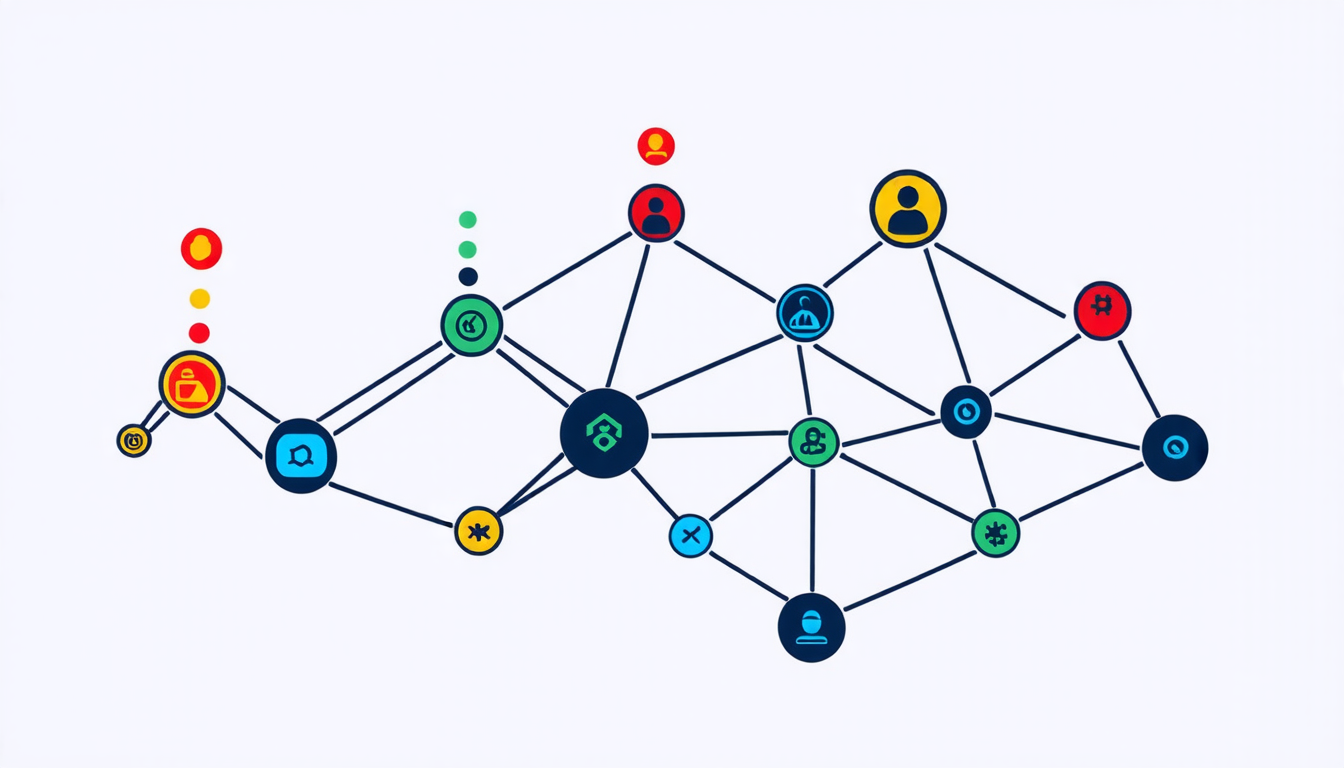
Node classification is a fundamental problem in graph neural networks (GNNs), where nodes are assigned labels based on their relationships with other nodes. However, when dealing with large and complex networks, it’s often challenging to gather enough labeled data for accurate training. This is where semi-supervised node classification comes in – by using a small amount of labeled data and combining it with unlabeled data, GNNs can learn more effectively.
But there’s a catch: when nodes have imbalanced representation norms, the model’s performance suffers. Nodes with varying norms within the same class can lead to misclassification, while nodes from different classes may be separated by only a small margin. To address this issue, researchers have proposed various methods that promote consistency in node representation norms.
NodeReg takes a novel approach by introducing a regularization term that enforces consistency in node representation norms within classes. This is achieved by minimizing the difference between the norms of neighboring nodes and the mean norm of the class. The result is a more accurate classification model that can handle imbalanced data and distribution shifts.
To test the effectiveness of NodeReg, researchers conducted experiments on several public datasets, including Cora and Citeseer. They compared their method with other approaches that promote consistency in node representation norms, such as CaNet, LSCA, LCentr, and LBounded. The results show that NodeReg outperforms these methods, achieving higher accuracy rates and faster training times.
The implications of this research are significant. By ensuring consistent norms in node representations, NodeReg can improve the performance of GNNs in various applications, such as social network analysis, bioinformatics, and recommender systems. Moreover, the method can be easily integrated into existing GNN architectures, making it a practical solution for real-world problems.
In summary, NodeReg is a powerful new approach to semi-supervised node classification that tackles the issue of imbalanced representation norms in complex networks. By promoting consistency within classes, this method has the potential to revolutionize our understanding and analysis of these systems.
Cite this article: “Unlocking Graph Neural Networks: A Novel Approach to Norm Consistency in Semi-Supervised Node Classification”, The Science Archive, 2025.
Node Classification, Graph Neural Networks, Semi-Supervised Learning, Consistency Regularization, Norm Consistency, Node Representation, Imbalanced Data, Distribution Shifts, Gnn Architectures, Complex Networks.





