

Sunday 06 April 2025
A team of researchers has been exploring the potential of deep reinforcement learning for autonomous cyber defence, and their findings could have significant implications for network security.
Cyber attacks are becoming increasingly sophisticated, and traditional methods of defence are struggling to keep pace. In response, scientists have turned to machine learning, which involves training computers to learn from experience and make decisions autonomously.
One approach is deep reinforcement learning, which combines the strengths of both human-designed rules and machine learning algorithms. The idea is that an agent can be trained to defend a network by interacting with it and learning from its mistakes.
But there’s a catch: traditional reward functions for these agents are often dense, meaning they provide a lot of feedback on every action taken. This can lead to agents becoming stuck in suboptimal strategies, as they focus too much on short-term gains rather than long-term goals.
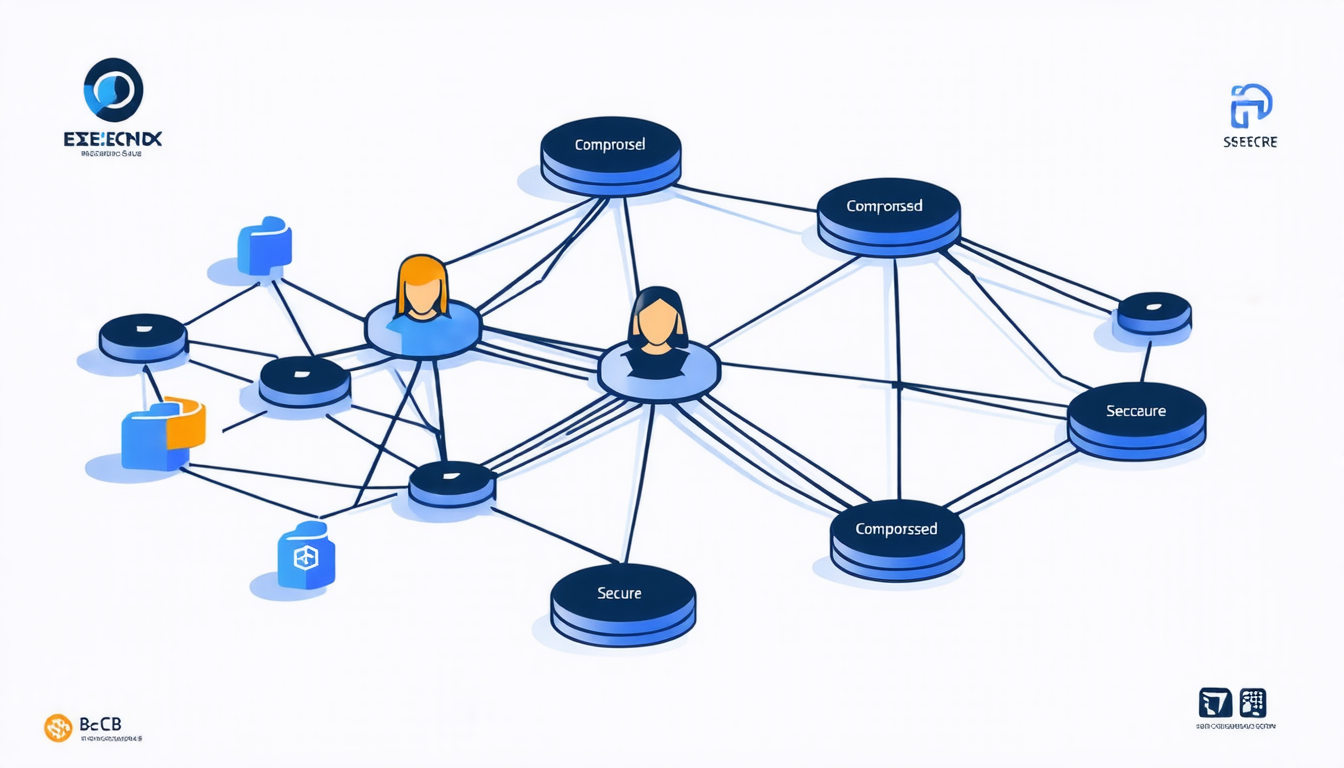
The researchers have developed two types of sparse reward function, which provide incentives only when the network is entirely free of compromised nodes or when it’s entirely compromised. They tested these functions against a conventional dense reward function in a cyber gym environment.
Their results show that agents trained with sparse rewards outperform those trained with dense rewards, even on complex networks. This is because sparse rewards encourage agents to focus on long-term goals rather than short-term gains.
But the researchers didn’t stop there. They also explored the impact of agent order and action space on performance. In one scenario, they found that an agent’s ability to place decoys on the network could significantly improve its performance.
The findings have significant implications for cyber defence. By using sparse reward functions, agents can be trained to focus on long-term goals rather than short-term gains, leading to more effective and reliable defence strategies.
In addition, the researchers’ work highlights the importance of considering agent order and action space when designing autonomous cyber defence systems. This could lead to more sophisticated and adaptable defence strategies that can keep pace with increasingly sophisticated attacks.
The research is still in its early stages, but the potential benefits are significant. As cyber threats continue to evolve, it’s essential that our defences do too. By harnessing the power of deep reinforcement learning and sparse reward functions, we may be able to stay one step ahead of the attackers and keep our networks safe.
Cite this article: “Unlocking Effective Cyber Defense with Sparse Rewards”, The Science Archive, 2025.
Cyber Defence, Deep Reinforcement Learning, Machine Learning, Autonomous Systems, Network Security, Sparse Reward Functions, Cyber Attacks, Traditional Methods, Defence Strategies, Adaptive Defence





