

Sunday 06 April 2025
In a breakthrough that could revolutionize the way we query databases, researchers have developed a new method for estimating the size of a query’s output. This achievement is significant because it enables database systems to make more accurate predictions about the results of complex queries, which can lead to faster and more efficient processing.
The problem with current methods of cardinality estimation is that they often rely on simplifications or assumptions about the data, which can lead to inaccurate estimates. For example, traditional methods may assume that the output size of a query will be proportional to the number of rows in each table being joined. However, this assumption does not always hold true, especially when dealing with complex queries involving multiple joins and filters.
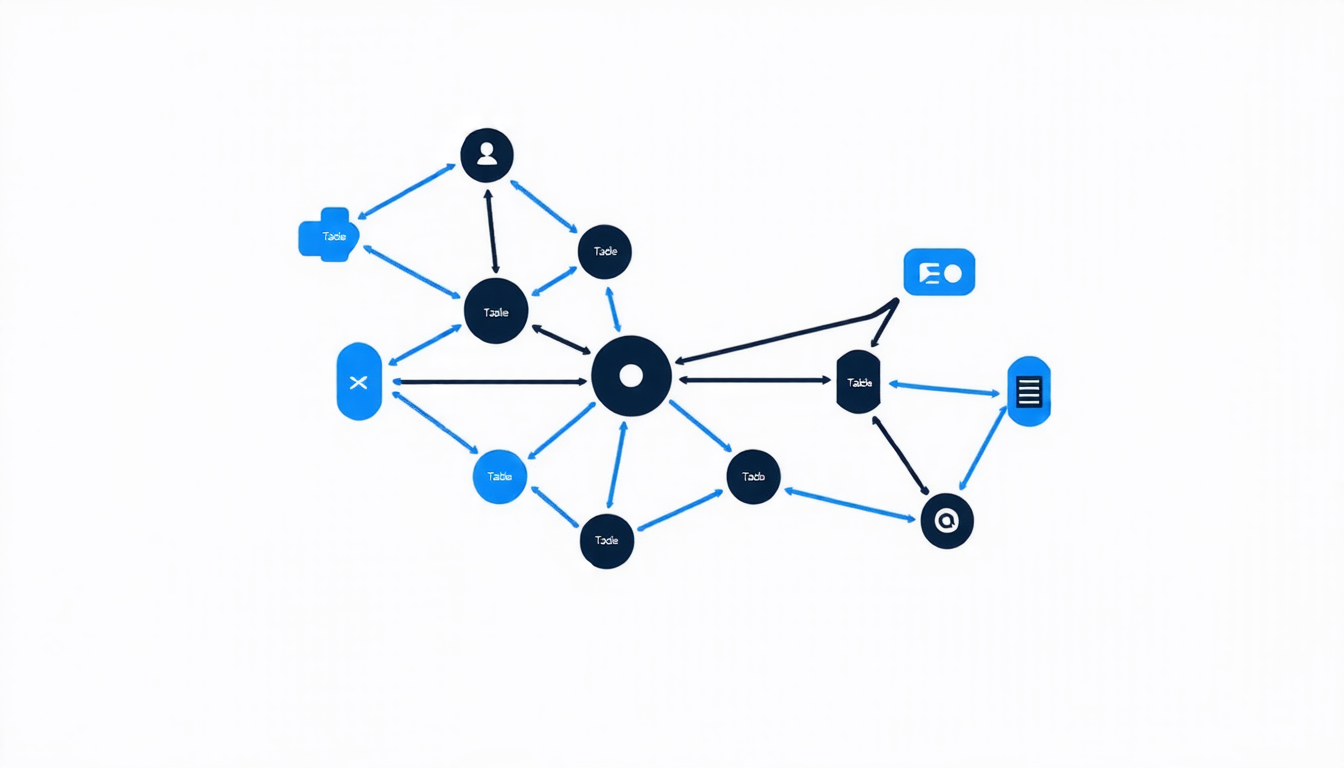
The new method developed by researchers uses a different approach, relying on the concept of degree sequences to estimate the output size of a query. A degree sequence is a list of numbers that represent the number of edges connected to each node in a graph. In the context of databases, this can be thought of as the number of rows in each table being joined.
The researchers used linear programming to optimize their approach and develop a formula that takes into account the degree sequences of all the tables involved in the query. This formula provides a tighter upper bound on the output size of the query than traditional methods, which means it is less likely to overestimate or underestimate the actual result size.
To test the effectiveness of this new method, researchers conducted experiments using real-world datasets and complex queries involving multiple joins and filters. The results showed that their approach outperformed traditional methods in most cases, providing more accurate estimates of the output size.
One potential application of this technology is in database query optimization. By accurately predicting the output size of a query, databases can optimize the query plan to reduce processing time and improve performance. This could lead to significant improvements in the efficiency and scalability of large-scale data processing systems.
While there are still limitations to this new method, it represents an important step forward in the field of database research. As researchers continue to refine and extend this approach, we can expect to see even more accurate and efficient cardinality estimation methods in the future.
Cite this article: “Unlocking the Secrets of Join Size Bounds: A New Framework for Conjunctive Query Evaluation”, The Science Archive, 2025.
Database, Query, Estimation, Size, Output, Degree Sequences, Linear Programming, Optimization, Cardinality, Efficiency





