

Sunday 06 April 2025
Scientists have long been fascinated by the strange and wonderful world of topological phenomena. From the way that certain materials can conduct electricity without resistance, to the peculiar properties of quantum systems, topology has emerged as a key area of study in modern physics.
Recently, researchers have made a significant breakthrough in this field, discovering a new type of topological edge state that defies conventional understanding. These edge states are found at the boundaries between different materials or regions with distinct physical properties, and are characterized by unique behavior and properties.
In traditional topological systems, these edge states arise from the presence of band gaps – regions where the material’s energy levels are prohibited from occupying certain ranges. However, this new discovery challenges our understanding of how these edge states come about. The researchers found that in some cases, the absence of band gaps can still lead to the formation of topological edge states.
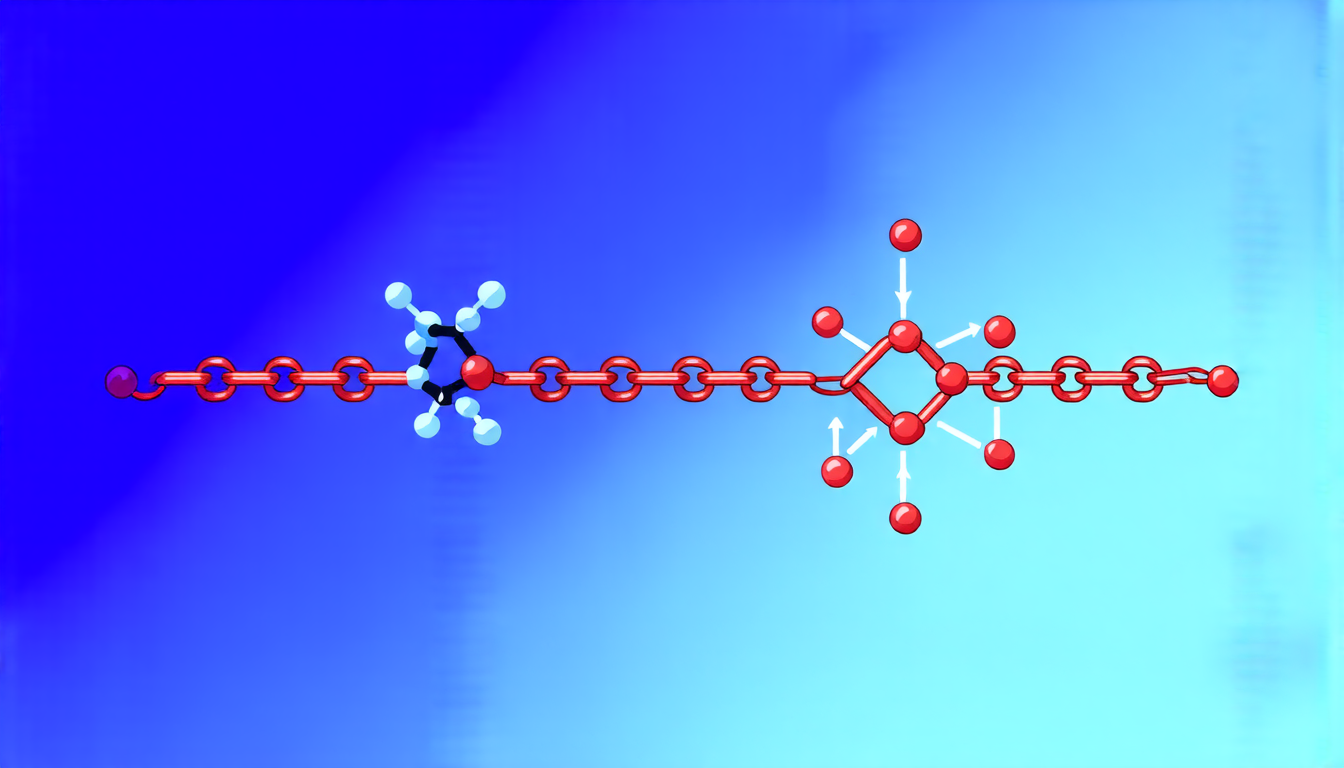
To study this phenomenon, scientists used a system consisting of a one-dimensional chain of atoms, where each atom was connected to its neighbors by springs. By manipulating the properties of these atoms and springs, they were able to create a situation where the material’s energy levels did not form band gaps. Surprisingly, they still observed the formation of edge states at the boundaries between different regions.
But how do these edge states arise without the presence of band gaps? The researchers propose that it is due to the non-hermitian nature of the system – in other words, the material’s properties are not symmetric under time reversal. This asymmetry allows for the emergence of topological phenomena that would not be possible in hermitian systems.
The implications of this discovery are significant. It opens up new avenues for research into the properties of non-hermitian systems, and could potentially lead to the development of new materials with unique properties. Additionally, it challenges our understanding of how topological edge states arise, and may require a re-evaluation of the fundamental principles that govern these phenomena.
The researchers used a combination of theoretical modeling and experimental techniques to study this phenomenon. They created a one-dimensional chain of atoms using ultracold atoms in an optical lattice, and then manipulated the properties of the atoms and springs using laser light.
The results of their experiment were striking – they observed the formation of edge states at the boundaries between different regions, even though there was no band gap present. These edge states exhibited unique behavior and properties, such as the ability to conduct electricity without resistance.
Cite this article: “Unlocking the Secrets of Topological Edge States in Gapless Systems”, The Science Archive, 2025.
Topology, Edge States, Non-Hermitian Systems, Band Gaps, Materials Science, Quantum Physics, Ultracold Atoms, Optical Lattices, Laser Manipulation, Conductivity





