

Sunday 06 April 2025
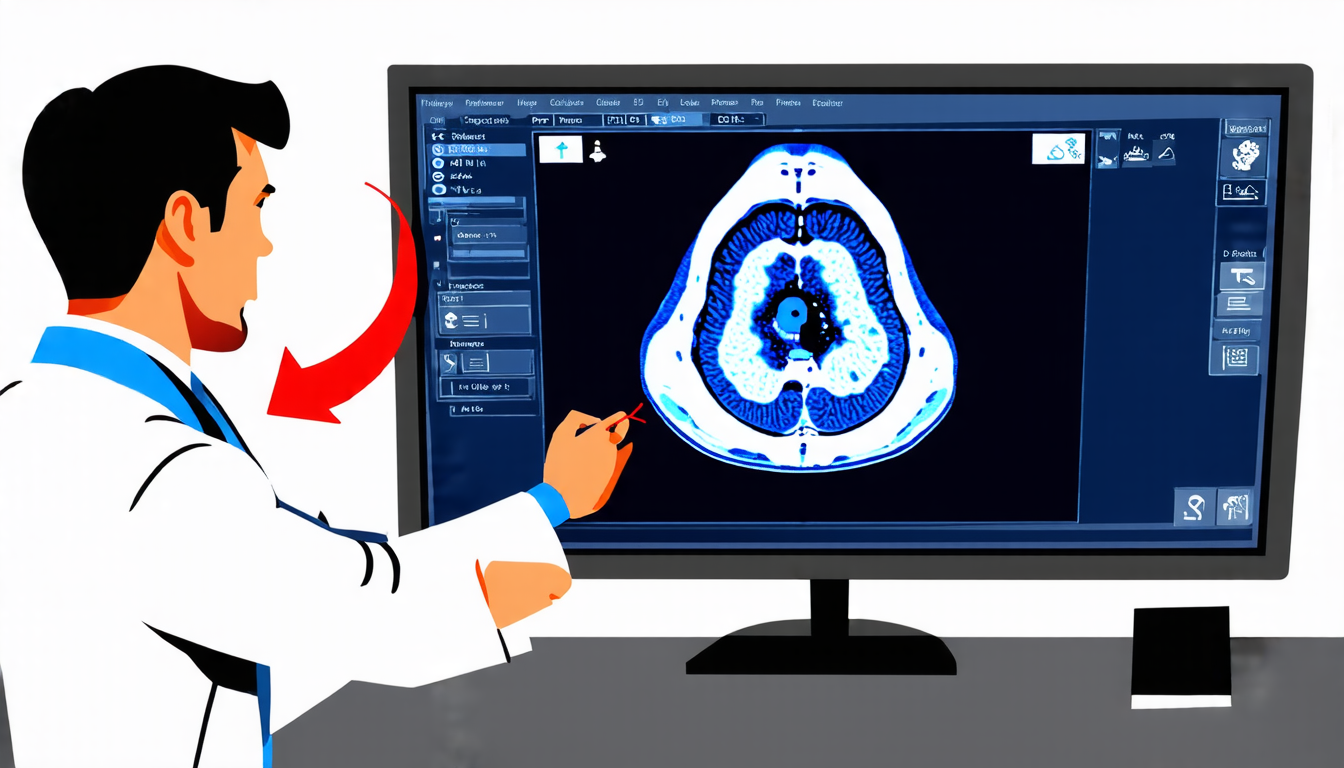
Deep learning has long been hailed as a panacea for medical imaging, and rightfully so. The ability to automate tasks like image segmentation can save doctors time, improve accuracy, and even help diagnose diseases earlier. But despite its many successes, deep learning still has its limitations. One of the biggest challenges is dealing with the variability in medical images – after all, no two patients are exactly alike.
Enter ScaleFusionNet, a new approach to medical image segmentation that’s been making waves in the research community. Developed by a team of researchers at Taif University in Saudi Arabia, this model uses a combination of cross-attention transformer modules and adaptive fusion blocks to tackle the complexities of medical imaging.
The key innovation here is the way ScaleFusionNet handles scale. Most deep learning models are designed to work on a fixed scale, which can be a problem when dealing with images that vary wildly in size and complexity. To address this, the researchers developed an adaptive fusion block that can adjust its output based on the input image’s characteristics.
This allows ScaleFusionNet to handle everything from small lesions to large tumors, all without sacrificing accuracy or speed. And it’s not just about scale – the model also incorporates a cross-attention transformer module that lets it focus on specific regions of interest within an image.
The results are impressive, with ScaleFusionNet achieving state-of-the-art performance on two major medical imaging datasets. The model was able to accurately segment skin lesions and tumors from CT scans and MRI images, even in cases where the boundaries were blurry or difficult to define.
But what really sets ScaleFusionNet apart is its ability to generalize well across different types of images. Most deep learning models are designed to work on a specific type of data – for example, a model trained on skin lesions might not perform well on tumors. But ScaleFusionNet can handle both with ease, making it an attractive option for hospitals and research institutions.
Of course, no medical imaging model is perfect, and ScaleFusionNet is no exception. The researchers acknowledge that the model still has some limitations – for example, it may struggle with images that are severely degraded or contain a lot of noise. But overall, ScaleFusionNet represents a major step forward in the field of medical image segmentation.
As the healthcare industry continues to grapple with the challenges of big data and artificial intelligence, models like ScaleFusionNet will be crucial for helping doctors make accurate diagnoses and develop effective treatments.
Cite this article: “Revolutionizing Skin Lesion Analysis with ScaleFusionNet: A Novel Approach to Medical Image Segmentation”, The Science Archive, 2025.
Medical Imaging, Deep Learning, Image Segmentation, Scalefusionnet, Medical Images, Variability, Adaptive Fusion Block, Cross-Attention Transformer Module, Scale, Artificial Intelligence





