

Sunday 06 April 2025
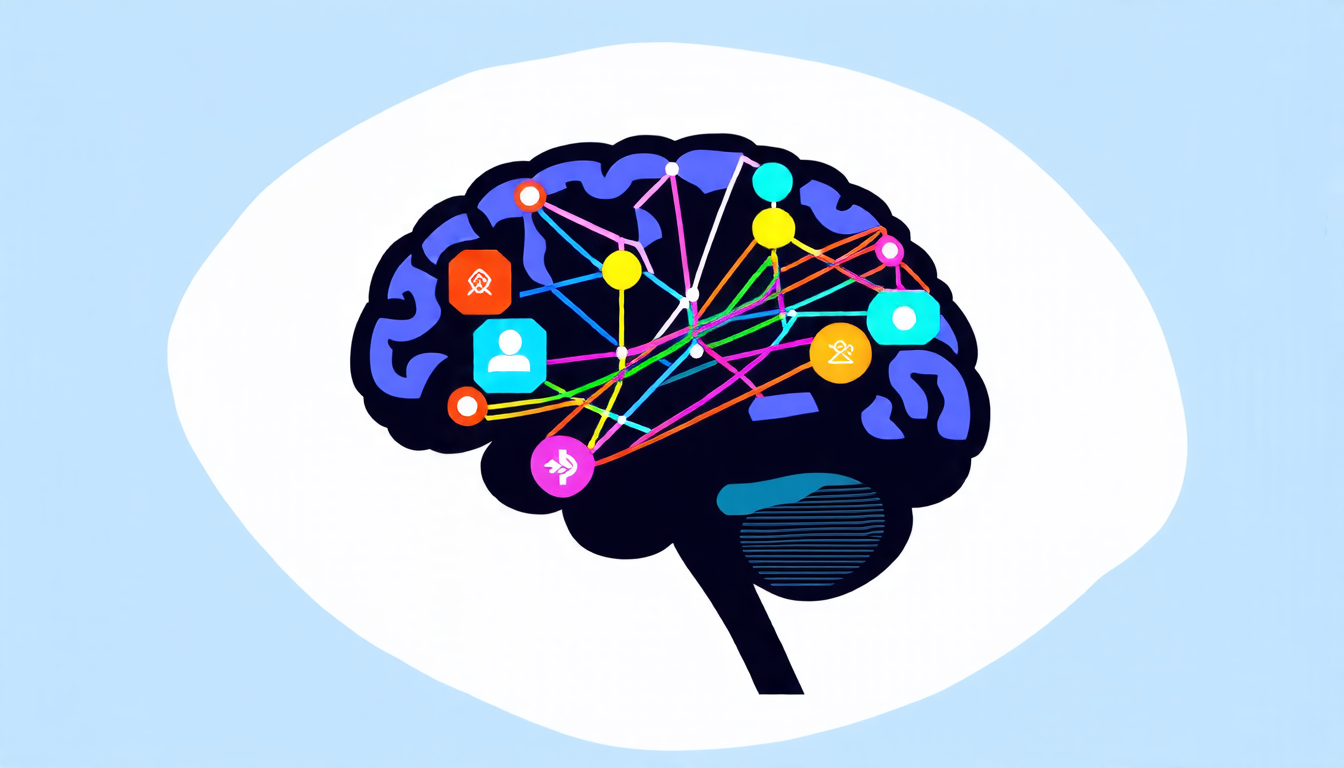
A team of researchers has made a significant breakthrough in understanding the human brain’s complex network of fibers, which play a crucial role in our thoughts, emotions, and behaviors. By developing a new method that integrates spatial and anatomical information, they have been able to create more accurate and detailed maps of these fibers.
The brain’s white matter is composed of millions of fibers, each with its own unique path and function. These fibers are responsible for transmitting signals between different parts of the brain, allowing us to think, move, and respond to our environment. However, mapping these fibers has long been a challenge due to their complex and branching nature.
Traditional methods of fiber tracking have relied on computer algorithms that analyze diffusion-weighted magnetic resonance imaging (MRI) scans. These scans measure the movement of water molecules in the brain, which is affected by the presence of fibers. While these methods have provided some insights into the brain’s connectivity, they are limited by their ability to accurately reconstruct the fibers’ paths.
The new method developed by the researchers uses a combination of convolutional neural networks (CNNs) and transformer-decoders to analyze diffusion-weighted MRI scans. The CNNs extract spatial features from the scans, while the transformer-decoders use attention mechanisms to capture long-range relationships between different parts of the brain.
The team tested their method on simulated and real-world data, including a dataset of 25 bundles from the ISMRM 2015 Tractography Challenge. They found that their method was able to accurately reconstruct the fibers’ paths in both simulated and real-world scenarios, outperforming traditional methods in terms of accuracy and precision.
The implications of this breakthrough are significant for our understanding of the human brain. By creating more accurate maps of the brain’s fibers, researchers can better understand how different parts of the brain communicate with each other, which could lead to new insights into neurological disorders such as Alzheimer’s disease and Parkinson’s disease.
Moreover, this technology has potential applications in fields beyond neuroscience, such as computer vision and robotics. The ability to accurately track complex patterns in images and data could revolutionize our understanding of many natural phenomena and artificial systems.
The development of this method is a testament to the power of collaboration between researchers from different disciplines. By combining expertise in computer science, engineering, and medicine, the team was able to create a tool that has far-reaching potential for advancing our knowledge of the human brain and beyond.
Cite this article: “Revolutionizing White Matter Mapping: A Deep Learning-Based Framework for Tractography”, The Science Archive, 2025.
Brain, Fibers, Mri, Neural Networks, Transformer-Decoders, Attention Mechanisms, Convolutional Neural Networks, Diffusion-Weighted Imaging, Tractography Challenge, White Matter





