

Sunday 06 April 2025
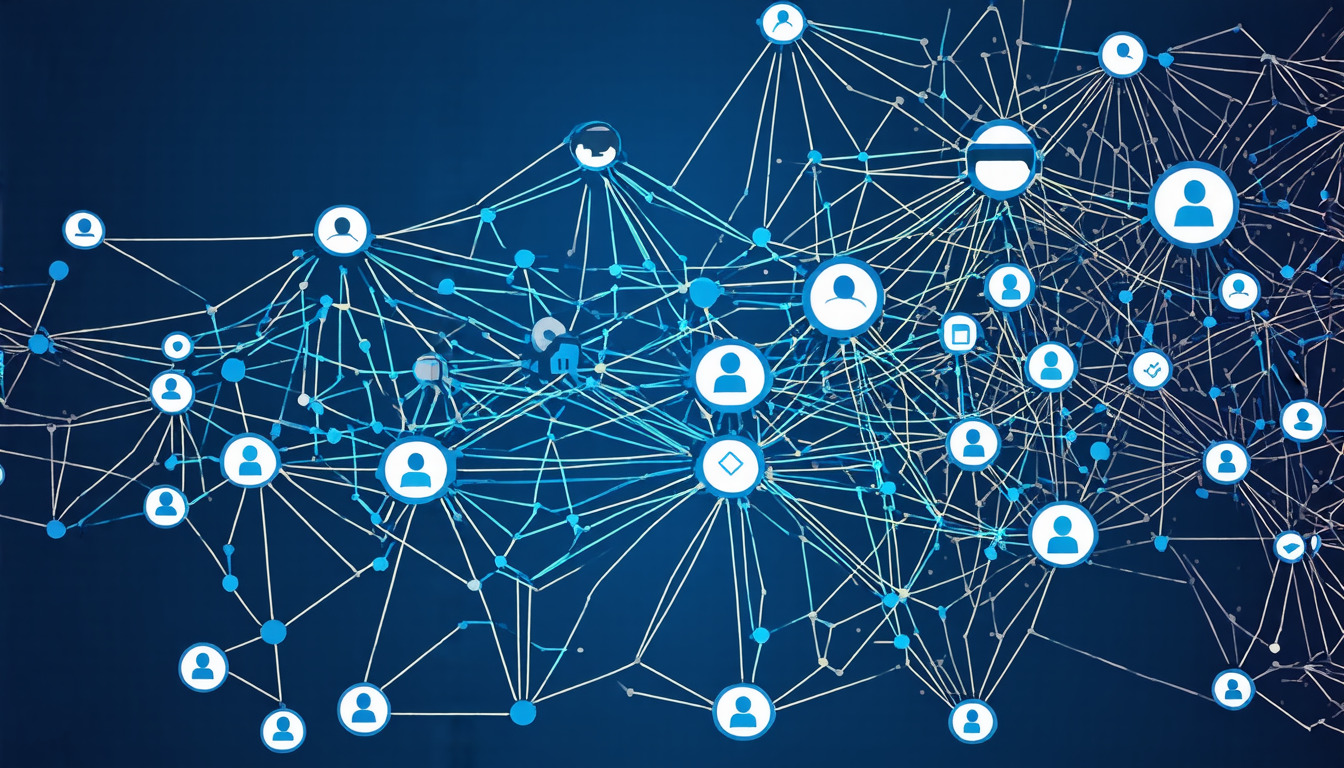
A team of researchers has made significant strides in developing a new approach to predicting links between nodes on complex networks, such as social media platforms and biological systems. The innovation, called LEAP (Learnable Edge Augmentation for Predicting), uses machine learning techniques to learn the structure of the network and make more accurate predictions about future connections.
The problem with current link prediction methods is that they often rely too heavily on node attributes, such as user profiles or gene sequences, rather than the relationships between nodes themselves. This can lead to poor performance when dealing with networks where node attributes are limited or noisy. LEAP addresses this issue by incorporating learnable edge weights into its architecture, allowing it to capture subtle patterns in the network’s structure.
The researchers tested LEAP on a range of datasets, including social media platforms and biological systems. They found that it outperformed existing methods in both transductive and inductive settings, where new nodes are added to the network or entire networks are merged. This is particularly significant for applications like recommendation systems, where accurate predictions can have a major impact on user experience.
One of the key advantages of LEAP is its ability to learn from incomplete or noisy data. In many real-world scenarios, link prediction must be performed on networks with missing or erroneous information. LEAP’s learnable edge weights allow it to adapt to these situations and make more accurate predictions despite the noise.
The researchers also experimented with different anchor selection strategies, finding that choosing nodes based on their degree centrality (i.e., how many edges they are connected to) resulted in the best performance. This makes sense, as highly connected nodes are likely to be hubs in the network and therefore provide valuable information about its structure.
In addition to its technical innovations, LEAP has significant implications for a wide range of fields. In social media, it could improve recommendation systems by better understanding how users interact with each other. In biology, it could help identify key players in complex networks like protein-protein interactions or gene regulatory networks. And in many other domains, it could provide insights into the structure and behavior of complex systems.
Overall, LEAP represents a major step forward in link prediction research, offering a more robust and adaptable approach to understanding complex networks. Its potential applications are vast, and its impact on our understanding of these systems could be profound.
Cite this article: “LEAP-ing Forward: Inductive Link Prediction on Heterogeneous Graphs using Learnable Edge Weights”, The Science Archive, 2025.
Machine Learning, Link Prediction, Complex Networks, Social Media, Biology, Protein-Protein Interactions, Gene Regulatory Networks, Recommendation Systems, Node Attributes, Edge Weights.





