

Sunday 06 April 2025
Scientists have made a significant breakthrough in the field of robotics, developing a new method for tiny lidars to accurately localize objects in their surroundings. These miniaturized sensors, known as Time-of-Flight (ToF) sensors, are revolutionizing the way robots interact with their environment.
The traditional approach to localization relies on high-resolution lidars that provide detailed 3D maps of the space. However, these systems are often bulky and expensive, making them impractical for many applications. The new method developed by researchers uses coarse point clouds obtained from miniaturized ToF sensors to localize objects with remarkable accuracy.
The team used a Particle Filter (PF) algorithm to approximate the belief of an object’s pose in the robot’s workspace. They characterized the dependency of sensor readings on relative range and orientation to targets, which is crucial for accurate localization. The results show that the proposed method outperforms two baselines: one that assumes measurements are free from uncertainty and another that uses the confidence provided by the sensor datasheet.
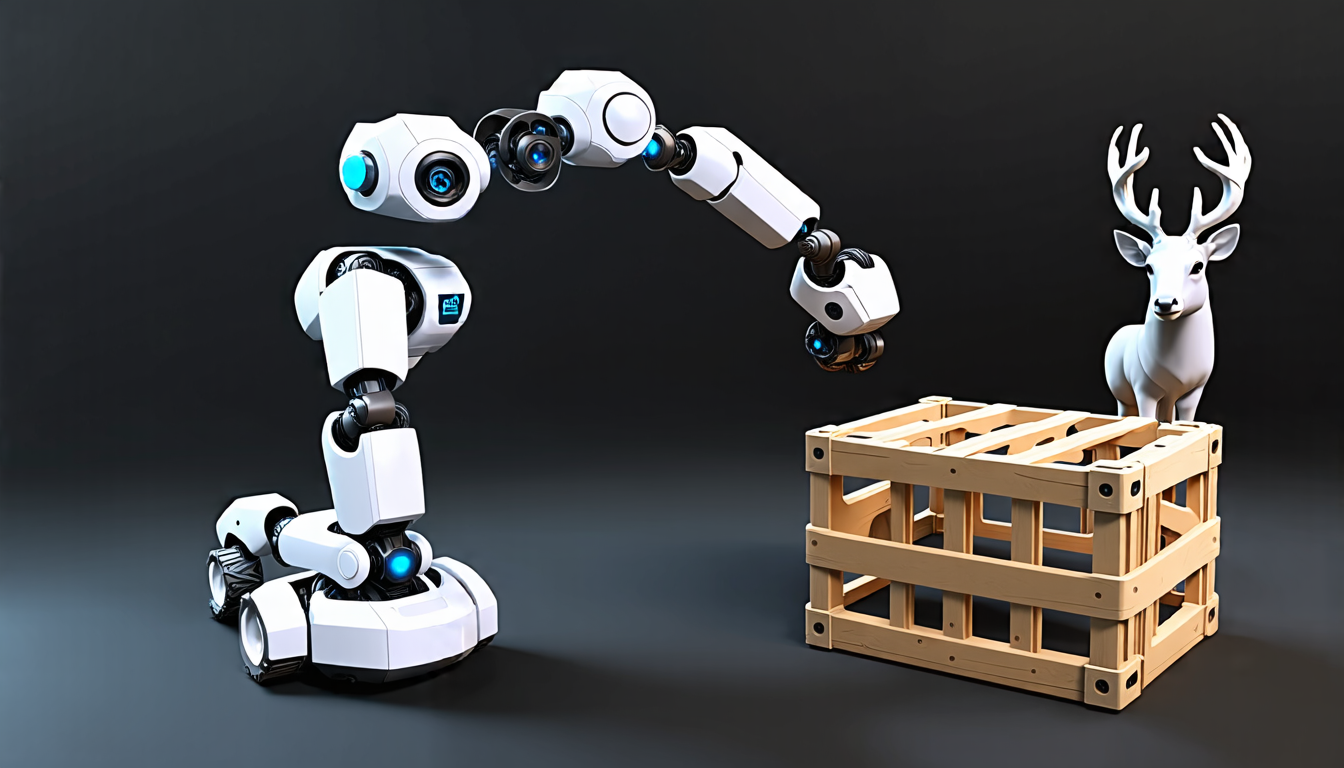
The researchers tested their approach using a robot manipulator with four ToF sensors embedded in its body. They localized a crate and a deer statue, both of which presented different challenges for the sensors. The results demonstrate that a single ToF sensor is sufficient to achieve accurate localization, even in complex environments.
This breakthrough has significant implications for robotics and automation. Miniaturized ToF sensors can be easily integrated into robots, allowing them to operate in a wider range of scenarios. This technology could enable robots to perform tasks such as object manipulation, inspection, and navigation with greater precision and flexibility.
The researchers’ approach is also scalable, meaning it can be applied to various applications beyond robotics. For instance, ToF sensors could be used in self-driving cars to detect obstacles and pedestrians, or in medical devices to track patients’ movements.
In the future, scientists will focus on refining their method to account for additional sources of error, such as multipath interference and light scattering. They also plan to explore new applications for this technology, including human-robot interaction and robotic skin for collision avoidance.
The development of miniaturized ToF sensors with accurate localization capabilities has the potential to revolutionize many fields. As researchers continue to push the boundaries of what is possible, we can expect to see robots that are more agile, more precise, and more capable than ever before.
Cite this article: “Tiny Lidars Take Giant Leap in Robot Localization”, The Science Archive, 2025.
Robotics, Lidar, Localization, Time-Of-Flight Sensors, Particle Filter Algorithm, Object Pose Estimation, Robot Manipulation, Automation, Miniaturization, Robotics Engineering





