

Sunday 06 April 2025
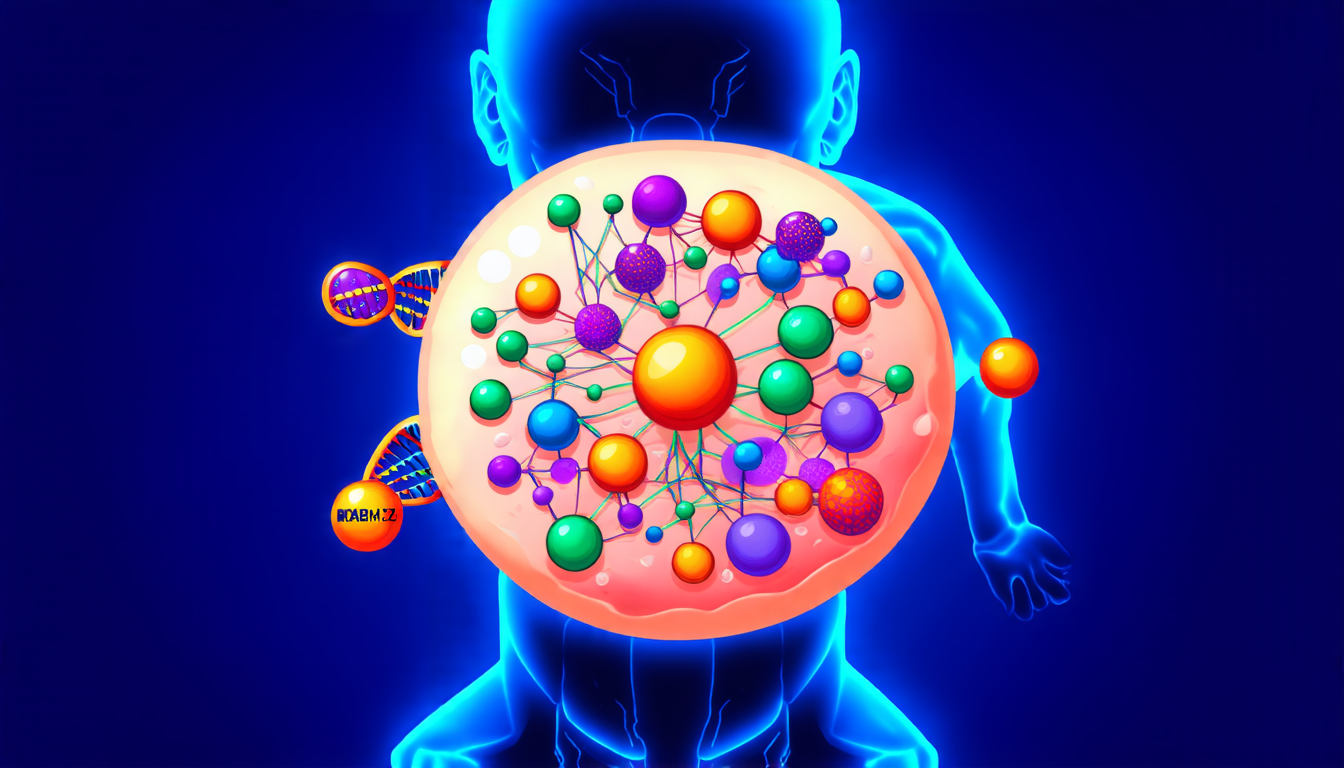
A team of researchers has developed a new approach to understanding single-cell biology, which could revolutionize our ability to diagnose and treat diseases. The breakthrough comes in the form of a family of large-scale foundation models called TEDDY, designed to learn from vast amounts of genomic data.
The problem that TEDDY aims to solve is that traditional approaches to analyzing single-cell biology are limited by their reliance on small datasets and manual feature engineering. In contrast, TEDDY uses a type of artificial intelligence known as a transformer-based model to learn patterns in the data itself. This allows it to identify subtle relationships between genes and cell types that would be difficult or impossible for humans to spot.
The key innovation behind TEDDY is its ability to scale up its training data to unprecedented sizes. The researchers used a dataset containing over 116 million cells, which they pre-trained on using a combination of biological annotations and mathematical techniques. This allowed them to create a model that can accurately predict the behavior of genes in different cell types, even when those genes have never been seen before.
One of the most exciting potential applications of TEDDY is in disease diagnosis. By analyzing the gene expression patterns of single cells, doctors could potentially identify biomarkers for diseases like cancer or Alzheimer’s, allowing them to diagnose patients more quickly and accurately. The researchers have already tested TEDDY on a range of diseases, including chronic kidney disease, gastric cancer, and rheumatoid arthritis.
Another advantage of TEDDY is its ability to learn from multiple species at once. This means that it could potentially be used to identify common patterns in gene expression across different organisms, which could lead to new insights into the evolution of life on Earth. The researchers have already trained TEDDY on data from both humans and mice, and are planning to expand their dataset to include other species.
Despite its impressive capabilities, TEDDY is still a relatively early-stage technology. The researchers acknowledge that there is much work left to be done before it can be used in clinical settings. However, the potential benefits of this approach are so great that it’s likely to be an area of intense research and development in the years to come.
In practice, TEDDY could be used as a tool for data analysis, allowing researchers to quickly identify patterns and relationships in large datasets. It could also be used to generate hypotheses about gene function and regulation, which could then be tested experimentally.
Cite this article: “Foundation Models for Single-Cell Biology: A New Era in Understanding Cellular Regulation”, The Science Archive, 2025.
Single-Cell Biology, Artificial Intelligence, Transformer-Based Model, Genomic Data, Disease Diagnosis, Gene Expression Patterns, Biomarkers, Chronic Kidney Disease, Gastric Cancer, Rheumatoid Arthritis





