

Sunday 06 April 2025
Automated driving systems are designed to make our roads safer, but they also present a new set of challenges. One of these is the risk of drivers misusing them, leading to hazardous situations. Researchers have been working on ways to mitigate this problem, and their latest approach involves using simulation-based testing to identify potential misuse scenarios.
The issue at hand is known as Foreseeable Misuse (FM), which occurs when a driver intentionally or unintentionally uses an automated driving system in a way that was not intended by the manufacturer. This can happen when a driver does not fully understand how the system works, or when they engage in behaviors that are not consistent with the system’s capabilities.
To tackle this problem, researchers used a technique called Conditional Probability Analysis (CPA) to identify the relationships between factors and causes of FM within automated driving systems. They focused on two key elements: Misjudgment (MJ), which occurs when a driver makes an erroneous decision during the takeover process; and False Recognition (FR), which happens when a driver fails to promptly recognize the necessity of taking control of the vehicle.
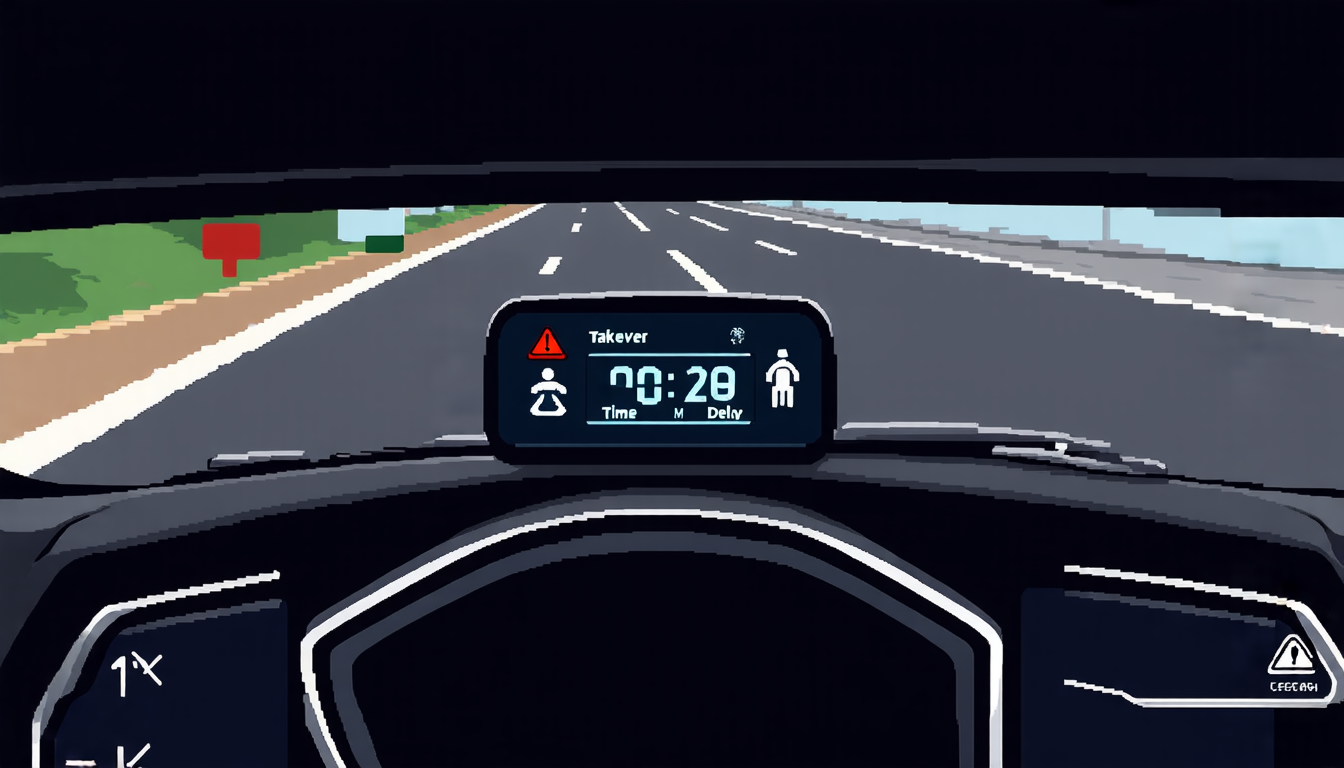
The researchers used simulation-based testing to evaluate the effectiveness of measures aimed at preventing or mitigating FM. They created 50 test cases, each with different parameters such as takeover time, hazard presence, and steering wheel angle. The results showed that the probability of MJ significantly reduced when the takeover time was delayed, particularly in the presence of a hazard.
However, the researchers found that the probability of FR remained high even when the takeover time was delayed. This suggests that drivers may still be prone to false recognition situations, leading to hazardous behavior.
The study’s findings have important implications for the development and testing of automated driving systems. By identifying potential misuse scenarios using simulation-based testing, manufacturers can design their systems with safety in mind. Additionally, the results highlight the need for further research into driver behavior and cognitive processes during takeover events.
One area that requires further investigation is the impact of threshold values on takeover time. The researchers found that changes to this value significantly affected the probability of MJ and FR. This suggests that manufacturers should carefully consider the optimal threshold value for their systems to ensure safe and reliable operation.
The study’s authors also emphasized the importance of real-world testing to validate simulation-based results. As automated driving systems become increasingly prevalent, it is essential to understand how they behave in actual driving scenarios. By combining simulation-based testing with real-world data, manufacturers can create more effective and safer systems for drivers.
Cite this article: “Mitigating Foreseeable Misuse in Automated Driving Systems: A Conditional Probability Analysis”, The Science Archive, 2025.
Automated Driving, Simulation-Based Testing, Foreseeable Misuse, Conditional Probability Analysis, Takeover Time, Hazard Presence, Steering Wheel Angle, False Recognition, Driver Behavior, Cognitive Processes.





