

Sunday 06 April 2025
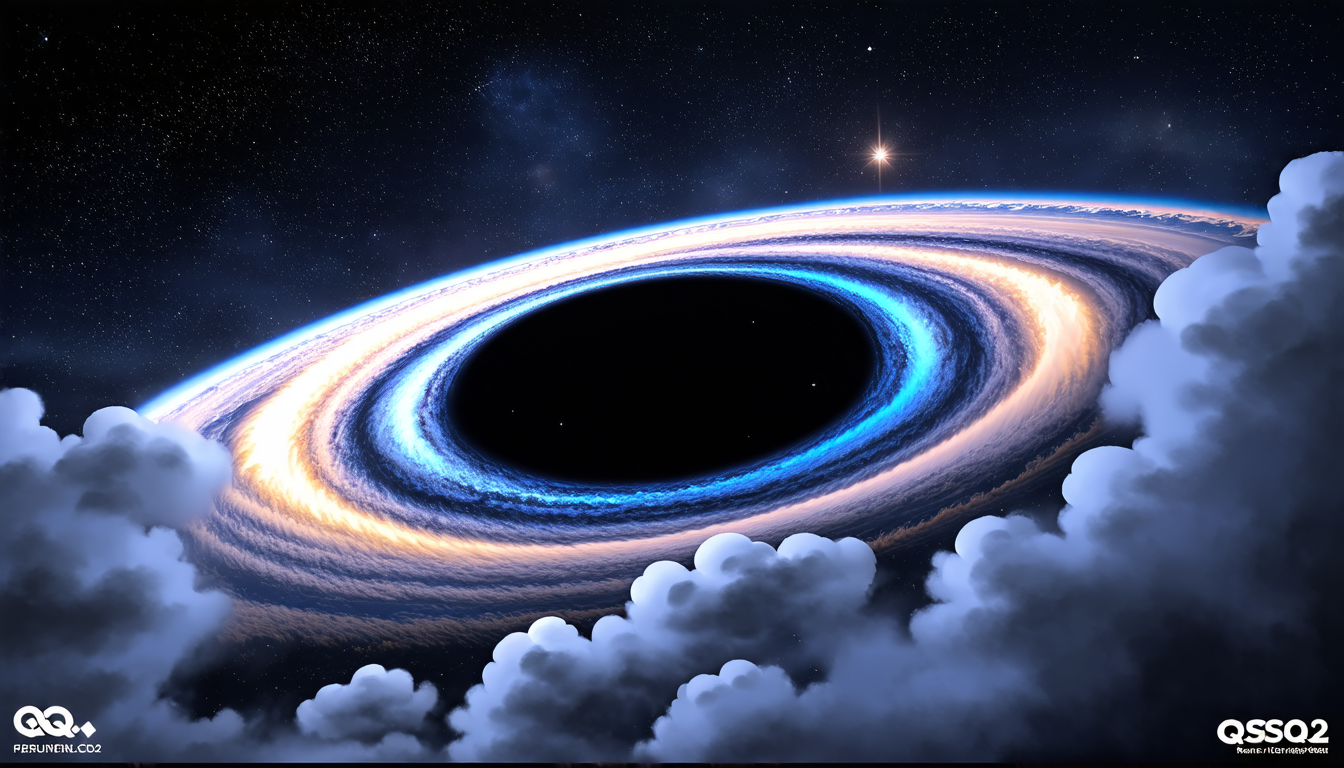
A new study has shed light on a mysterious class of galaxies that were previously thought to be rare and elusive. Type II quasars, or QSO2s, are galaxies that host supermassive black holes at their centers, but unlike typical quasars, they are shrouded in dust and gas. This makes them difficult to detect and study.
Researchers have long been fascinated by these enigmatic objects, as they offer a unique window into the early universe. By studying QSO2s, scientists can gain insights into the formation and evolution of galaxies over billions of years.
The latest research on QSO2s has focused on identifying their physical properties, such as star-formation rates, stellar masses, and black hole activity. The study used a combination of observations from space-based telescopes like the Sloan Digital Sky Survey (SDSS) and the Wide-field Infrared Survey Explorer (WISE), along with sophisticated computer models.
The results show that QSO2s are not just rare curiosities, but rather an important part of the galaxy population. The study found that these galaxies are more common than previously thought, making up about 10% of all galaxies at intermediate redshifts.
One of the most striking findings is that QSO2s are often found in regions where star formation is actively occurring. This suggests that supermassive black holes may play a role in regulating the growth and development of galaxies.
The study also revealed that QSO2s are more massive than typical quasars, with stellar masses ranging from tens to hundreds of billions of solar masses. This implies that these galaxies have undergone significant mergers or interactions, leading to the buildup of mass over time.
Another key finding is that QSO2s are characterized by a high level of dust extinction, which blocks our view of their central black holes. This means that traditional methods for detecting quasars, such as looking for bright optical emission, may not be effective for these objects.
Instead, researchers relied on the detection of mid-infrared radiation, which is less affected by dust extinction. This allowed them to identify QSO2s and study their properties in detail.
The discovery of QSO2s has significant implications for our understanding of galaxy evolution. It suggests that supermassive black holes may have played a more important role in shaping the universe than previously thought.
Cite this article: “Unlocking the Secrets of Obscured Quasars: A Study of Type II Quasar Candidates at Intermediate Redshifts”, The Science Archive, 2025.
Galaxies, Quasars, Supermassive Black Holes, Dust Extinction, Star Formation, Galaxy Evolution, Redshifts, Stellar Masses, Mergers, Mid-Infrared Radiation





