

Sunday 06 April 2025
As we continue to rely more heavily on technology in our daily lives, it’s becoming increasingly clear that traditional data centers are no longer a sustainable solution for our computing needs. These massive facilities consume enormous amounts of energy and contribute significantly to greenhouse gas emissions.
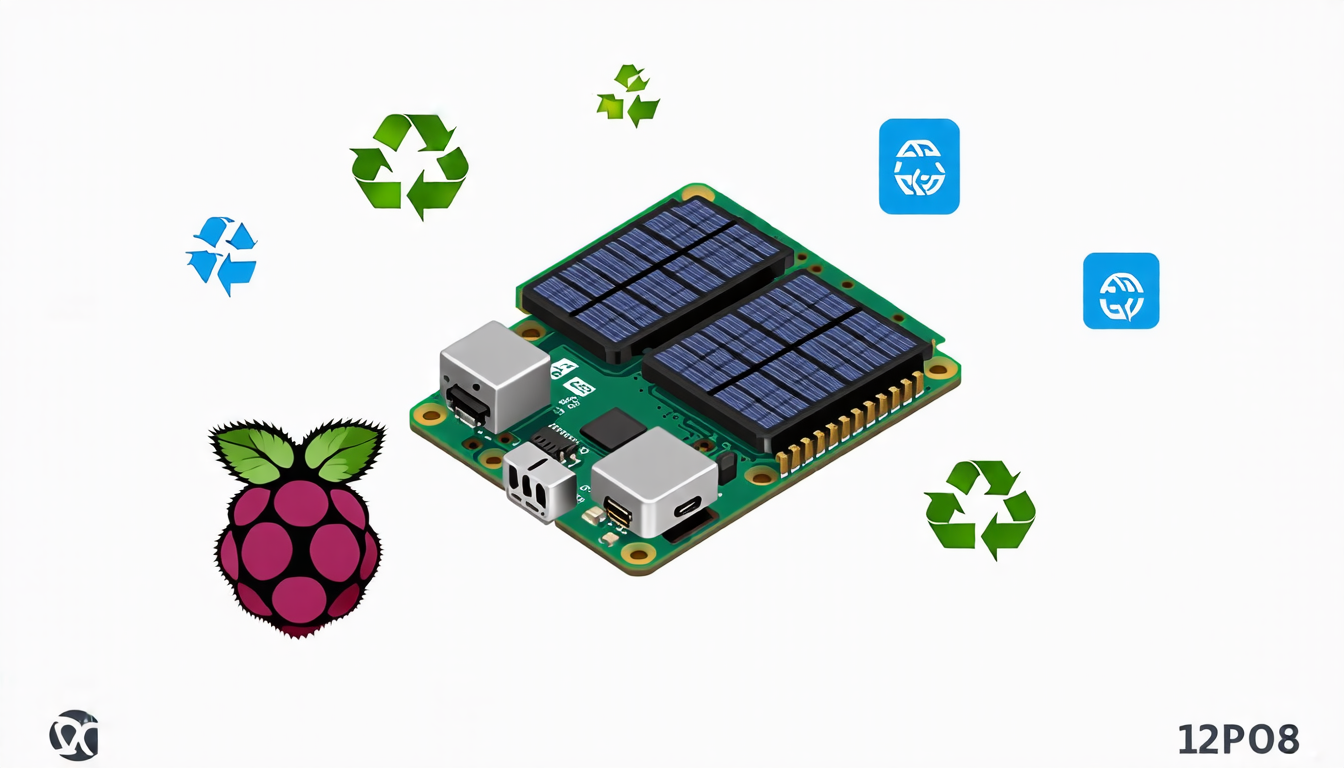
But what if there was a way to decentralize our data processing, using low-cost, energy-efficient devices powered by renewable energy? That’s the idea behind a new study that explores the use of Raspberry Pi clusters running on solar power.
The researchers designed a cluster of five Raspberry Pi devices, each with its own solar panel and battery pack. They then used open-source software to create a distributed computing system that could handle tasks such as web hosting, email services, and e-commerce platforms.
One of the key advantages of this approach is its energy efficiency. The Raspberry Pi devices are designed to consume very little power, making them ideal for use in off-grid locations or areas with limited access to traditional energy sources.
But what about performance? According to the study, the cluster was able to handle a variety of tasks with ease, including running web servers and processing large amounts of data. The researchers also found that the system’s autonomy was impressive, with the battery pack able to sustain operation for several days on a single charge.
So how does this technology work? Essentially, it’s a matter of connecting multiple Raspberry Pi devices together using a special type of software called Kubernetes. This allows each device to work together as a single unit, sharing resources and processing tasks in parallel.
The implications of this research are significant. Decentralized computing systems like this one could revolutionize the way we approach data processing, allowing us to reduce our reliance on traditional energy sources and create more sustainable computing solutions.
One potential application is in rural areas or developing countries where access to traditional energy sources may be limited. By using renewable energy sources like solar power, these communities could have access to reliable and affordable computing services.
Another area of interest is in the field of artificial intelligence. As AI systems become increasingly complex and demanding on resources, decentralized computing systems like this one could provide a new way to scale up processing power while reducing energy consumption.
Overall, this research demonstrates that it’s possible to create sustainable, energy-efficient computing solutions using low-cost devices and renewable energy sources. As we continue to rely more heavily on technology in our daily lives, it’s essential that we find ways to make it more environmentally friendly – and this study is a promising step in the right direction.
Cite this article: “Solar-Powered Raspberry Pi Clusters: A Sustainable Solution for Decentralized Computing?”, The Science Archive, 2025.
Raspberry Pi, Solar Power, Decentralized Computing, Energy Efficiency, Renewable Energy, Kubernetes, Artificial Intelligence, Sustainable Computing, Data Processing, Green Technology





