

Sunday 06 April 2025
For people who need a little extra help getting around, exoskeletons can be game-changers. These wearable robots can assist with walking, running, and even climbing stairs, giving individuals with mobility issues or injuries a newfound sense of freedom.
But developing an effective exoskeleton is no easy feat. It requires careful consideration of the wearer’s movements, terrain, and personal preferences to ensure that the device provides the right amount of support without compromising their natural gait.
A recent study published in a scientific journal has made significant progress in this area by designing an adaptive exoskeleton control strategy that can adjust its assistance based on the user’s individual movements. This approach allows the exoskeleton to seamlessly synchronize with the wearer’s actions, reducing the energy expenditure and improving overall mobility.
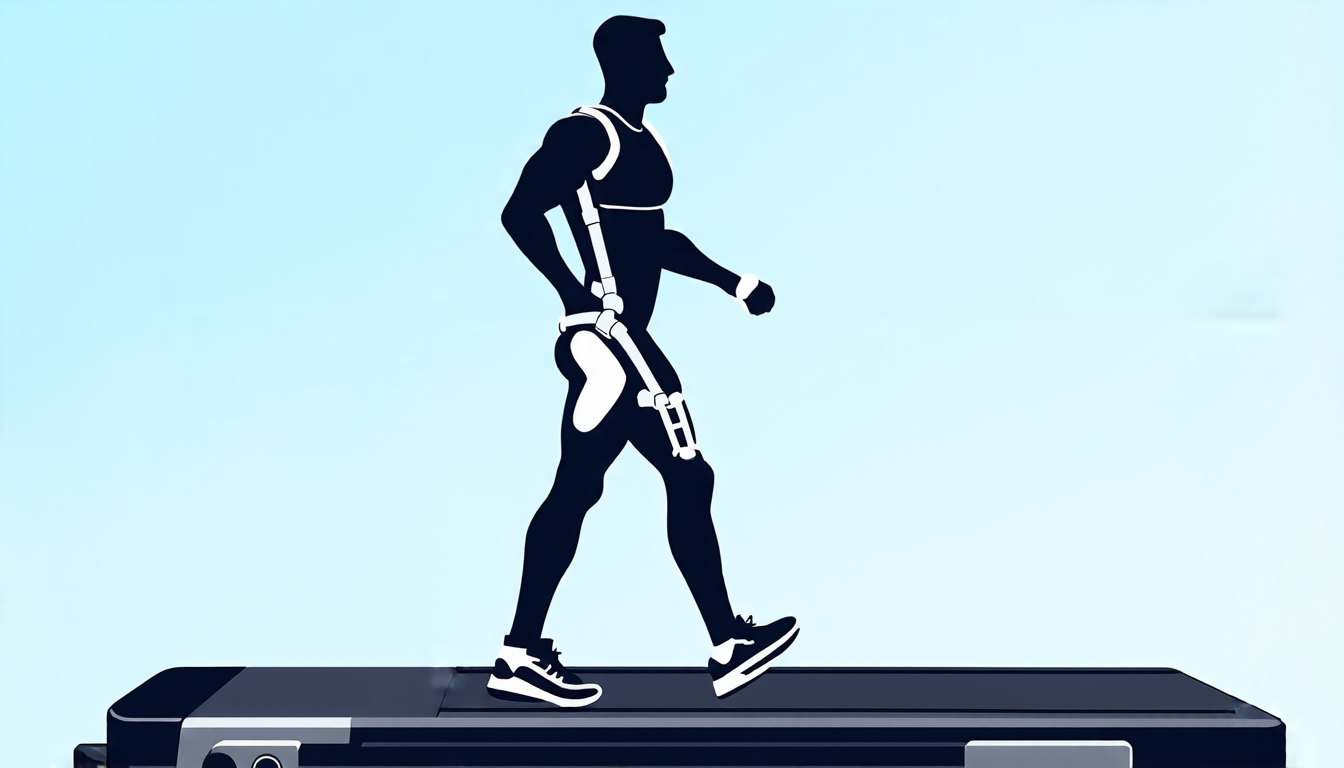
The researchers behind this innovation used a hip exoskeleton as their test subject. They developed a control algorithm that analyzed the wearer’s kinematics – in other words, how they move – to determine when and how much assistance was needed. This adaptive approach allowed the exoskeleton to adjust its resistance and support in real-time, ensuring that it was always providing the optimal amount of help.
But what makes this system truly impressive is its ability to adapt to different environments and walking styles. The researchers tested their exoskeleton on a treadmill, as well as on uneven terrain such as stairs, and found that it performed consistently well across all conditions.
The benefits of this adaptive control strategy are numerous. For one, it reduces the wearer’s energy expenditure, making it easier for them to walk or run without getting tired quickly. It also helps to preserve their natural gait patterns, which is important for maintaining balance and preventing falls.
Furthermore, this technology has the potential to be scaled up for use in a variety of applications, from rehabilitation centers to military training exercises. The researchers are already exploring ways to integrate their algorithm into other types of exoskeletons, such as those designed for the arms or legs.
While there’s still much work to be done before these devices become widely available, this study represents an important step forward in the development of adaptive exoskeleton control strategies. As wearable robots continue to advance, we can expect to see even more innovative applications emerge, transforming the lives of people around the world.
Cite this article: “Unlocking Efficient Gait: Adaptive Exoskeleton Control Strategies for Reduced Energy Consumption”, The Science Archive, 2025.
Exoskeletons, Mobility Issues, Wearable Robots, Adaptive Control Strategy, Kinematics, Energy Expenditure, Natural Gait Patterns, Rehabilitation Centers, Military Training Exercises, Prosthetics





