

Sunday 06 April 2025
Scientists have long been fascinated by the behavior of granular materials, like sand or coffee grounds, which can behave in unexpected ways when subjected to different forces and pressures. Recently, a team of researchers has made significant strides in understanding how these materials respond to stress, shedding light on the intricate networks of force chains that govern their behavior.
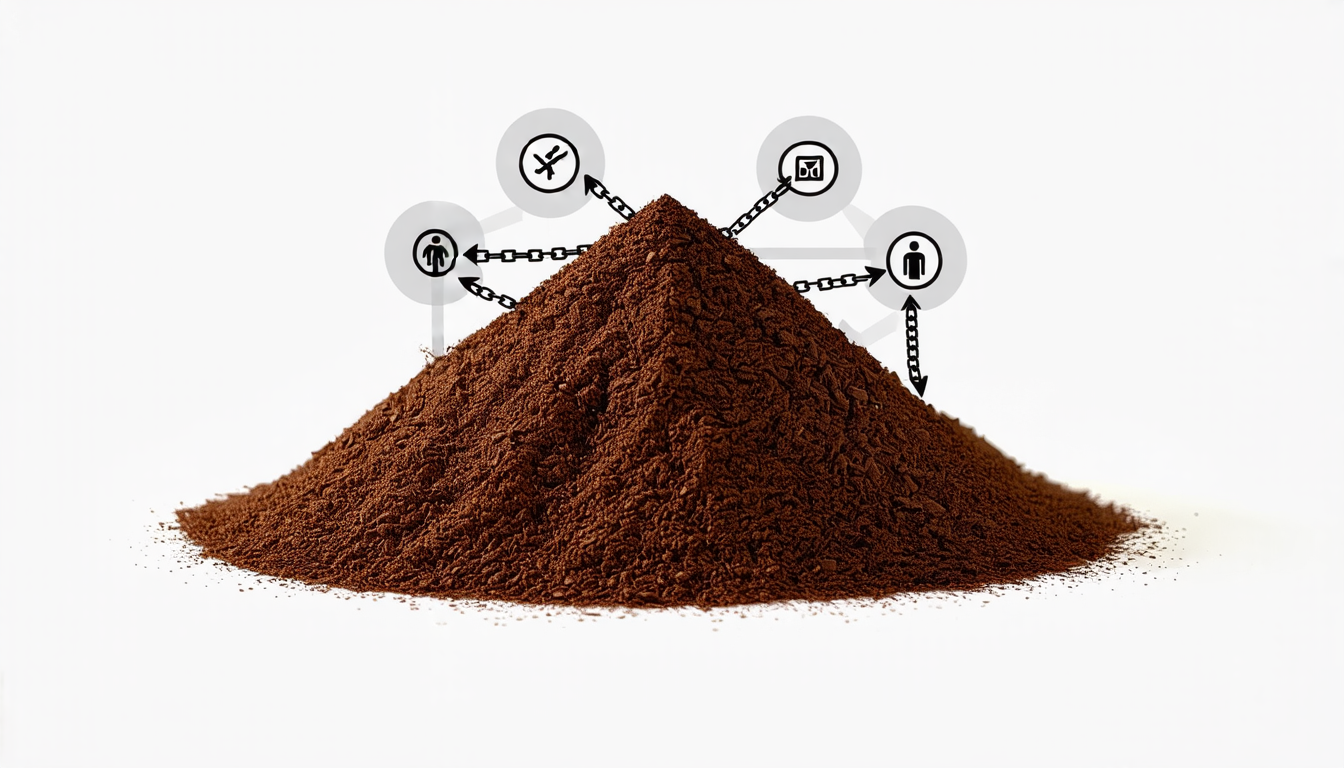
Granular materials are unique because they consist of individual particles that interact with each other in complex ways. When subjected to external forces, like compression or shear, these particles begin to form intricate networks of force chains, which can be thought of as pathways of stress transmission throughout the material. These chains play a crucial role in determining how the material will respond to further stress, and understanding their behavior is essential for predicting the material’s properties.
In their study, researchers used advanced computational methods to simulate the behavior of granular materials under different conditions. By analyzing the simulations, they were able to identify two distinct types of disorder that can occur within the material: size disorder and positional disorder. Size disorder refers to variations in the size of individual particles, while positional disorder occurs when these particles are arranged in an irregular pattern.
The researchers found that as the degree of size disorder increased, the force chains became more uniform and continuous, allowing the material to transmit stress more efficiently. However, beyond a certain threshold, the material began to exhibit signs of fragmentation, where the force chains broke down into smaller, disconnected clusters. This transition from ordered to disordered behavior was found to be critical in determining the material’s mechanical properties.
In contrast, positional disorder had a more dramatic impact on the material’s behavior. As the degree of positional disorder increased, the force chains became increasingly fragmented and disconnected, leading to a significant reduction in the material’s ability to transmit stress. This finding has important implications for understanding the role of particle arrangement in determining the mechanical properties of granular materials.
The study also explored the impact of cohesion on the behavior of granular materials. Cohesion refers to the attractive forces between particles that can occur due to chemical or physical interactions. The researchers found that as the degree of cohesion increased, the force chains became less prominent and more diffuse, leading to a reduction in the material’s ability to transmit stress.
These findings have important implications for understanding the behavior of granular materials in a wide range of applications, from construction and engineering to environmental science and geology.
Cite this article: “Unlocking the Secrets of Force Chains: A Study on Granular Materials Under Uniaxial Compression”, The Science Archive, 2025.
Granular Materials, Force Chains, Stress Transmission, Particle Interactions, Computational Simulations, Disorder, Size Disorder, Positional Disorder, Cohesion, Mechanical Properties.





