

Sunday 06 April 2025
In a recent breakthrough, mathematicians have made significant strides in understanding the behavior of complex systems driven by random fluctuations. The research, published in a leading scientific journal, has far-reaching implications for fields such as finance, physics, and biology.
The study focuses on stochastic differential equations (SDEs), which describe how systems change over time in response to random forces. SDEs are used to model everything from stock prices to the movement of molecules in a gas. However, these equations can be notoriously difficult to solve, especially when the random forces are highly correlated and exhibit long-range dependence.
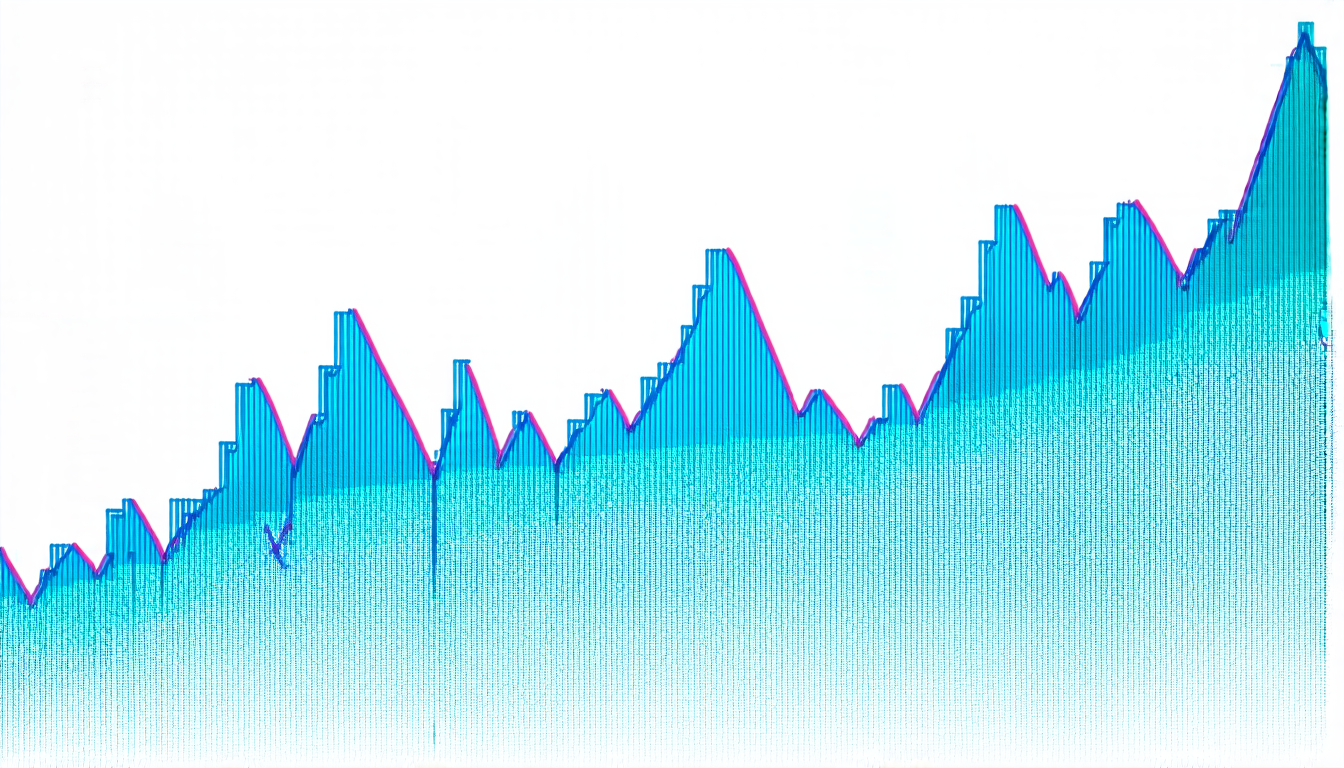
The researchers tackled this challenge by developing new mathematical techniques that allow them to analyze SDEs driven by fractional Brownian motion (fBm). fBm is a type of noise that is characterized by its ability to generate power-law distributions in time, which means that the magnitude of the fluctuations increases with the duration over which they are observed.
The team’s approach involves using a combination of probabilistic and analytic techniques to study the behavior of SDEs driven by fBm. They were able to show that these equations have a unique solution, known as a strong solution, which is characterized by its ability to converge to a stable limit over time.
This breakthrough has significant implications for fields such as finance, where SDEs are used to model the behavior of stock prices and other financial instruments. By developing new techniques for analyzing SDEs driven by fBm, researchers can gain a better understanding of how these systems behave in response to random fluctuations.
The study also has important implications for physics and biology, where SDEs are used to model the behavior of complex systems such as the movement of particles in a fluid or the spread of disease through a population. By developing new mathematical techniques for analyzing SDEs driven by fBm, researchers can gain a better understanding of how these systems behave in response to random fluctuations.
In addition, the study has potential applications in fields such as engineering and computer science, where SDEs are used to model the behavior of complex systems such as networks and algorithms. By developing new techniques for analyzing SDEs driven by fBm, researchers can gain a better understanding of how these systems behave in response to random fluctuations.
Overall, this breakthrough has significant implications for fields that rely on stochastic differential equations to model complex systems.
Cite this article: “Unlocking the Secrets of Fractal Noise: A Breakthrough in Understanding Complex Systems”, The Science Archive, 2025.
Stochastic Differential Equations, Fractional Brownian Motion, Random Fluctuations, Mathematical Techniques, Probabilistic Analysis, Analytic Solutions, Strong Solution, Power-Law Distributions, Financial Modeling, Complex Systems





