
Sunday 06 April 2025
A team of researchers has developed a new method for analyzing complex functional data, which could have significant implications for fields such as medicine and neuroscience. Functional data refers to data that is collected over time or space, such as brain activity patterns or stock prices.
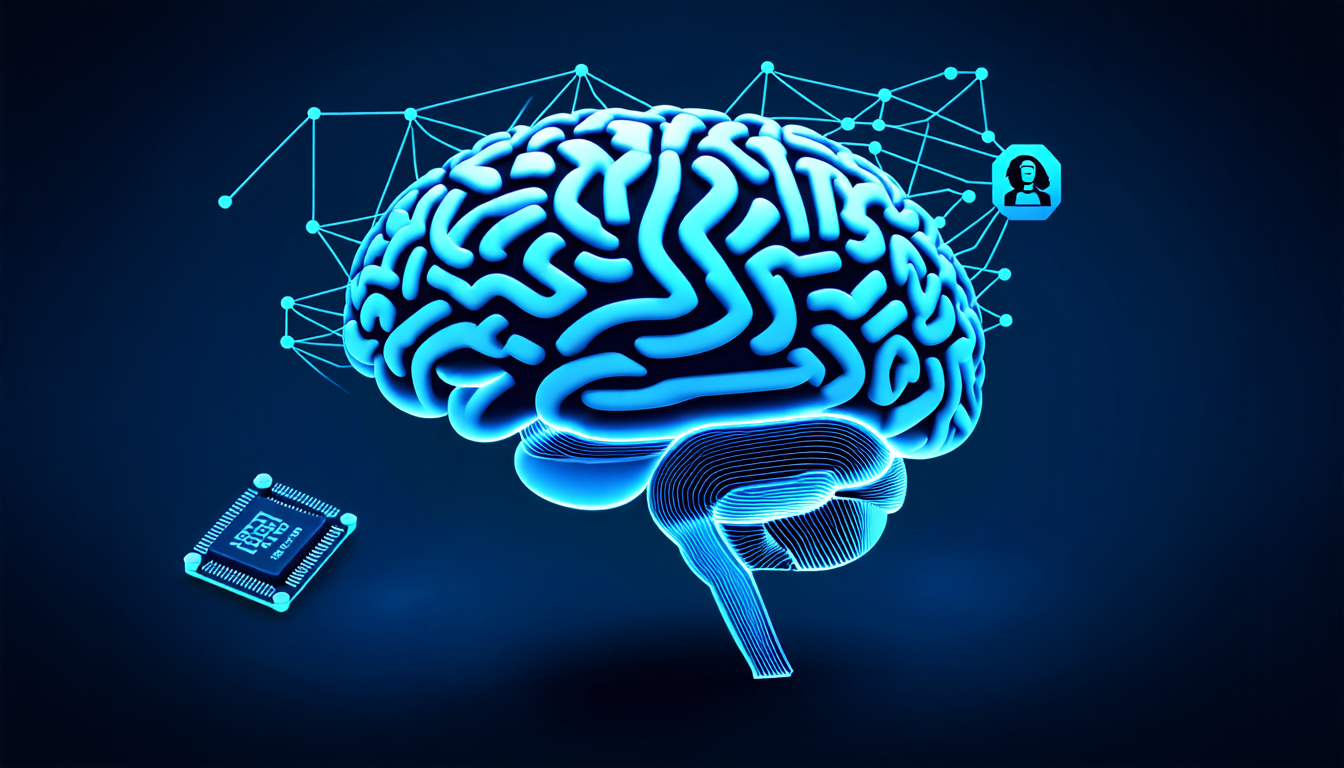
The new method, called the functional BIC deep neural network (fb-DNN), uses a type of artificial intelligence called a neural network to analyze large amounts of complex data. Neural networks are designed to mimic the way the human brain works, by processing information in layers and making connections between different pieces of data.
The fb-DNN is particularly useful for analyzing functional data because it can handle large amounts of data that are collected over time or space. This is important because many real-world problems involve complex patterns that cannot be easily identified using traditional statistical methods.
One of the key features of the fb-DNN is its ability to perform feature selection, which means that it can identify the most important pieces of data in a large dataset and ignore the rest. This is useful because it allows researchers to focus on the most relevant information and reduce the complexity of their analysis.
The fb-DNN was tested using a dataset from the Alzheimer’s Disease Neuroimaging Initiative (ADNI), which collects brain imaging data from people with and without Alzheimer’s disease. The results showed that the fb-DNN was able to accurately classify patients with Alzheimer’s disease based on their brain activity patterns, even when the data was noisy or missing.
The researchers also compared the performance of the fb-DNN to other methods for analyzing functional data, such as traditional statistical methods and machine learning algorithms. They found that the fb-DNN performed better than these other methods in many cases, particularly when the data was complex and noisy.
Overall, the fb-DNN is a powerful tool for analyzing complex functional data, and it has the potential to revolutionize fields such as medicine and neuroscience. Its ability to perform feature selection and handle large amounts of noisy data make it particularly useful for researchers who are working with complex datasets.
The fb-DNN is not without its limitations, however. For example, it requires a large amount of computing power and memory, which can be a challenge for researchers who are working with limited resources. Additionally, the algorithm may require some expertise in machine learning and neural networks, which can be a barrier to entry for researchers who are new to these fields.
Despite these limitations, the fb-DNN is an exciting development that has the potential to transform our understanding of complex functional data.
Cite this article: “Unlocking Complex Functional Data: A Novel Deep Learning Approach for Accurate Classification and Feature Selection”, The Science Archive, 2025.
Artificial Intelligence, Neural Networks, Functional Data, Alzheimer’S Disease, Brain Imaging, Machine Learning, Feature Selection, Deep Neural Network, Complex Datasets, Data Analysis