

Sunday 06 April 2025
Scientists have long been fascinated by the intricate dance between light and matter. Now, a team of researchers has taken a major step forward in understanding how to manipulate this interaction at the smallest scales.
At its core, the research involves creating structures that can control the way light behaves when it interacts with tiny particles called excitons. These particles are found in materials known as transition metal dichalcogenides, or TMDCs for short. TMDCs have unique properties that make them ideal for studying the behavior of light and matter.
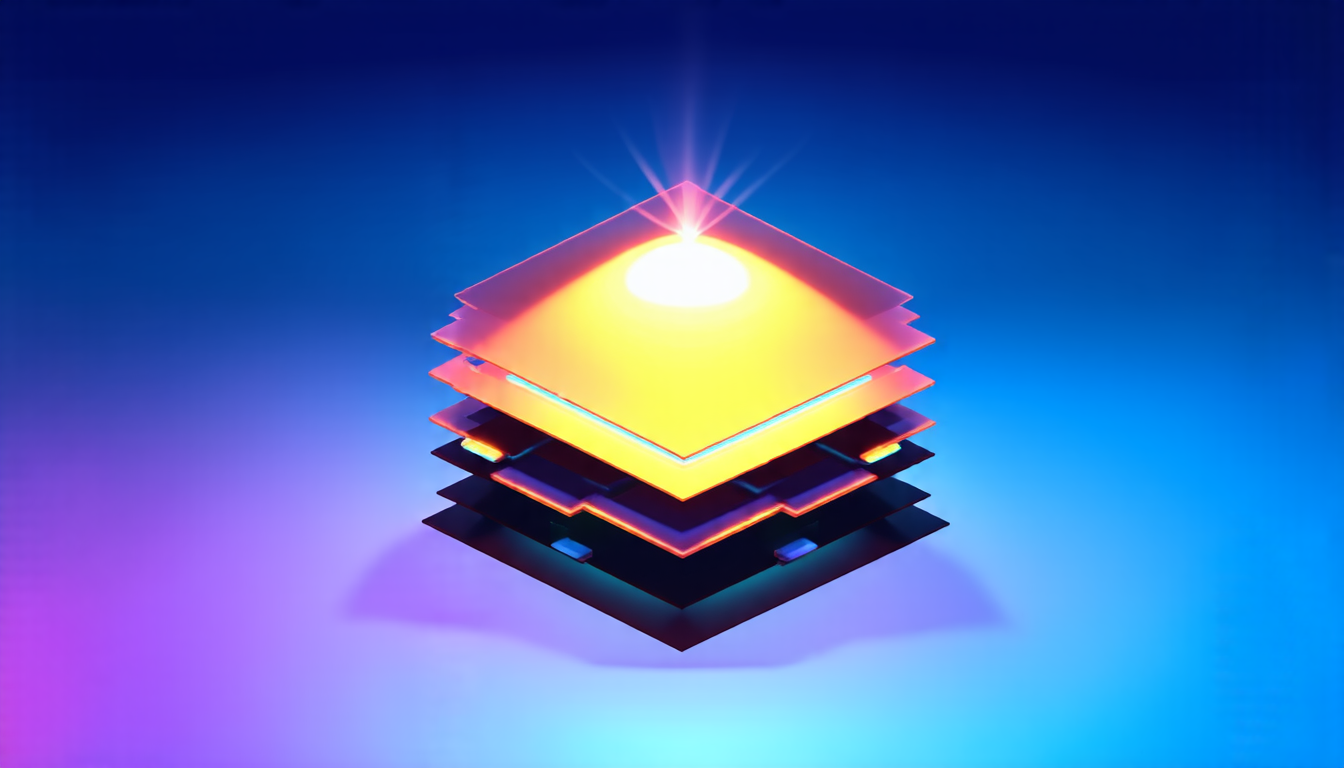
The researchers created a new type of structure by layering TMDCs on top of each other to form a metasurface. This metasurface is incredibly thin – just a few nanometers thick – but it’s packed with tiny features that allow it to control the behavior of light.
When light hits the metasurface, it interacts with the excitons in the TMDC layers, creating a phenomenon called bound states in the continuum. These bound states are like little pockets of light that are trapped between the TMDC layers, and they have some amazing properties.
For one thing, they can be incredibly bright. In fact, the researchers found that the bound states could emit up to 80 meV of energy – a huge amount compared to other materials. This brightness is due in part to the way the metasurface is designed to amplify the light.
But the bound states also have some more subtle properties. For example, they can be manipulated by changing the polarization of the light that hits them. This means that the researchers can control the direction and intensity of the emitted light simply by adjusting the polarization of the incident light.
The implications of this research are huge. It could lead to new ways of creating ultra-fast lasers, more efficient solar cells, and even new types of optical fibers. The metasurface technology is also incredibly versatile – it could be used in a wide range of applications, from telecommunications to biomedical imaging.
One of the most exciting aspects of this research is its potential for scaling up. Right now, the metasurfaces are just a few nanometers thick, but it’s possible that they could be made even thinner and more efficient. This would make them ideal for use in tiny devices like smartphones or wearables.
Of course, there’s still much to be learned about these bound states and how they work. But the researchers are excited by the potential of their discovery and are already working on ways to apply it to real-world problems.
Cite this article: “Unlocking the Secrets of Van der Waals Metasurfaces: Artificial Etching Boosts Light-Matter Interaction”, The Science Archive, 2025.
Light, Matter, Excitons, Tmdcs, Metasurface, Bound States, Continuum, Energy, Polarization, Lasers.





