

Sunday 06 April 2025
A recent study has shed new light on the behavior of complex systems, providing a deeper understanding of how they function and respond to changes.
The researchers focused on a particular type of system known as join-the-shortest-queue (JSQ) networks. These networks are used in many real-world applications, including cloud storage and communication networks, where they help to manage traffic and allocate resources efficiently.
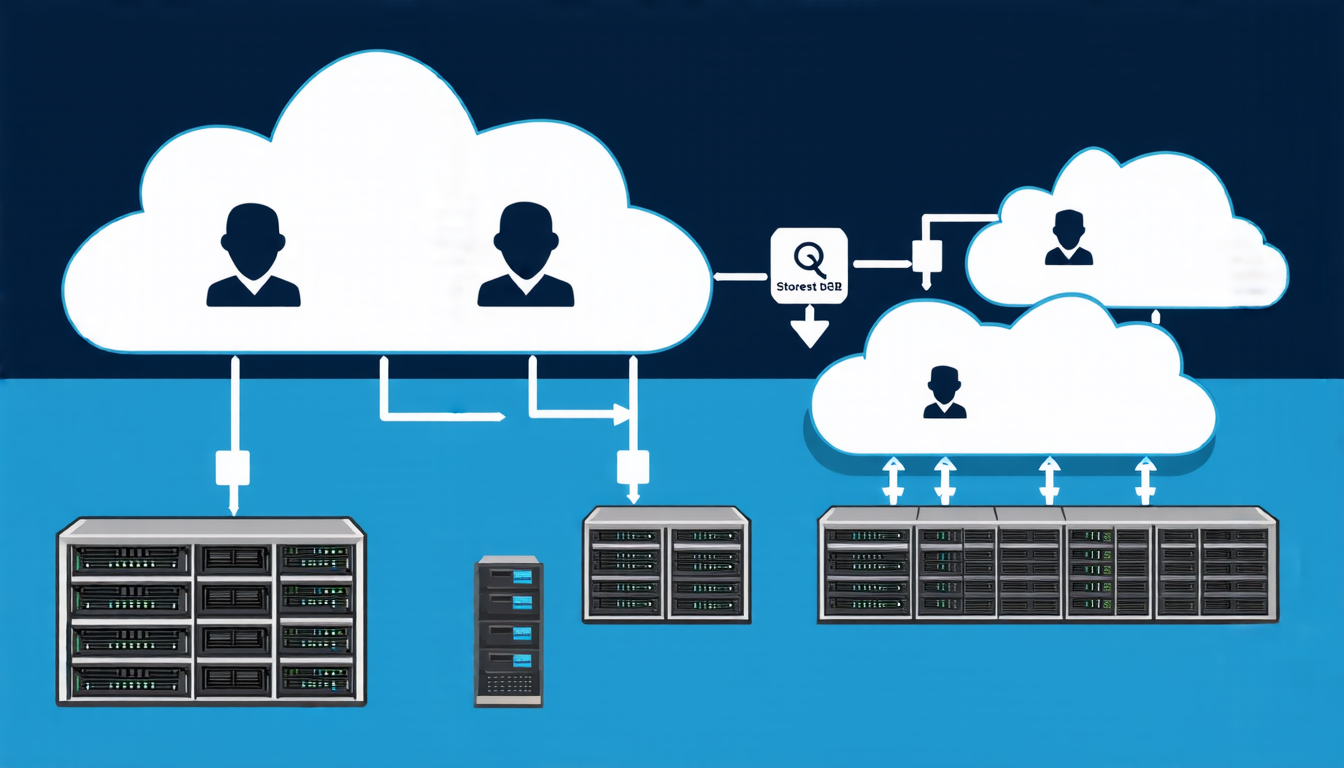
In JSQ systems, customers or tasks arrive at multiple servers and choose the shortest queue to join. This process is repeated continuously, with each server processing its own queue of tasks. The researchers sought to understand how these systems behave over time, particularly in situations where there are many servers and a large volume of traffic.
Using advanced mathematical techniques, the team was able to develop a new model that captures the behavior of JSQ networks in great detail. Their approach involved analyzing the interactions between individual servers and the way they adapt to changes in the system as a whole.
The results show that even in highly complex systems with many interacting components, there are underlying patterns and structures that govern their behavior. The researchers found that these patterns can be used to predict how the system will respond to changes, allowing for more effective management of traffic and resource allocation.
One key finding was that the system’s behavior becomes increasingly stable as it grows in size. This is because the interactions between individual servers become less significant compared to the overall trends and patterns in the system. The researchers also discovered that certain types of fluctuations in the system’s behavior can be smoothed out over time, reducing the impact of random events on the overall performance.
The study’s findings have important implications for the design and management of complex systems. By understanding how these systems behave and respond to changes, engineers and policymakers can make more informed decisions about how to allocate resources and manage traffic.
For example, in cloud storage networks, the researchers’ model could be used to optimize the allocation of servers and data centers, ensuring that customers receive fast and reliable service even during periods of high demand. Similarly, in communication networks, the study’s findings could inform decisions about how to manage traffic and allocate bandwidth, reducing congestion and improving overall performance.
Overall, this research provides a valuable new perspective on the behavior of complex systems, highlighting the importance of understanding patterns and structures at multiple scales. As our world becomes increasingly interconnected and dependent on complex systems, this knowledge will be essential for building more resilient, efficient, and effective networks.
Cite this article: “Unlocking the Secrets of Load Balancing in Crowded Networks: A Study on Join-the-Shortest Queue Systems”, The Science Archive, 2025.
Complex Systems, Join-The-Shortest-Queue, Networks, Cloud Storage, Communication Networks, Traffic Management, Resource Allocation, Pattern Recognition, System Behavior, Mathematical Modeling.
Reference: Zhenhua Wang, Ruoyu Wu, “Moderate Deviation Principle for Join-The-Shortest-Queue-d Systems” (2025).





