

Sunday 06 April 2025
Artificial Intelligence and Robotics teams have long been searching for a solution to the problem of low-quality demonstrations, which can hinder the performance of learned robot policies. These suboptimal demonstrations can stem from various sources, such as human error or incomplete understanding of the task at hand.
Recently, researchers proposed a new method called Demo-SCORE, designed to address this issue by curating demonstration datasets and improving policy robustness. The approach involves training a classifier using the robot’s own rollouts, which are collected during policy evaluation. This classifier is then used to filter out suboptimal demonstrations from the original dataset.
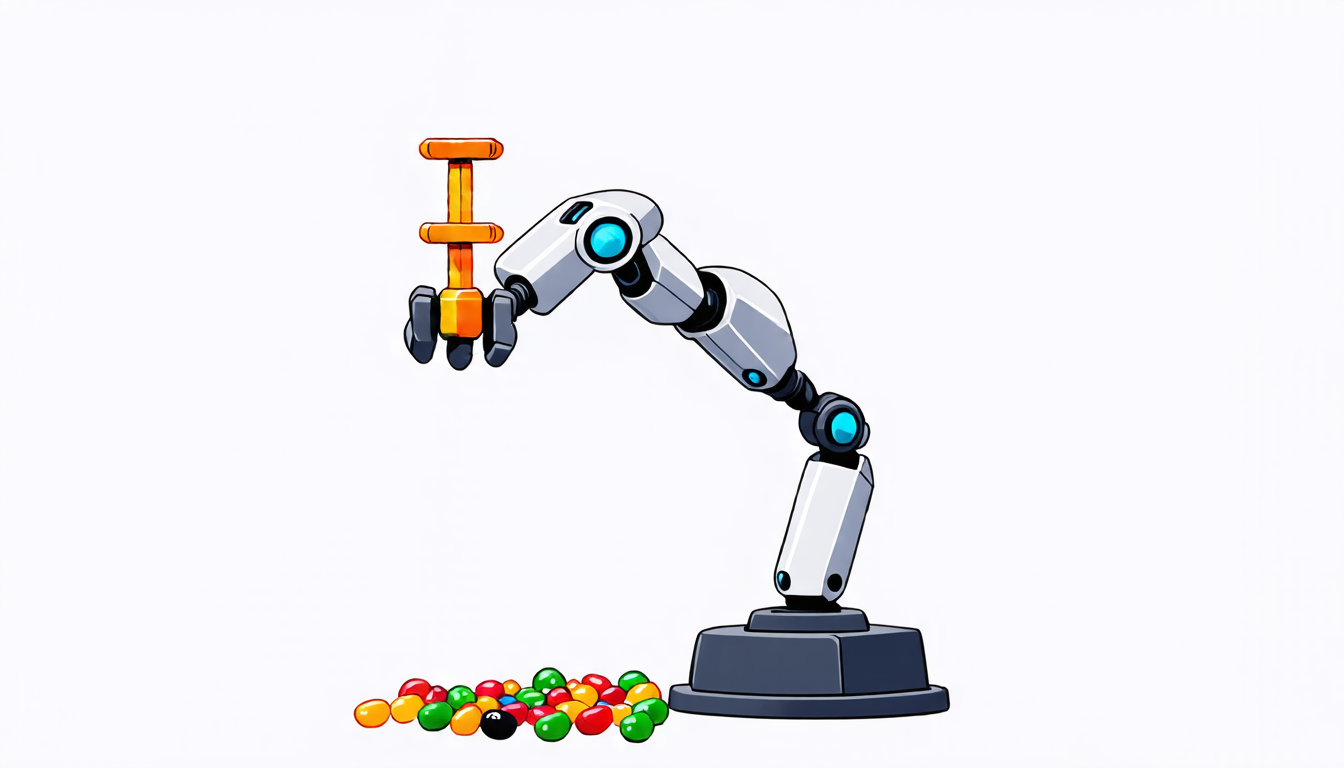
To test the effectiveness of Demo-SCORE, researchers conducted experiments in simulated and real-world environments, including tasks such as peg insertion and jellybean retrieval. The results showed that policies trained using Demo-SCORE achieved higher success rates across data mixtures compared to those trained without it. In some cases, the improvement was as high as 15-35%.
The approach also demonstrated its ability to adjust the number of filtered demonstrations based on the quality mixture of the original dataset. For example, when dealing with a strongly lopsided heterogeneous mixture, Demo-SCORE effectively filtered out more suboptimal demonstrations.
One of the key benefits of Demo-SCORE is its flexibility in adapting to different task requirements. The classifier can be trained using various architectures and sizes, allowing researchers to fine-tune it for specific tasks or environments.
While the potential applications of Demo-SCORE are vast, the approach does have some limitations. For instance, it may not perform well in situations where the robot’s rollouts are noisy or biased. However, these challenges can be addressed through further research and development.
In the future, researchers plan to explore additional ways to improve Demo-SCORE, such as incorporating domain adaptation techniques or using transfer learning for policy training. As robotics continues to advance, the ability to effectively curate and utilize demonstration datasets will play a crucial role in achieving high-performance robot policies.
Overall, Demo-SCORE represents an important step forward in addressing the challenges posed by low-quality demonstrations in robot learning. By providing a more robust and adaptable approach to dataset curation, researchers can unlock new possibilities for robotics and artificial intelligence applications.
Cite this article: “Curating Robot Demonstrations: A Data-Driven Approach to Improving Policy Robustness”, The Science Archive, 2025.
Artificial Intelligence, Robotics, Low-Quality Demonstrations, Policy Robustness, Classifier Training, Rollouts, Peg Insertion, Jellybean Retrieval, Task Requirements, Domain Adaptation





