

Monday 07 April 2025
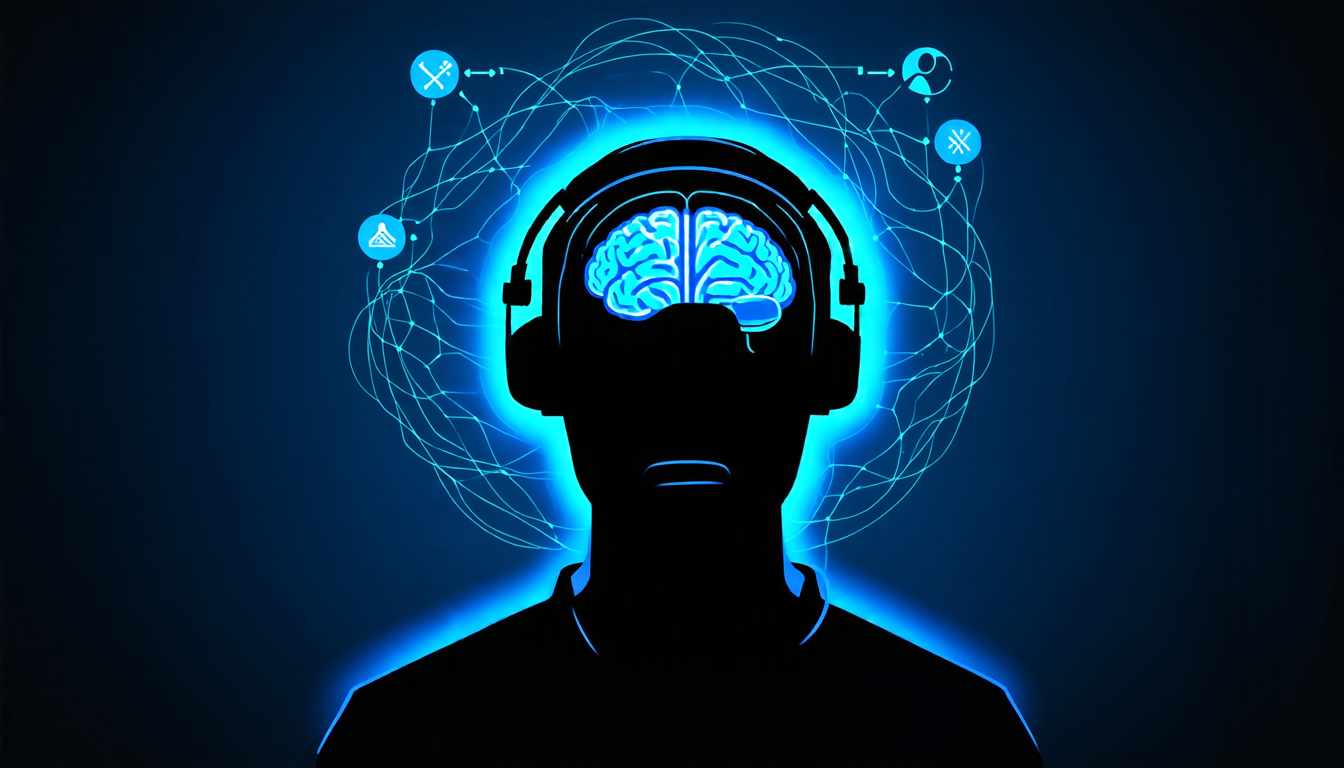
The quest for seamless brain-computer interfaces (BCIs) has taken a significant leap forward with the development of a new algorithm that can adapt to different headsets and EEG signals, allowing people to control devices with unprecedented ease.
Brain-computer interfaces are systems that enable individuals to communicate or control devices using only their brain activity. While they have shown great promise in helping people with paralysis, ALS, and other motor disorders, one major hurdle has been the need for extensive calibration and training to ensure accurate signal detection.
The new algorithm, called Spatial Distillation-based Distribution Alignment (SDDA), addresses this challenge by leveraging the unique characteristics of each individual’s brain activity. By distilling the spatial information from EEG signals and aligning them across different headsets, SDDA enables BCIs to adapt quickly and accurately to new devices, reducing the need for lengthy calibration sessions.
In a study published recently, researchers demonstrated the effectiveness of SDDA by testing it on six EEG datasets from two BCI paradigms. The results showed that SDDA outperformed 10 classical and state-of-the-art transfer learning algorithms in both offline unsupervised domain adaptation and online supervised domain adaptation scenarios.
The implications are significant. With SDDA, people with motor disorders could potentially use a variety of devices without the need for extensive calibration, greatly increasing their independence and quality of life. Furthermore, the algorithm’s adaptability could pave the way for more widespread adoption of BCIs in fields such as gaming, education, and healthcare.
The development of SDDA is a testament to the power of interdisciplinary research, combining insights from neuroscience, computer science, and machine learning. By better understanding the complex patterns of brain activity and developing algorithms that can adapt to these patterns, researchers are one step closer to unlocking the full potential of BCIs.
In the future, the team plans to continue refining SDDA and exploring its applications in various domains. As the technology advances, it will be exciting to see how BCIs can transform lives and revolutionize the way we interact with each other and our surroundings.
Cite this article: “Breakthrough in Brain-Computer Interfaces: Novel Algorithm Achieves Superior Transfer Learning Performance Across Diverse EEG Data Sets”, The Science Archive, 2025.
Brain-Computer Interfaces, Neural Networks, Eeg Signals, Spatial Information, Distribution Alignment, Transfer Learning, Domain Adaptation, Machine Learning, Neuroscience, Algorithms





