

Monday 07 April 2025
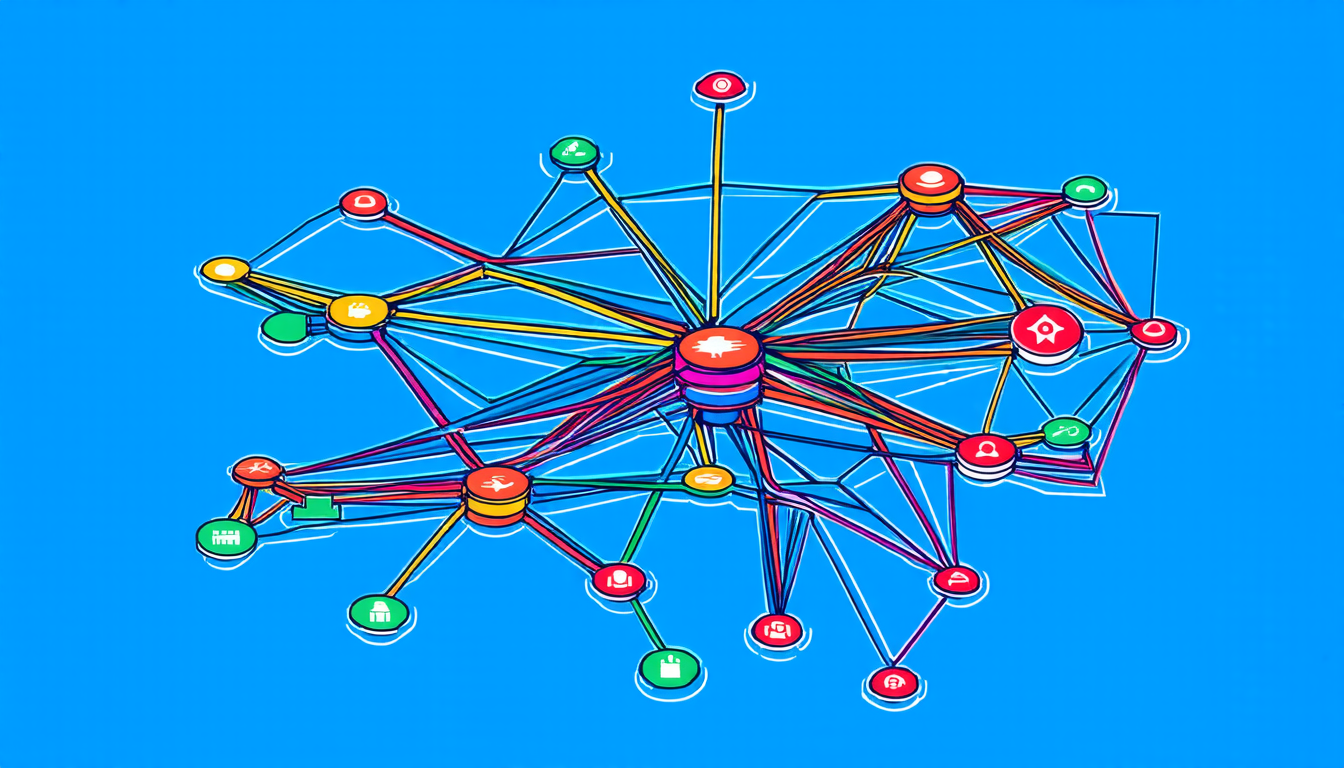
The intricate web of relationships that underlies complex networks has long fascinated scientists and engineers. From social media platforms to biological systems, these networks are crucial for understanding how information flows and how systems function. However, a major challenge in studying these networks is determining whether they exhibit geometric properties, such as clustering and self-similarity.
Geometric properties can provide valuable insights into the behavior of complex systems. For instance, clustering refers to the tendency of nodes in a network to form tight groups or communities. Self-similarity, on the other hand, means that smaller sub-networks resemble larger ones, with similar patterns repeating at different scales. These properties can indicate whether a system is robust and resilient or prone to collapse.
Researchers have long sought to develop methods for identifying geometric properties in complex networks. One approach has been to use random graph theory, which assumes that networks are generated randomly according to certain probability distributions. However, this approach often fails to capture the intricate structures and patterns observed in real-world networks.
In a recent study, scientists from the University of Barcelona have developed a new method for analyzing complex networks and identifying their geometric properties. The researchers used a combination of statistical analysis and machine learning techniques to identify clusters and self-similarities in a wide range of networks, including social media platforms, biological systems, and physical networks.
The team’s approach involves using a technique called degree-threshold renormalization (DTR), which involves iteratively removing nodes with low degrees (i.e., few connections) from the network. By analyzing the resulting network, researchers can identify clusters and self-similarities that would be difficult or impossible to detect otherwise.
Using DTR, the researchers analyzed a diverse range of networks, including Facebook, Twitter, and biological systems such as the human brain and protein interaction networks. They found that many of these networks exhibit geometric properties, including clustering and self-similarity.
The study’s findings have significant implications for our understanding of complex systems and their behavior. For instance, identifying clusters and self-similarities in social media platforms could help researchers develop more effective algorithms for spreading information and influencing user behavior. In biological systems, the discovery of geometric properties could provide new insights into disease mechanisms and potential treatments.
The development of DTR also opens up new avenues for research into complex networks and their geometric properties.
Cite this article: “Unveiling the Hidden Patterns of Real-World Networks: A New Perspective on Self-Similarity and Geometry”, The Science Archive, 2025.
Complex Networks, Geometric Properties, Clustering, Self-Similarity, Random Graph Theory, Machine Learning, Statistical Analysis, Degree-Threshold Renormalization, Network Analysis, Network Science





