

Monday 07 April 2025
Scientists have long been fascinated by the intricate dance of synchronized oscillators, where individual components work together in harmony to produce a collective rhythm. Now, researchers have made a significant breakthrough in understanding how spin Hall nano-oscillators, tiny magnetic devices, synchronize their activity.
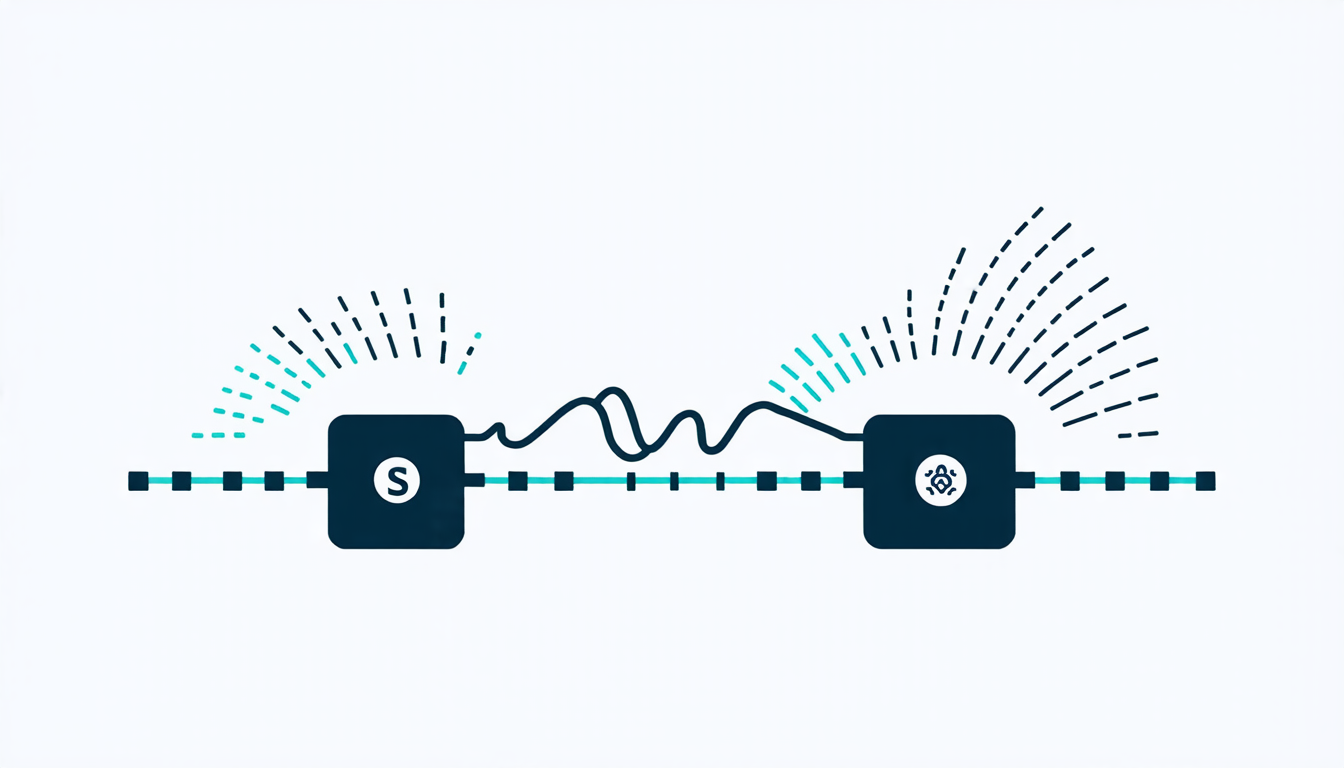
These devices, known as SHNOs, rely on the manipulation of spin waves – ripples in the magnetic field that flow through the device like a liquid – to generate oscillations. When two or more SHNOs are brought together, they can form a synchronized system, where their individual rhythms become entwined. This phenomenon has significant implications for the development of advanced technologies, including neuromorphic computing and microwave signal generation.
To study this synchronization process, researchers used micromagnetic simulations to model the behavior of SHNOs with different separation distances. They found that when two oscillators were brought close together, they could synchronize their activity by exchanging spin waves. This exchange allowed them to adjust their phase difference, or timing, in order to achieve a harmonious rhythm.
The researchers also discovered that the synchronization process was highly dependent on the distance between the oscillators. When the devices were too far apart, the spin waves would decay before they could be exchanged, preventing synchronization from occurring. However, when the separation distance was just right, the spin waves would propagate efficiently, allowing the oscillators to synchronize.
The findings have significant implications for the development of SHNO-based technologies. For example, researchers may be able to design arrays of synchronized SHNOs that can perform complex tasks, such as pattern recognition or signal processing. These devices could potentially outperform traditional computing systems, making them ideal for applications where energy efficiency and speed are crucial.
The study also highlights the importance of understanding spin wave dynamics in these devices. By manipulating the exchange of spin waves between oscillators, researchers may be able to control the synchronization process, allowing them to fine-tune the performance of SHNO-based systems.
In addition to their potential applications, the synchronized SHNOs offer a fascinating glimpse into the intricate mechanisms that govern the behavior of complex systems. The ability of individual components to work together in harmony is a fundamental aspect of many natural phenomena, from the synchronization of fireflies’ flashing patterns to the coordinated activity of neurons in the brain.
As researchers continue to explore the properties and potential applications of SHNOs, this breakthrough provides a significant stepping stone towards unlocking their full potential.
Cite this article: “Unlocking the Secrets of Synchronized Spin Waves”, The Science Archive, 2025.
Spin Hall Nano-Oscillators, Synchronization, Spin Waves, Magnetic Devices, Neuromorphic Computing, Microwave Signal Generation, Micromagnetic Simulations, Oscillator Separation Distance, Phase Difference, Pattern Recognition





