

Monday 07 April 2025
Self-modeling robots are becoming increasingly sophisticated, and a new approach is pushing the boundaries of what’s possible. By using three-dimensional Gaussian splatting, researchers have developed a method that enables robots to build accurate models of themselves without needing depth information.
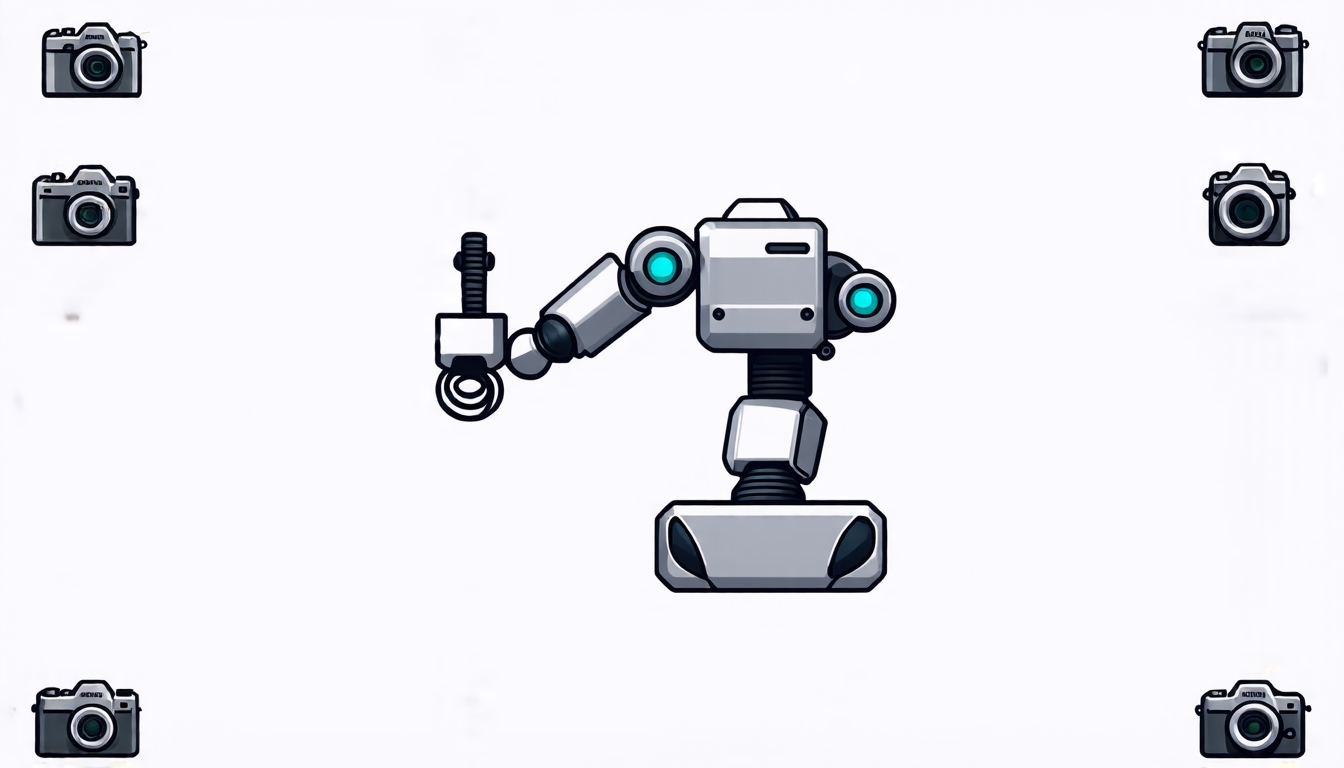
The process works by capturing images of the robot from multiple angles and then using machine learning algorithms to reconstruct its shape and texture. This allows the robot to learn about its own morphology and kinematics, which is essential for tasks such as motion planning and control.
One of the key advantages of this approach is that it eliminates the need for depth information, which can be difficult to obtain in real-world environments. Instead, the robot uses a combination of color and texture cues to build its model, making it more robust and adaptable.
The researchers tested their method on an OpenManipulator robot, capturing images of it from various angles and then using the resulting data to reconstruct its shape and texture. The results were impressive, with the robot accurately recreating its own morphology and kinematics.
But what’s truly exciting is the potential applications of this technology. By enabling robots to build accurate models of themselves, we can open up new possibilities for tasks such as motion planning, control, and even self-repair.
For example, imagine a robot that can repair itself by accessing its internal components without needing human intervention. Or one that can adapt to changing environments by modifying its own shape and movement patterns. The potential is vast, and it’s clear that this technology has the potential to revolutionize the field of robotics.
The researchers are already exploring ways to improve their method, including using multiple cameras to capture more detailed images and incorporating additional sensors to gather more information about the robot’s environment. As they continue to refine their approach, we can expect to see even more impressive results in the future.
In short, this new method is a significant step forward for self-modeling robots, offering a powerful tool for building accurate models of complex systems. With its potential applications ranging from motion planning to self-repair, it’s an area that’s sure to generate plenty of excitement and innovation in the years to come.
Cite this article: “Self-Modeling Robots: A Breakthrough in AI-Driven Robotics”, The Science Archive, 2025.
Robotics, Self-Modeling, Gaussian Splatting, Machine Learning, 3D Reconstruction, Motion Planning, Control, Kinematics, Morphology, Automation
Reference: Kejun Hu, Peng Yu, Ning Tan, “Self-Modeling Robots by Photographing” (2025).





