

Tuesday 08 April 2025
The researchers have made a significant discovery in the field of mathematics, shedding light on the complex relationships between Riemann surfaces and branched covers. The study has far-reaching implications for our understanding of these mathematical structures and their applications in various fields.
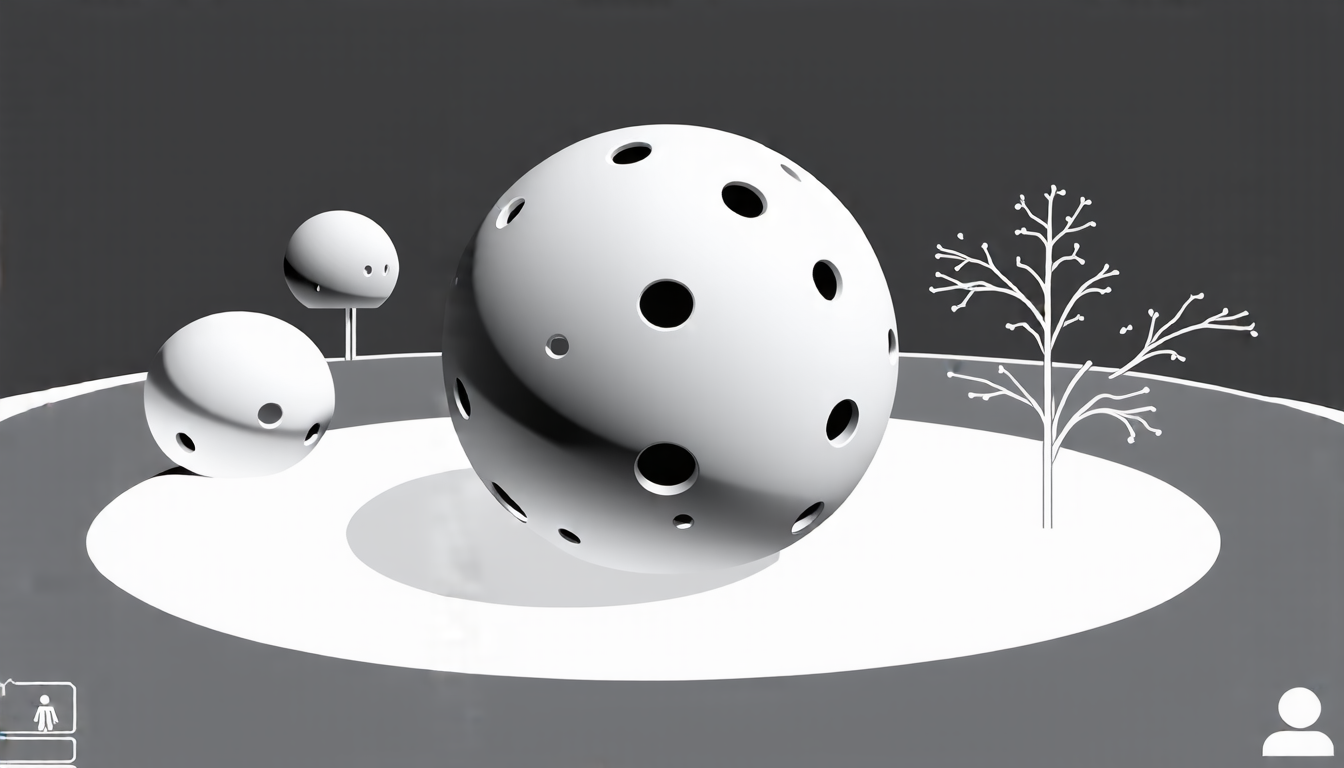
A Riemann surface is essentially a two-dimensional space that can be visualized as a sphere or a plane with holes punched out of it. These surfaces play a crucial role in many areas of mathematics, from algebraic geometry to number theory. Branched covers, on the other hand, are maps between these surfaces that have specific properties.
The researchers used a combination of mathematical techniques and computer algorithms to study the relationships between Riemann surfaces and branched covers. They found that certain types of branched covers can be used to create new Riemann surfaces with unique properties. This has significant implications for our understanding of these mathematical structures and their potential applications.
One of the most important findings of the study is that it provides a way to construct new Riemann surfaces by combining existing ones in specific ways. This has far-reaching implications for fields such as algebraic geometry, where the construction of new surfaces with unique properties can be used to solve complex problems.
The researchers also found that their method can be used to study the properties of branched covers themselves. By analyzing the relationships between Riemann surfaces and branched covers, they were able to determine the properties of these maps in a way that was previously impossible.
This study has significant implications for our understanding of mathematics and its potential applications in various fields. The ability to construct new Riemann surfaces with unique properties can have a major impact on fields such as physics, engineering, and computer science. Additionally, the study of branched covers can lead to new insights into the nature of these mathematical structures and their potential uses.
In summary, this study has shed light on the complex relationships between Riemann surfaces and branched covers, providing new insights into the properties of these mathematical structures and their potential applications. The researchers’ method for constructing new Riemann surfaces and studying the properties of branched covers has significant implications for our understanding of mathematics and its potential uses in various fields.
Cite this article: “Unraveling the Mysteries of Hurwitz Spaces: A New Perspective on Riemann Surfaces and Algebraic Curves”, The Science Archive, 2025.
Riemann Surfaces, Branched Covers, Algebraic Geometry, Number Theory, Mathematical Structures, Computer Algorithms, Surface Construction, Property Determination, Physics, Engineering
Reference: Darragh Glynn, “Boundary stratifications of Hurwitz spaces” (2025).





