

Tuesday 08 April 2025
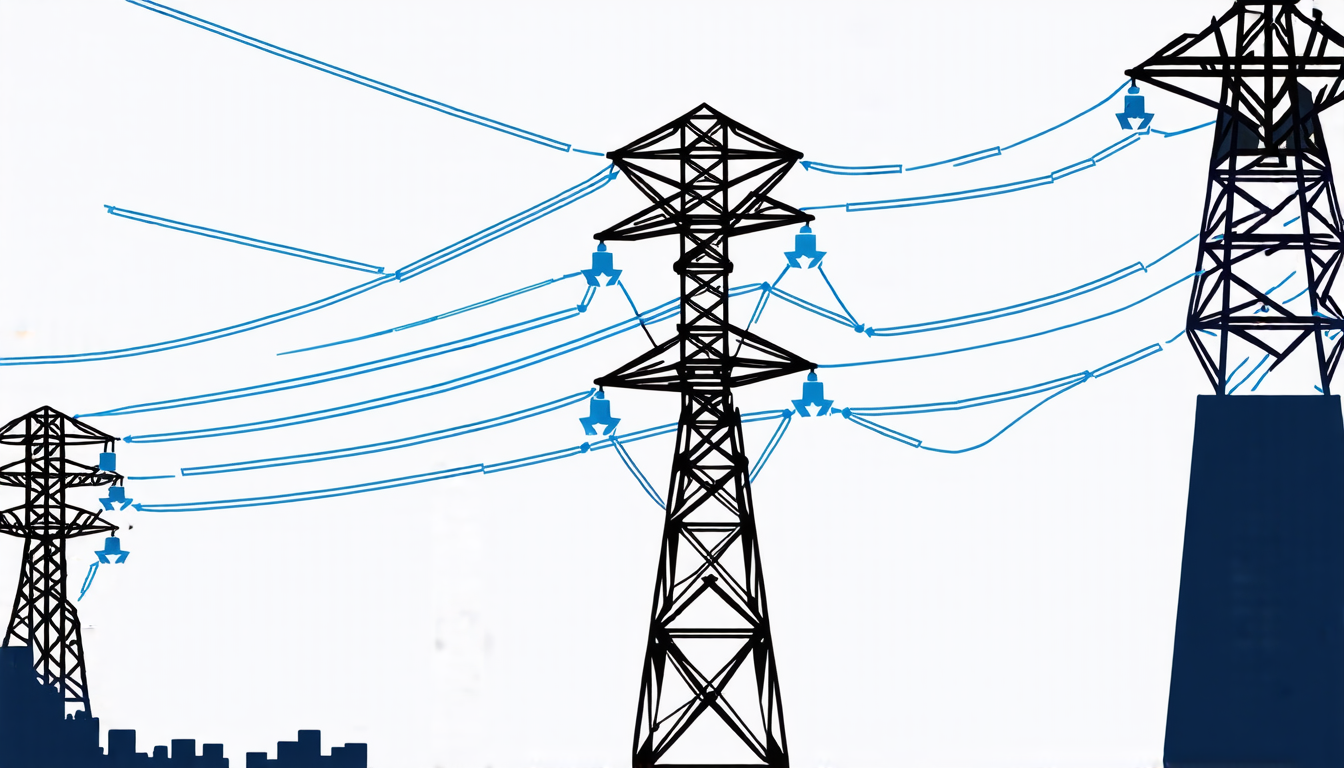
The modern power grid is a complex system that’s increasingly vulnerable to cyber-physical attacks, which can disrupt or even shut down entire networks. In recent years, researchers have been working on developing more effective methods for detecting and mitigating these types of threats, but there’s still much work to be done.
One approach has been to use graph neural networks (GNNs) to analyze the complex relationships between different nodes in a power grid. GNNs are a type of artificial intelligence that can learn patterns and relationships from large datasets, making them well-suited for tasks like anomaly detection and fault localization.
In a new paper, researchers have proposed a novel approach to using GNNs for fault diagnosis in power grids under parallel cyber-physical attacks (PCPA). PCPAs are particularly insidious because they involve both physical attacks on the grid itself, as well as manipulation of measurement data to hide or distort the effects of those attacks.
The proposed method, which the researchers call the Graph Attention Network-based Fault Localization (GAT-FL) algorithm, uses a combination of graph neural networks and linear programming to identify faulty transmission lines and restore power injection at buses. The algorithm is designed to be highly adaptable and able to handle complex fault scenarios, including those involving multiple attacks on different parts of the grid.
The researchers tested their algorithm using simulations on two different test cases: a 30-bus system and an 118-bus system. In both cases, they found that GAT-FL outperformed existing methods for fault diagnosis under PCPA conditions. The algorithm was able to accurately identify faulty transmission lines and restore power injection at buses with high accuracy, even in scenarios where multiple attacks were involved.
One of the key advantages of the proposed method is its ability to handle complex relationships between different nodes in a power grid. Traditional approaches to fault diagnosis often rely on simple threshold-based methods or linear regression models that may not be able to capture the intricate relationships between different parts of the system.
In contrast, GAT-FL uses a graph neural network to learn patterns and relationships from large datasets, making it better equipped to handle complex fault scenarios. The algorithm is also highly adaptable and can be easily extended to other types of power grid systems or attacks.
The proposed method has significant implications for the development of more resilient and secure power grids.
Cite this article: “Power Grid Resilience in the Face of Cyber-Physical Attacks: A Graph Attention Network Approach”, The Science Archive, 2025.
Power Grid, Cyber-Physical Attacks, Graph Neural Networks, Gnns, Fault Diagnosis, Pcpa, Parallel Cyber-Physical Attacks, Gat-Fl, Linear Programming, Artificial Intelligence





