

Tuesday 08 April 2025
The quest for realistic traffic simulations has taken a significant leap forward, thanks to the development of a novel framework that leverages large language models (LMs) and diffusion-based methods. This innovative approach has the potential to revolutionize the way we design and test autonomous vehicles, by generating diverse and realistic scenarios that can push these systems to their limits.
Traditional traffic simulation methods rely on physics-based engines or rule-based approaches, which are limited in their ability to generate complex and unexpected scenarios. In contrast, this new framework uses LMs to analyze large datasets of real-world driving behavior, identifying patterns and relationships that can be used to generate realistic traffic simulations. The LM is then fine-tuned using a diffusion-based method, which enables the creation of diverse and nuanced scenarios.
The benefits of this approach are twofold. Firstly, it allows for the generation of complex and unexpected scenarios that can test an autonomous vehicle’s ability to adapt to unusual situations. This is particularly important, given the unpredictable nature of real-world driving. Secondly, the LM-based framework can be used to create customized traffic simulations that are tailored to specific testing scenarios or environments.
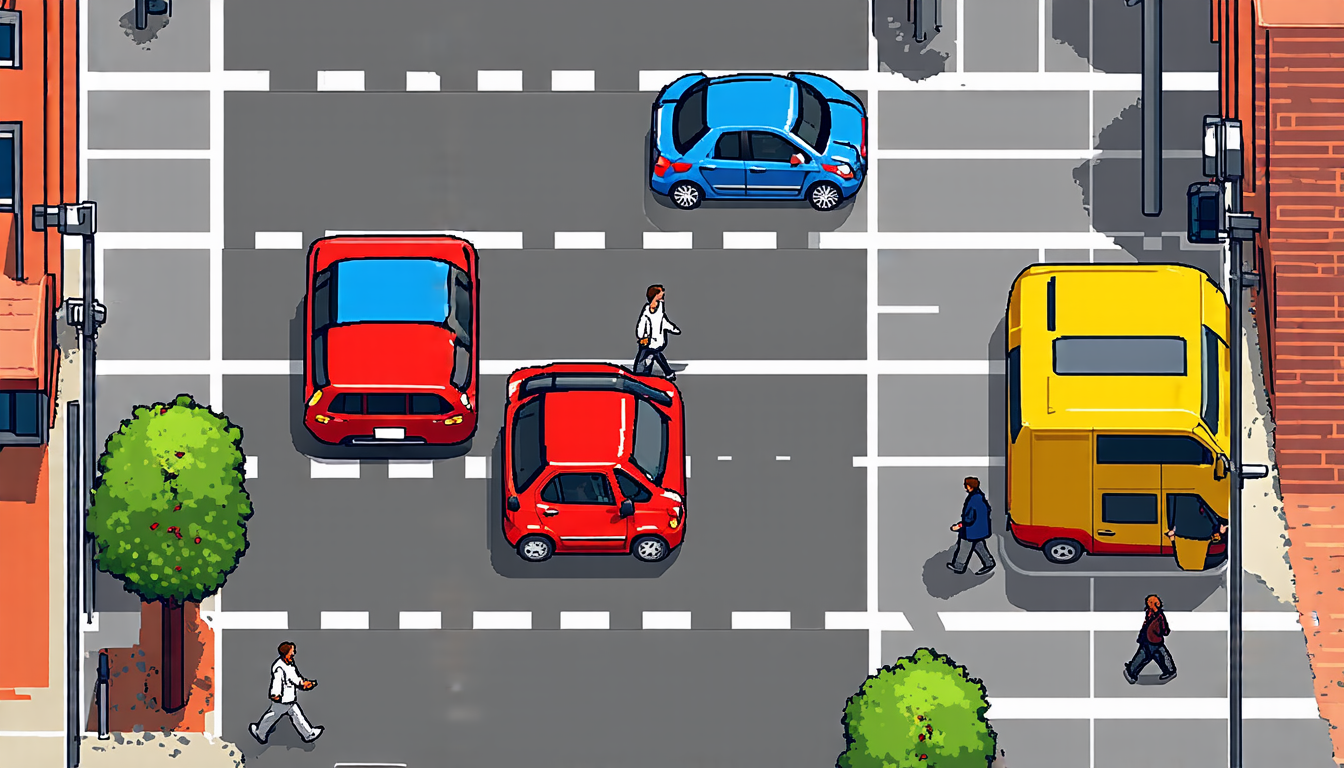
One of the key advantages of this approach is its ability to generate realistic traffic behavior, including the interactions between multiple vehicles and pedestrians. This is achieved through the use of a diffusion-based method, which enables the creation of nuanced and context-dependent scenarios. For example, the framework can be used to simulate a busy city street, with multiple vehicles and pedestrians interacting in complex ways.
The potential applications of this technology are vast, from the development of autonomous vehicles to the testing of advanced driver-assistance systems. It also has implications for urban planning and traffic management, allowing cities to test and evaluate different scenarios before implementing them in reality.
While there is still much work to be done before this technology can be widely adopted, the potential benefits are significant. By generating realistic and diverse traffic simulations, we can create a safer and more efficient transportation system that is better equipped to handle the challenges of the 21st century.
The use of large language models in traffic simulation has opened up new possibilities for testing and evaluating autonomous vehicles. This technology has the potential to revolutionize the way we design and test these systems, by generating complex and realistic scenarios that can push them to their limits. As research continues to evolve, we can expect to see even more sophisticated simulations that are capable of simulating a wide range of real-world scenarios.
Cite this article: “Unlocking Autonomous Driving with Large Language Models: A Revolutionary Approach to Traffic Simulation and Scenario Generation”, The Science Archive, 2025.
Traffic Simulation, Autonomous Vehicles, Large Language Models, Diffusion-Based Methods, Realistic Scenarios, Testing, Urban Planning, Traffic Management, Transportation System, 21St Century





