

Tuesday 08 April 2025
As we continue to push the boundaries of artificial intelligence and machine learning, researchers are now exploring new ways to apply these technologies to complex systems in various fields. One such area is the field of control engineering, where scientists are working on developing more accurate and efficient methods for predicting and controlling the behavior of nonlinear systems.
Nonlinear systems are those that do not follow simple linear relationships between their inputs and outputs. Examples include weather patterns, financial markets, and even the motion of underwater vehicles. In recent years, researchers have been using a mathematical concept called the Koopman operator to better understand and model these complex systems.
The Koopman operator is a way to describe the behavior of nonlinear systems by mapping them into higher-dimensional spaces. This allows scientists to identify patterns and relationships within the system that would be difficult or impossible to detect otherwise. However, traditional methods for applying the Koopman operator have limitations, including randomness in selecting basis functions and potential biases in model predictions.
To address these issues, a team of researchers has developed a new method called Broad Learning System (BLS)-Extended Dynamic Mode Decomposition (EDMD). This approach combines the benefits of BLS, which is an incremental learning system that can handle high-dimensional data, with EDMD, which is a technique for decomposing nonlinear systems into simpler components.
The result is a more accurate and robust method for predicting the behavior of nonlinear systems. In a recent study, researchers tested the new method on several complex systems, including a classic van der Pol oscillator and an underwater vehicle dynamics system. The results showed significant improvements in prediction accuracy compared to traditional methods.
One of the key advantages of the BLS-EDMD approach is its ability to handle high-dimensional data and nonlinear relationships between inputs and outputs. This makes it particularly useful for applications such as control engineering, where accurate predictions are critical for ensuring stability and performance.
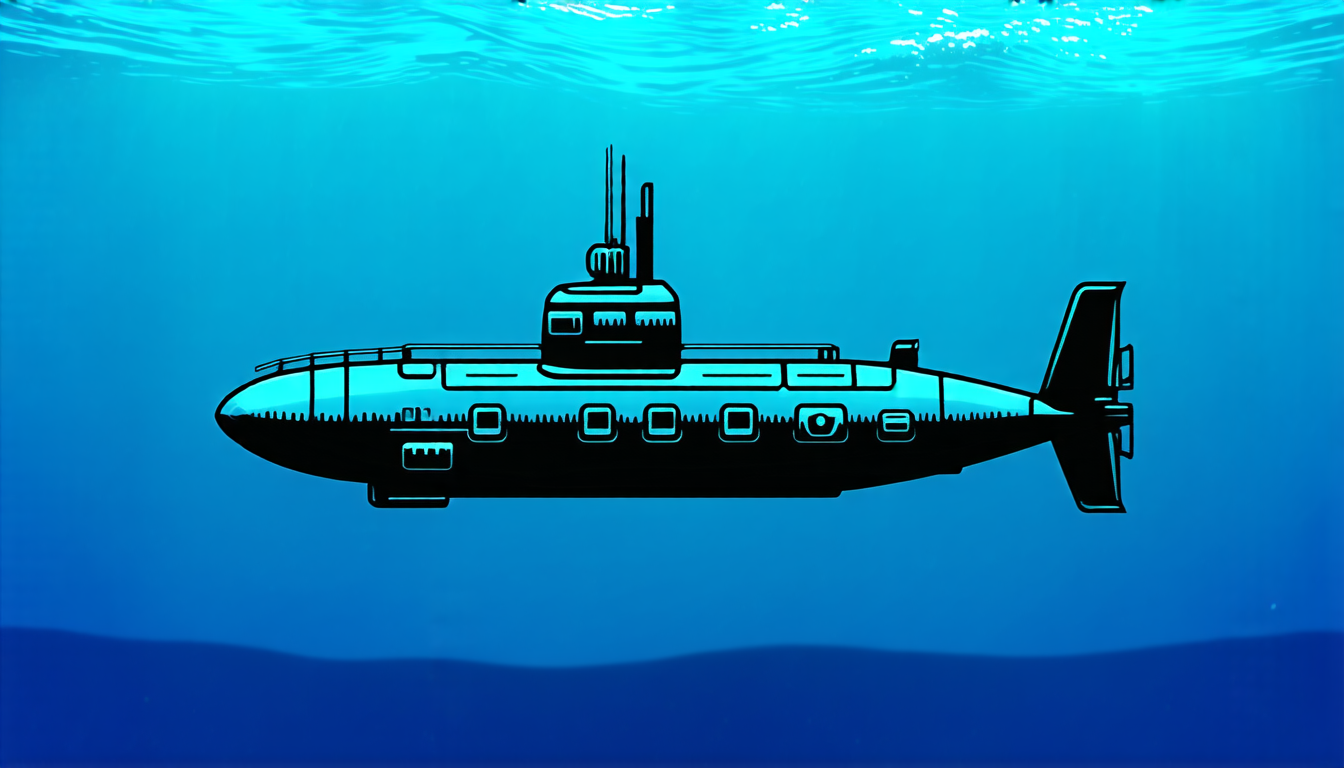
The researchers also used their new method to develop a model predictive controller (MPC) for an underwater vehicle dynamics system. MPCs are algorithms that use real-time feedback to optimize the behavior of complex systems over time. In this case, the BLS-EDMD-based MPC was able to successfully control the motion of the underwater vehicle and achieve precise tracking of target depths.
The potential applications of this technology are vast and varied. For example, it could be used to improve the efficiency and safety of autonomous vehicles on land or sea, or to optimize the performance of complex industrial processes.
Cite this article: “Unlocking Nonlinear Dynamics with Broad Learning Systems: A New Paradigm for Model Predictive Control”, The Science Archive, 2025.
Artificial Intelligence, Machine Learning, Control Engineering, Nonlinear Systems, Koopman Operator, Broad Learning System, Extended Dynamic Mode Decomposition, Prediction Accuracy, Model Predictive Controller, Underwater Vehicle Dynamics.





