

Tuesday 08 April 2025
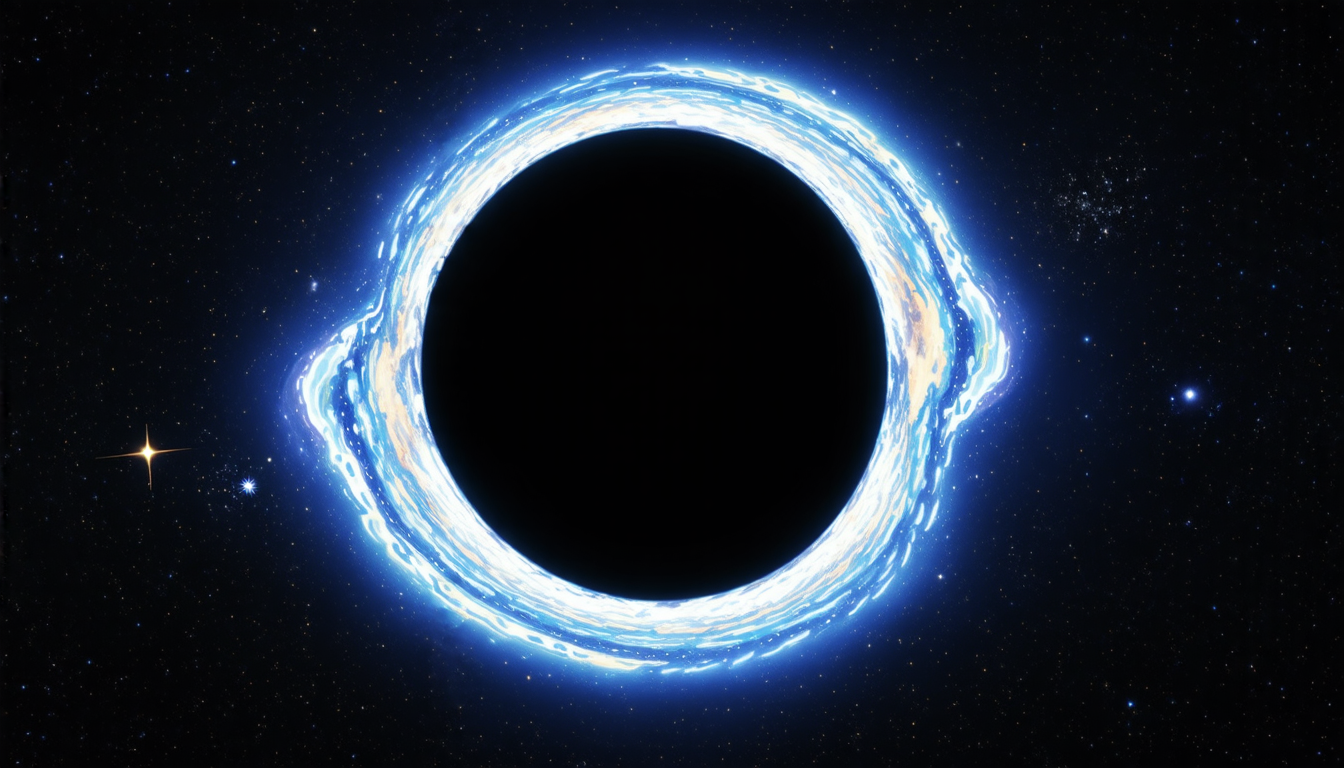
Black holes have long been a source of fascination and mystery, with their immense gravity and cosmic power captivating scientists and the general public alike. But despite our understanding of these celestial bodies, there’s still much to be learned about how they behave.
Recently, researchers have made significant progress in studying the behavior of black holes, particularly when it comes to their stability and instability. A team of scientists has discovered that certain types of black holes can exhibit a phenomenon known as transient superradiance, where energy is emitted from the hole at a rate greater than what would be expected.
This finding has important implications for our understanding of how black holes work and how they interact with their surroundings. Traditionally, it was thought that black holes were completely stable, with any matter or energy that entered them being trapped forever. But this new research suggests that, under certain conditions, black holes can actually become unstable and release energy in the form of radiation.
The discovery of transient superradiance was made possible by advances in computational power and numerical methods. Researchers used complex algorithms to simulate the behavior of black holes in various scenarios, allowing them to study the stability of these celestial bodies in unprecedented detail.
One of the key findings of this research is that the instability of black holes can be triggered by certain types of perturbations or disturbances. For example, if a star were to pass too close to a black hole, it could potentially cause the hole to become unstable and release energy. This has important implications for our understanding of how black holes interact with their surroundings and how they affect the behavior of nearby stars.
The study of transient superradiance also has significant implications for our understanding of the fundamental laws of physics. Black holes are among the most extreme objects in the universe, with gravitational forces so strong that not even light can escape once it gets too close. By studying these objects and their behavior, scientists can gain a deeper understanding of the underlying laws of physics that govern the behavior of all matter and energy.
In addition to its scientific significance, this research also has important implications for our understanding of the universe as a whole. Black holes are thought to play a key role in the evolution of galaxies, with their powerful gravitational forces shaping the formation and behavior of stars and planets.
The study of transient superradiance is an exciting area of research that holds much promise for advancing our understanding of black holes and the universe as a whole.
Cite this article: “Unlocking Black Hole Secrets: New Insights into Quasinormal Modes and Superradiance”, The Science Archive, 2025.
Black Holes, Transient Superradiance, Stability, Instability, Energy, Radiation, Perturbations, Disturbances, Gravitational Forces, Galaxies





