

Tuesday 08 April 2025
A team of researchers has made a significant breakthrough in the field of computational fluid dynamics, developing a new method for simulating complex flows that can accurately capture shockwaves and other discontinuities.
Traditional methods for simulating these types of flows often struggle to accurately capture the behavior of shockwaves, which are critical in many real-world applications such as aerospace engineering. This is because traditional methods rely on simple assumptions about the behavior of fluids at high speeds, which can lead to inaccuracies when dealing with complex geometries and multiple interacting flows.
The new method, developed by a team of researchers from the University of Notre Dame and other institutions, uses a technique called mesh-based parametrization to accurately capture shockwaves. This approach involves creating a three-dimensional mesh that is tailored to the specific geometry of the problem being studied, and then using this mesh to discretize the equations of motion.
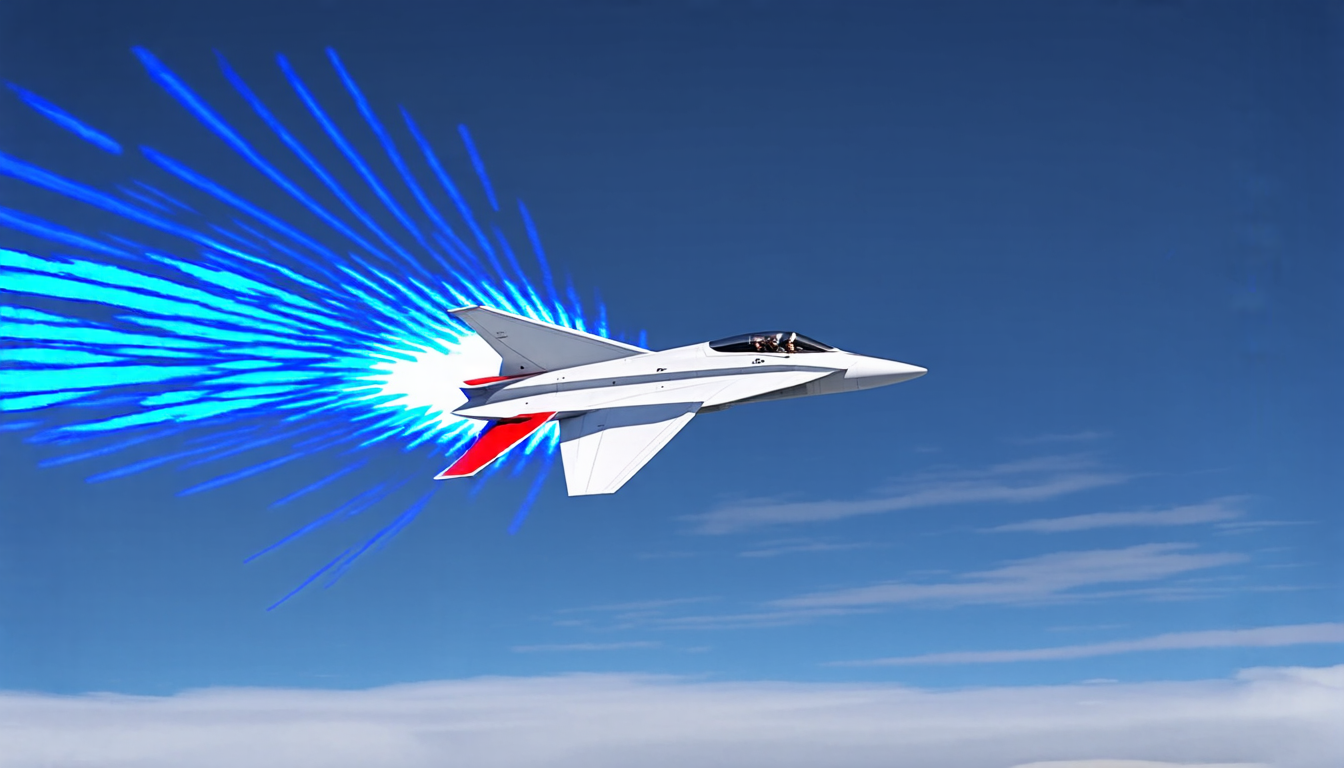
The researchers used their new method to simulate a range of complex flows, including supersonic airfoils and hypersonic vehicles. In each case, they were able to accurately capture the behavior of shockwaves and other discontinuities, even in regions where traditional methods would have struggled.
One of the key advantages of the new method is its ability to handle complex geometries and multiple interacting flows. This is because it uses a mesh that is tailored to the specific geometry of the problem being studied, rather than relying on simple assumptions about the behavior of fluids at high speeds.
The researchers believe that their new method has significant potential for real-world applications in fields such as aerospace engineering and materials science. They hope that it will be used to design more efficient and effective systems, and to better understand complex flows and interactions.
In addition to its practical applications, the new method also has important implications for our understanding of fundamental physical processes. By allowing researchers to accurately simulate complex flows, it could help us better understand how fluids behave at high speeds, and how they interact with different materials and geometries.
Overall, the development of this new method represents a significant advance in the field of computational fluid dynamics. It has the potential to revolutionize our ability to simulate complex flows and interactions, and could have important implications for a wide range of fields and applications.
Cite this article: “Unlocking the Secrets of Shock- Dominated Flows with High-Order Mesh-Based Parametrizations”, The Science Archive, 2025.
Computational Fluid Dynamics, Shockwaves, Mesh-Based Parametrization, Supersonic Airfoils, Hypersonic Vehicles, Complex Geometries, Multiple Interacting Flows, Aerospace Engineering, Materials Science, High-Speed Fluids.





