

Tuesday 08 April 2025
The quest for reliable autonomous vehicles has long been hampered by the problem of visual corruption – a phenomenon where sensor noise, adverse weather conditions, and dynamic lighting can degrade image quality, leading to suboptimal control decisions. To mitigate this issue, researchers have proposed various approaches, including domain adaptation and adversarial training. However, these methods struggle to generalize to unseen corruptions, introducing computational overhead in the process.
Enter a team of engineers from the Trustworthy Engineered Autonomy Lab at the University of Florida, who have developed a real-time image repair module that restores corrupted images before they’re used by the controller. Their solution leverages generative adversarial models, specifically CycleGAN and pix2pix, for image repair. The former enables unpaired image-to-image translation to adapt to novel corruptions, while the latter exploits paired image data when available to improve quality.
To ensure alignment with control performance, the researchers introduced a control-focused loss function that prioritizes perceptual consistency in repaired images. In other words, the algorithm learns to balance the quality of the repaired image with its ability to inform accurate control decisions.
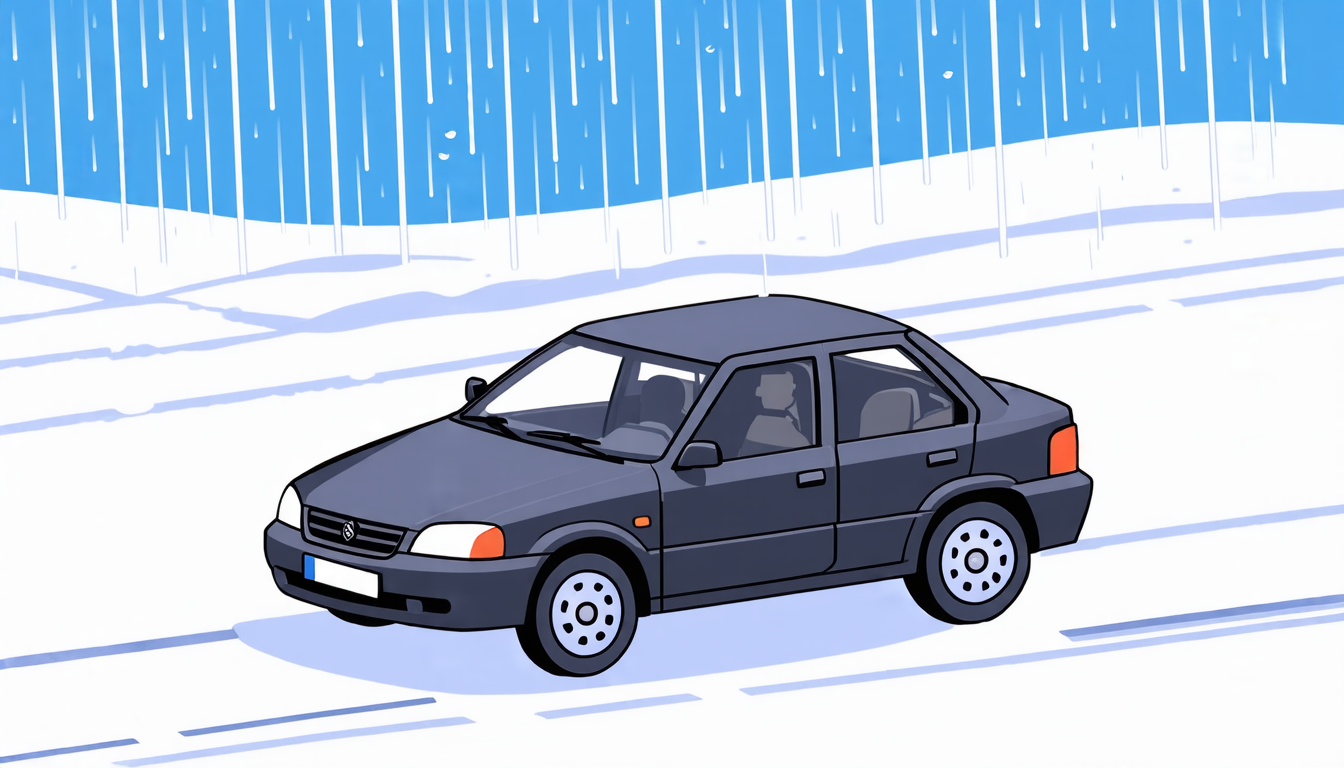
The team evaluated their method in a simulated autonomous racing environment with various visual corruptions, including sensor noise, rain, fog, and snow. The results showed that their approach significantly improved performance compared to baselines, mitigating distribution shift and enhancing controller reliability.
One of the key benefits of this research is its focus on real-time image repair. Traditional approaches often require extensive computational resources or rely on pre-processing steps that can introduce latency. In contrast, this method is designed to operate in parallel with the control system, minimizing delays and ensuring that the vehicle responds promptly to changing conditions.
The researchers’ use of CycleGAN and pix2pix models also offers a degree of flexibility and adaptability. By training these models on diverse datasets and corruption scenarios, they can generalize effectively to new and unseen corruptions – a critical capability for real-world autonomous vehicles.
While this research is still in its early stages, it represents an important step towards developing more reliable and robust autonomous systems. As the automotive industry continues to push the boundaries of AI-driven autonomy, innovations like this will be crucial in ensuring that these vehicles can operate safely and efficiently in a wide range of environments.
Cite this article: “Revolutionizing Autonomous Racing with Generative Image Repair”, The Science Archive, 2025.
Autonomous Vehicles, Image Repair, Generative Adversarial Models, Cyclegan, Pix2Pix, Visual Corruption, Sensor Noise, Real-Time Processing, Control Performance, Reliability.





