

Tuesday 08 April 2025
The quest for more realistic and varied data has led researchers to explore new methods in machine learning, and one such approach is Learning-Order Autoregressive Models (LO-ARM). This technique aims to generate complex datasets like molecular graphs by modeling the autoregressive process of generating discrete tokens.
In traditional autoregressive models, the ordering of tokens is fixed and predetermined. However, LO-ARM introduces a probabilistic ordering that adapts to the evolving state of the generation process. This allows for more flexibility and creativity in generating diverse data samples.
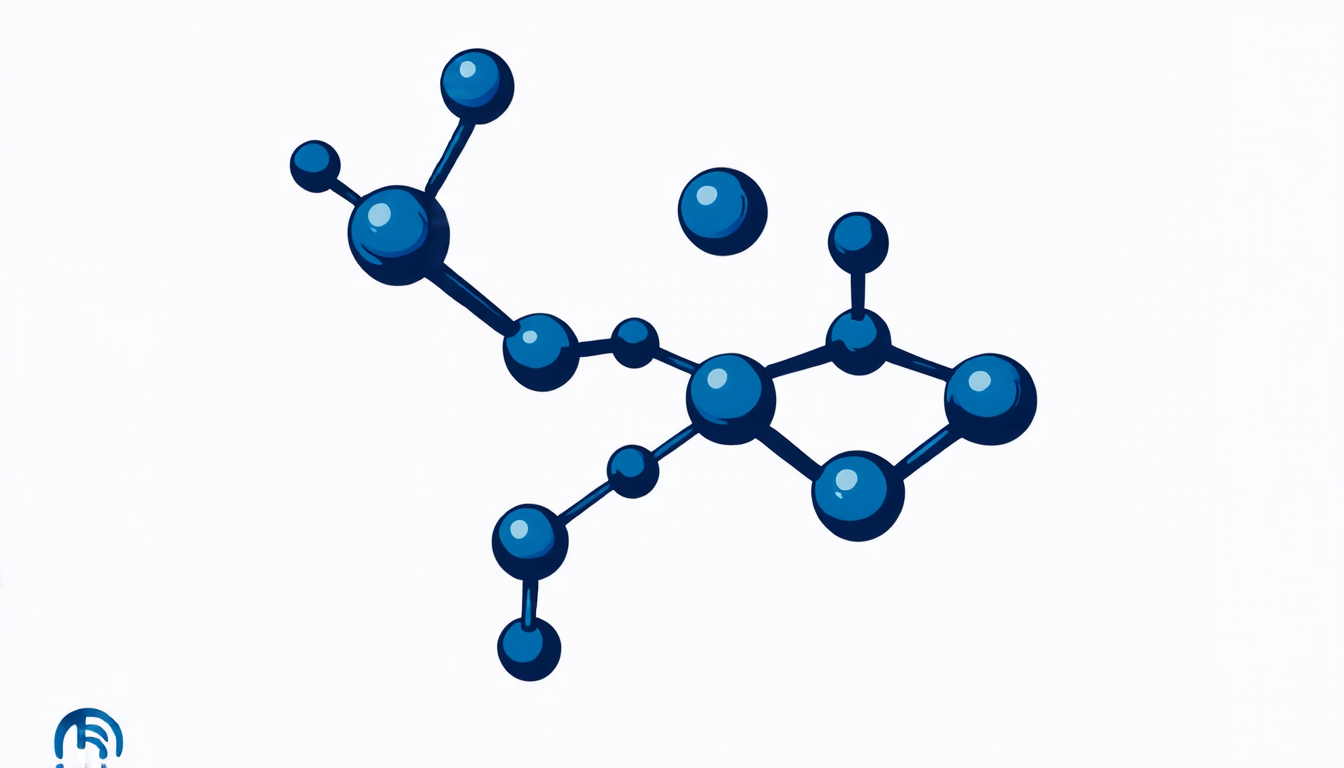
One key aspect of LO-ARM is its ability to generate complex molecular graphs, which are crucial in fields like chemistry and materials science. These graphs represent the structure of molecules, consisting of nodes (atoms) and edges (chemical bonds). By modeling the autoregressive process of generating these tokens, LO-ARM can create more realistic and varied molecular structures.
The researchers behind LO-ARM used a combination of neural networks and probabilistic graphical models to develop their approach. They employed a graph transformer network to predict the probability distribution over clean graphs, given a masked input graph. This allowed them to model the autoregressive process of generating tokens while incorporating information from previous generated tokens.
To ensure symmetry in the generated molecular graphs, the researchers used a clever trick: they only processed the upper half of the adjacency matrix during training and flipped it after each sampling step. This ensured that the resulting adjacency matrices were always symmetric.
LO-ARM’s performance was evaluated on two datasets: QM9 and ZINC250K. These datasets consist of molecular graphs with varying sizes and complexities, making them ideal testbeds for LO-ARM. The results showed that LO-ARM outperformed traditional uniform autoregressive models in generating realistic and diverse molecular structures.
The implications of LO-ARM are significant, as it has the potential to revolutionize the field of molecule generation. By creating more realistic and varied molecular structures, researchers can accelerate the discovery of new materials and compounds with unique properties. This could lead to breakthroughs in fields like medicine, energy, and electronics.
LO-ARM’s flexibility and creativity also make it an attractive approach for generating diverse data samples in other domains. As machine learning continues to evolve, techniques like LO-ARM will play a crucial role in pushing the boundaries of what is possible with artificial intelligence.
The researchers behind LO-ARM have made their code and datasets publicly available, allowing the wider research community to build upon and improve their work.
Cite this article: “Unlocking the Secrets of Molecule Generation: A Novel Learning-Order Autoregressive Model for Efficient and Accurate Molecular Graph Generation”, The Science Archive, 2025.
Machine Learning, Autoregressive Models, Learning-Order Autoregressive Models, Molecular Graphs, Graph Transformer Network, Probabilistic Graphical Models, Neural Networks, Symmetry, Qm9, Zinc250K





