

Tuesday 08 April 2025
Medical imaging technology has come a long way in recent years, allowing doctors to diagnose and treat diseases more accurately than ever before. But despite these advances, there is one area where medical imaging still falls short: the diagnosis of vertebral fractures.
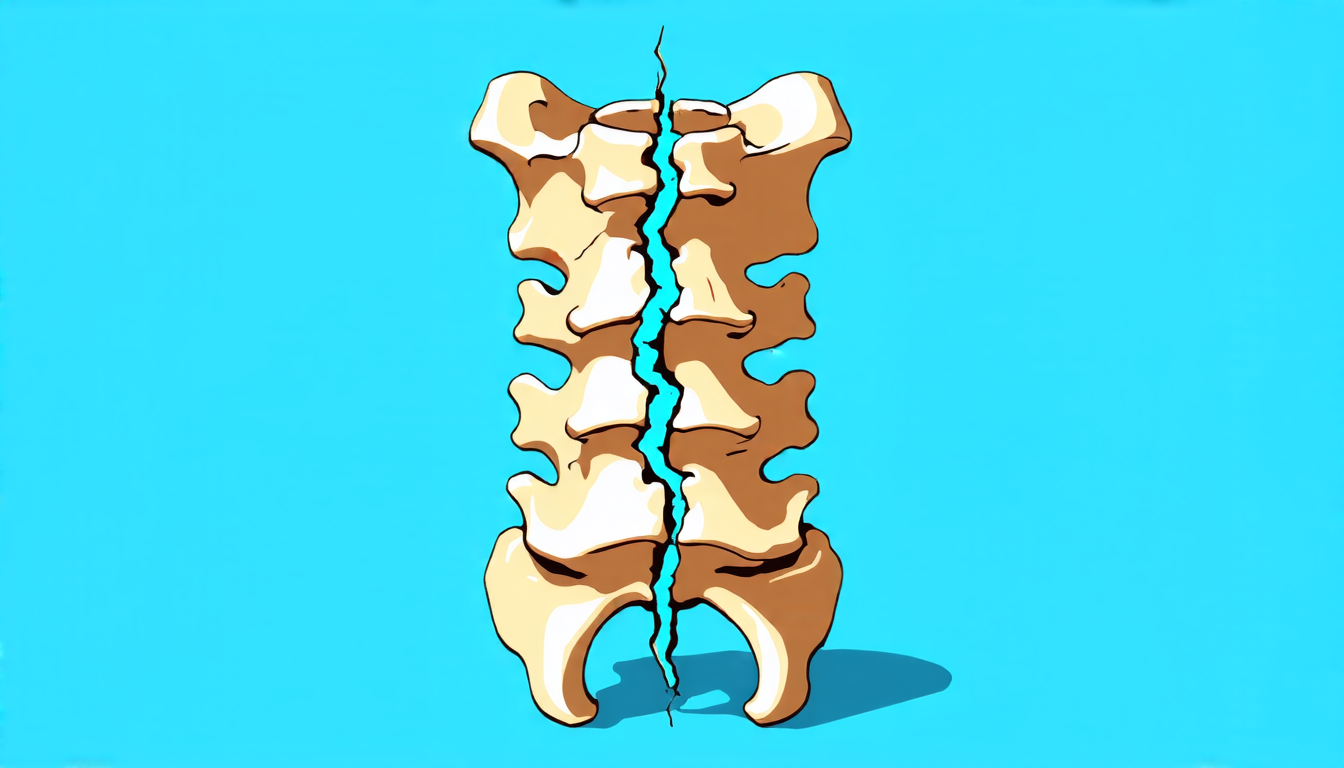
Vertebral fractures are incredibly common, particularly among older adults. In fact, it’s estimated that over 50% of women and 25% of men will experience a vertebral fracture at some point in their lives. But despite this high prevalence, vertebral fractures are often difficult to diagnose using traditional medical imaging techniques.
That’s because vertebral fractures can be subtle and may not show up clearly on X-rays or other types of images. This can lead to misdiagnosis or delayed diagnosis, which can have serious consequences for patients.
A team of researchers has been working to change this by developing a new technology that uses artificial intelligence to generate synthetic images of healthy vertebrae. These synthetic images are then used to train machine learning algorithms to detect vertebral fractures more accurately.
The technology works by using a combination of computer algorithms and medical imaging data to create highly realistic images of healthy vertebrae. These images are then used to train the machine learning algorithm, which can be fine-tuned to detect specific patterns and features associated with vertebral fractures.
In tests, the new technology was found to be incredibly accurate, detecting vertebral fractures in patients with a high degree of precision. This is particularly significant because it means that doctors may be able to diagnose vertebral fractures more quickly and accurately, which could lead to better treatment outcomes for patients.
The implications of this technology are far-reaching. For one, it has the potential to revolutionize the way doctors diagnose and treat vertebral fractures. But it also has the potential to improve patient outcomes by allowing doctors to intervene earlier in the diagnosis process.
In addition, the technology has the potential to be used in a variety of other medical applications, such as diagnosing other types of fractures or detecting diseases like osteoporosis.
Overall, this new technology is an exciting development that has the potential to make a significant impact on patient care. By improving diagnostic accuracy and allowing doctors to intervene earlier in the diagnosis process, it could lead to better outcomes for patients with vertebral fractures.
Cite this article: “Revolutionizing Vertebral Fracture Diagnosis: A Deep Learning Approach to Synthesize Pseudo-Healthy CT Images”, The Science Archive, 2025.
Medical Imaging, Vertebral Fractures, Artificial Intelligence, Machine Learning, Computer Algorithms, Medical Imaging Data, Synthentic Images, Diagnosis, Treatment Outcomes, Osteoporosis





