

Tuesday 08 April 2025
The pursuit of autonomous driving has long been a holy grail for researchers and developers, with many attempts at cracking the code leading to incremental progress rather than revolutionary breakthroughs. Recently, however, a novel approach has emerged that leverages the observed trajectories of surrounding traffic participants as additional expert demonstrations, promising significant improvements in safety and performance.
The core idea behind this method is simple yet effective: by incorporating data from other vehicles into the training process, it becomes possible to learn more nuanced and diverse driving behaviors. This is achieved through a vehicle selection mechanism that prioritizes dynamic and contextually rich driving behaviors, such as turns, lane changes, and parking maneuvers.
To put this approach to the test, researchers trained a state-of-the-art planning algorithm called PLUTO using varying amounts of data from the nuPlan dataset, a comprehensive collection of real-world scenarios. The results were nothing short of impressive: across all tested scenarios, the augmented model outperformed its baseline counterpart in terms of safety metrics such as collision rates and time-to-collision.
But what’s truly remarkable about this approach is its ability to generalize well even when faced with limited data. In fact, the researchers found that using just 10% of the original dataset resulted in performance comparable to using the full dataset – a significant achievement given the complexities involved in autonomous driving.
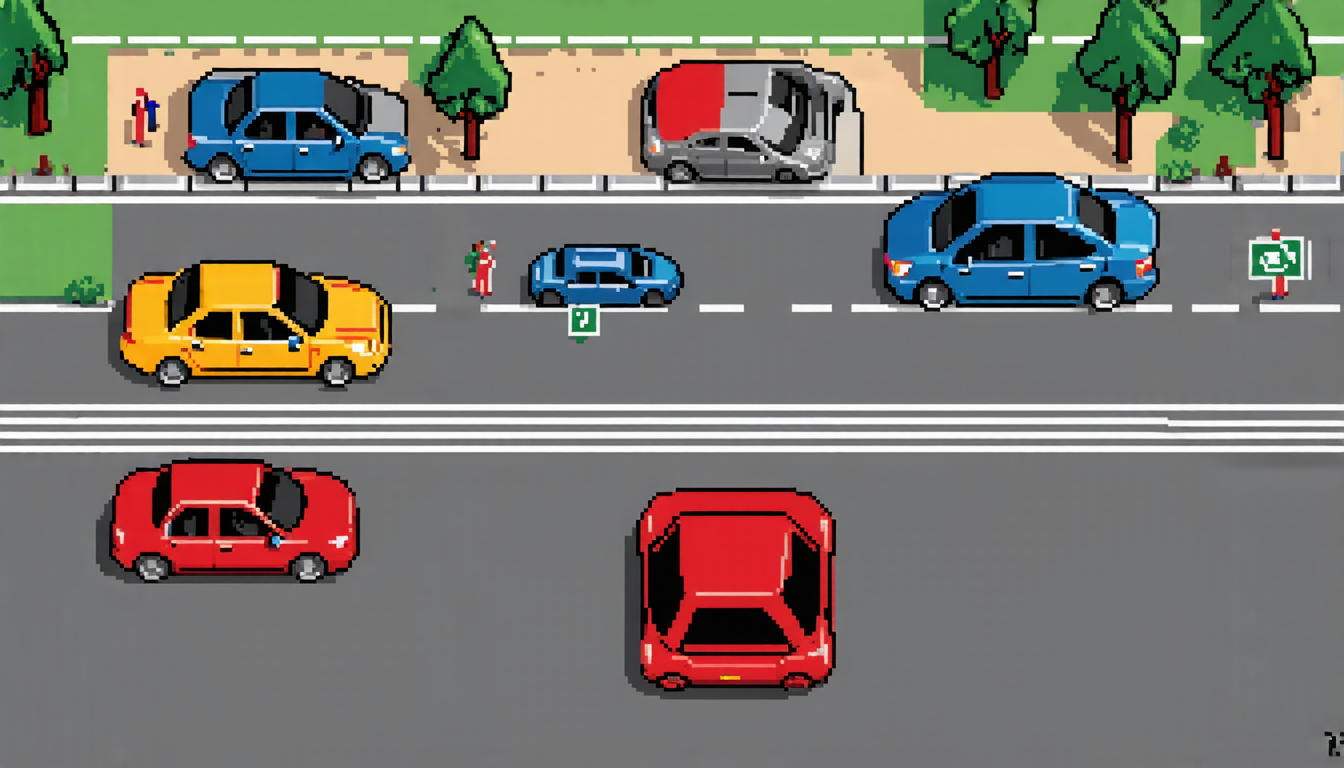
One of the most compelling aspects of this method is its potential to improve safety in scenarios where human drivers are prone to making mistakes. For instance, the augmented model demonstrated a more confident decision-making process in a challenging merging scenario, successfully avoiding a collision that would have occurred under traditional planning algorithms.
The implications of this research are far-reaching, with the potential to transform not just autonomous driving but also other areas where agent interactions play a critical role. As we continue to grapple with the complexities of AI-powered systems, approaches like this one offer a beacon of hope for developing more robust and effective solutions.
In evaluating the performance of PLUTO, researchers used a combination of metrics including no ego-at-fault collisions, time-to-collision compliance, drivable area compliance, comfort, and progress. The results showed that the augmented model outperformed the baseline in all categories, with notable improvements in collision rates and TTC compliance.
A key aspect of this approach is its ability to adapt to different scenarios, making it particularly well-suited for real-world deployment. By incorporating data from a wide range of vehicles and environments, the model becomes more resilient and better equipped to handle unexpected situations.
Cite this article: “Boosting Autonomous Driving Performance with Imitation Learning and Data Augmentation”, The Science Archive, 2025.
Autonomous Driving, Vehicle Selection, Pluto, Nuplan Dataset, Planning Algorithm, Collision Rates, Time-To-Collision, Decision-Making Process, Safety Metrics, Ai-Powered Systems





