

Tuesday 08 April 2025
In a breakthrough that could revolutionize the treatment of skin cancer, researchers have developed a new technique for placing needles during high-dose rate brachytherapy. This type of radiation therapy is used to treat tumors close to the surface of the body, and accurate placement of the needles is crucial for delivering the correct dose of radiation.
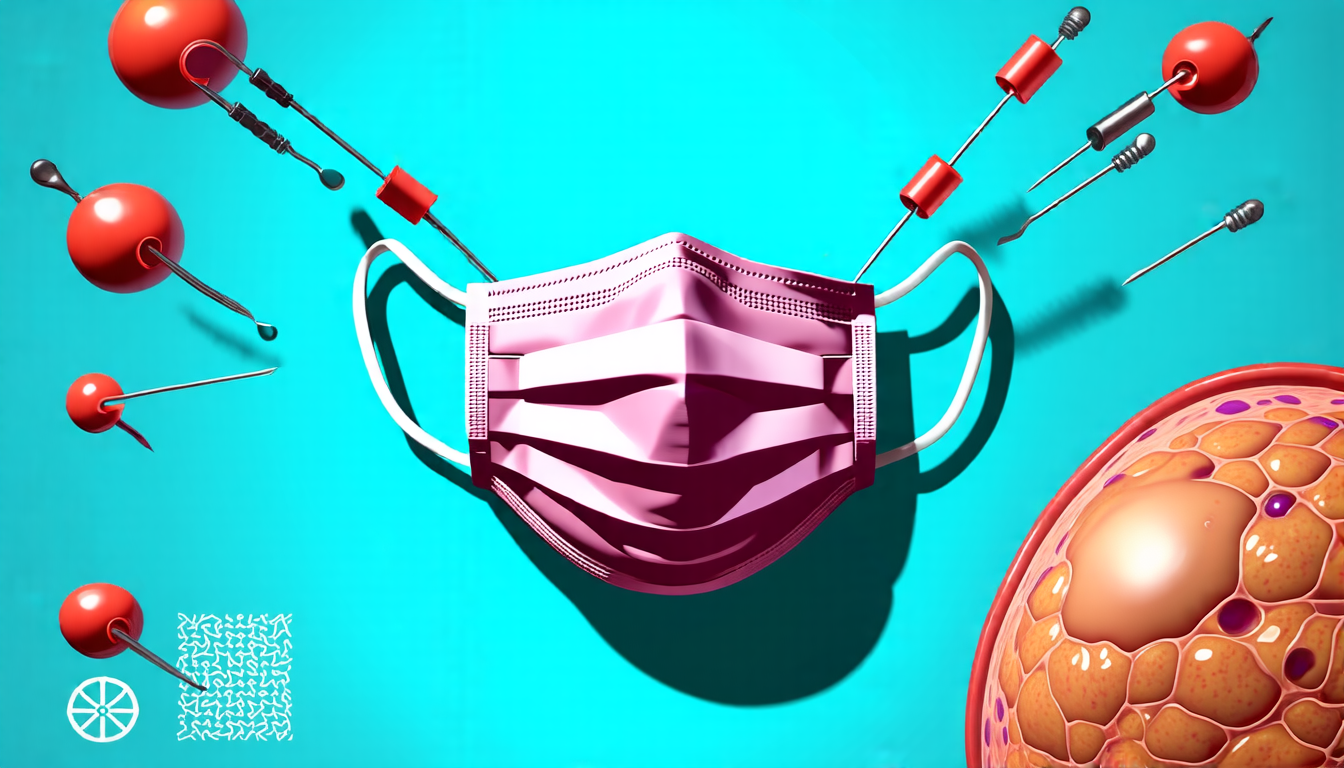
The traditional method of needle placement involves manual positioning by physicians or medical physicists, a time-consuming and labor-intensive process that can lead to errors. To address this issue, scientists have been exploring ways to use 3D-printed masks customized for individual patients to guide the placement of the needles.
A team of researchers has now developed an optimization model that uses machine learning algorithms to determine the optimal needle positions within these masks. The model takes into account a range of factors, including the shape and size of the tumor, the location of nearby organs and tissues, and the desired radiation dose.
The new technique was tested on five variants of a clustering approach, each with different parameters for the optimization model. The results showed that all formulations produced similar improvements in dosimetric indices, such as the volume of healthy tissue exposed to radiation.
However, one variant stood out for its speed and efficiency, requiring just 46 seconds to solve the optimization problem compared to over an hour for some of the other variants. This could make it a viable option for use in clinical practice, where time is of the essence in treating patients with skin cancer.
The researchers used computational models to simulate the behavior of radiation during treatment and evaluated the performance of each variant using a range of dosimetric indices. They also tested the stability of the solutions by introducing random variations in the patient’s anatomy and found that the optimal needle positions remained robust.
The use of 3D-printed masks has several advantages over traditional methods, including increased precision and reduced radiation exposure to healthy tissue. The new optimization model could further enhance the effectiveness of this approach by ensuring that the needles are positioned exactly where they need to be to deliver the correct dose of radiation.
In addition to its potential benefits for patients with skin cancer, this technology could also be used to treat other types of tumors and diseases. The researchers hope to continue refining their technique and exploring its applications in various medical contexts.
The development of this new optimization model is a significant step forward in the quest for more effective and efficient radiation therapy treatments.
Cite this article: “Optimizing Needle Placement in 3D-Printed Masks for HDR-BT Cancer Treatment: A Clustering Approach”, The Science Archive, 2025.
Skin Cancer, Brachytherapy, Needle Placement, 3D Printing, Machine Learning, Radiation Therapy, Optimization Model, Dosimetric Indices, Treatment Planning, Medical Physics





