
Tuesday 08 April 2025
The study of psychiatric illness has long been plagued by a disconnect between symptoms and underlying neurobiology. Computational psychiatry, an emerging field that combines machine learning and neuroscience, aims to bridge this gap by providing formal accounts of the information processing changes that contribute to mental health disorders.
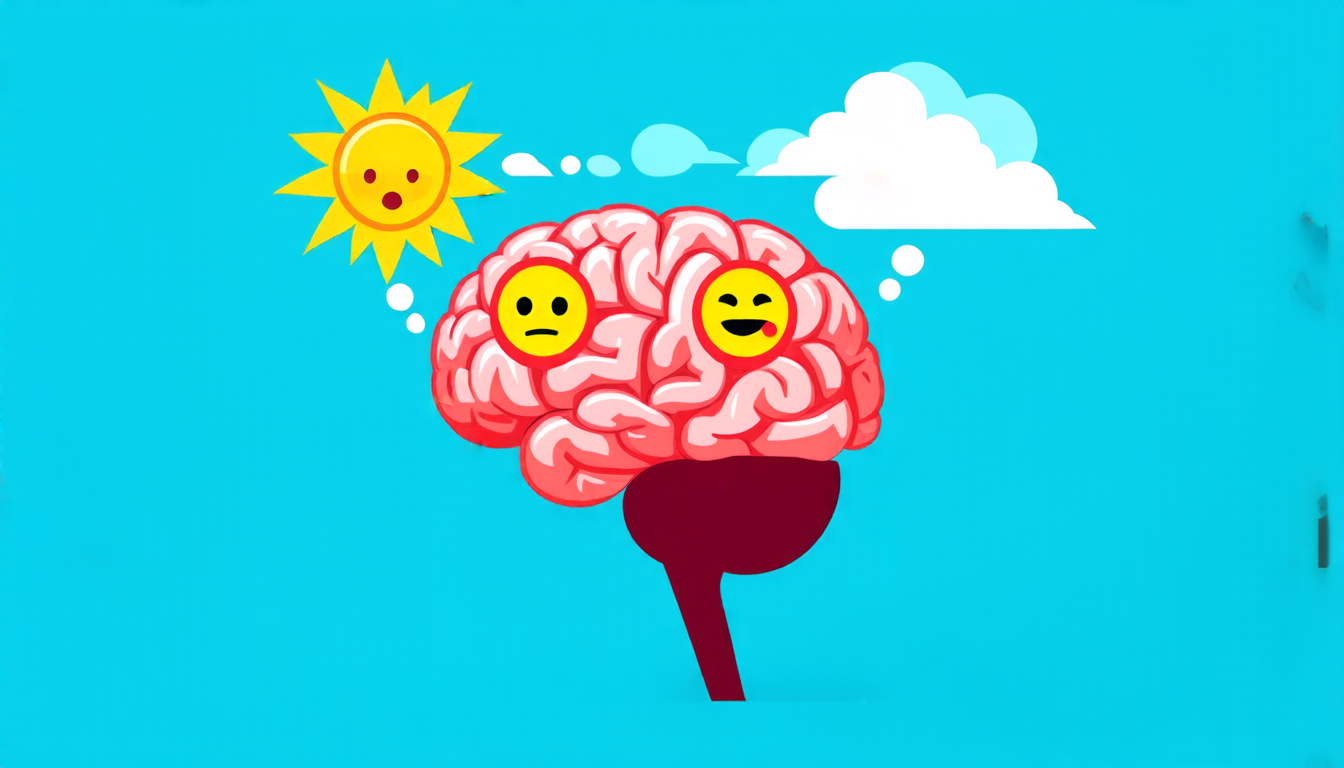
One key aspect of psychological experience that has garnered significant attention in recent years is affect – our emotional state and how it influences our thoughts and behaviors. Affective states have been shown to play a crucial role in decision-making, with emotions serving as important cues for navigating complex social situations.
Researchers have used computational models to explore the relationship between affect and decision-making, finding that affective states can both enhance and impede cognitive processes such as attention and memory. For example, negative emotional states like anxiety or depression can lead to rumination and distraction, while positive emotions like excitement or joy can facilitate focus and creativity.
But what happens when these affective states become distorted or maladaptive? In the case of psychiatric illnesses like schizophrenia, researchers have found that aberrant affective processing is a key contributor to symptom development. For instance, individuals with schizophrenia often exhibit difficulties in regulating their emotional responses, leading to heightened anxiety and fear.
To better understand this relationship, scientists have turned to computational models that simulate the neural circuits involved in emotional processing. One popular approach is active inference, which posits that our brains are constantly generating predictions about the world around us and updating these predictions based on new sensory information.
In the context of schizophrenia, researchers have used active inference to model the emergence of delusions – fixed, false beliefs that are resistant to correction by reality. According to this framework, delusions arise when the brain becomes stuck in a particular emotional state, such as anxiety or fear, which leads to the generation of aberrant predictions about the environment.
These predictions are then reinforced through a process known as confirmation bias, where individuals selectively attend to information that confirms their preconceived notions. Over time, this can lead to the development of entrenched delusional beliefs that resist attempts at correction.
The implications of these findings are far-reaching, suggesting new avenues for therapeutic intervention and potential biomarkers for disease diagnosis. By better understanding the complex interplay between affective states and cognitive processes, researchers may be able to develop more targeted treatments for psychiatric illnesses like schizophrenia.
Ultimately, the integration of computational psychiatry with traditional clinical approaches holds promise for revolutionizing our understanding of mental health disorders and improving treatment outcomes.
Cite this article: “Unraveling the Neural Mechanisms of Psychosis: A Comprehensive Review of Computational Modeling Approaches”, The Science Archive, 2025.
Psychiatric Illness, Computational Psychiatry, Machine Learning, Neuroscience, Affect, Decision-Making, Emotions, Schizophrenia, Active Inference, Delusions.