

Tuesday 08 April 2025
A team of researchers has shed new light on the mysterious process of battery aging, revealing that it’s not just about lithium loss, but also about changes in the very structure of the graphite electrodes.
For years, scientists have struggled to understand why batteries degrade over time. One major culprit is thought to be the loss of lithium ions as they move in and out of the graphite electrodes, causing them to become less efficient at storing energy. But a new study suggests that this isn’t the whole story.
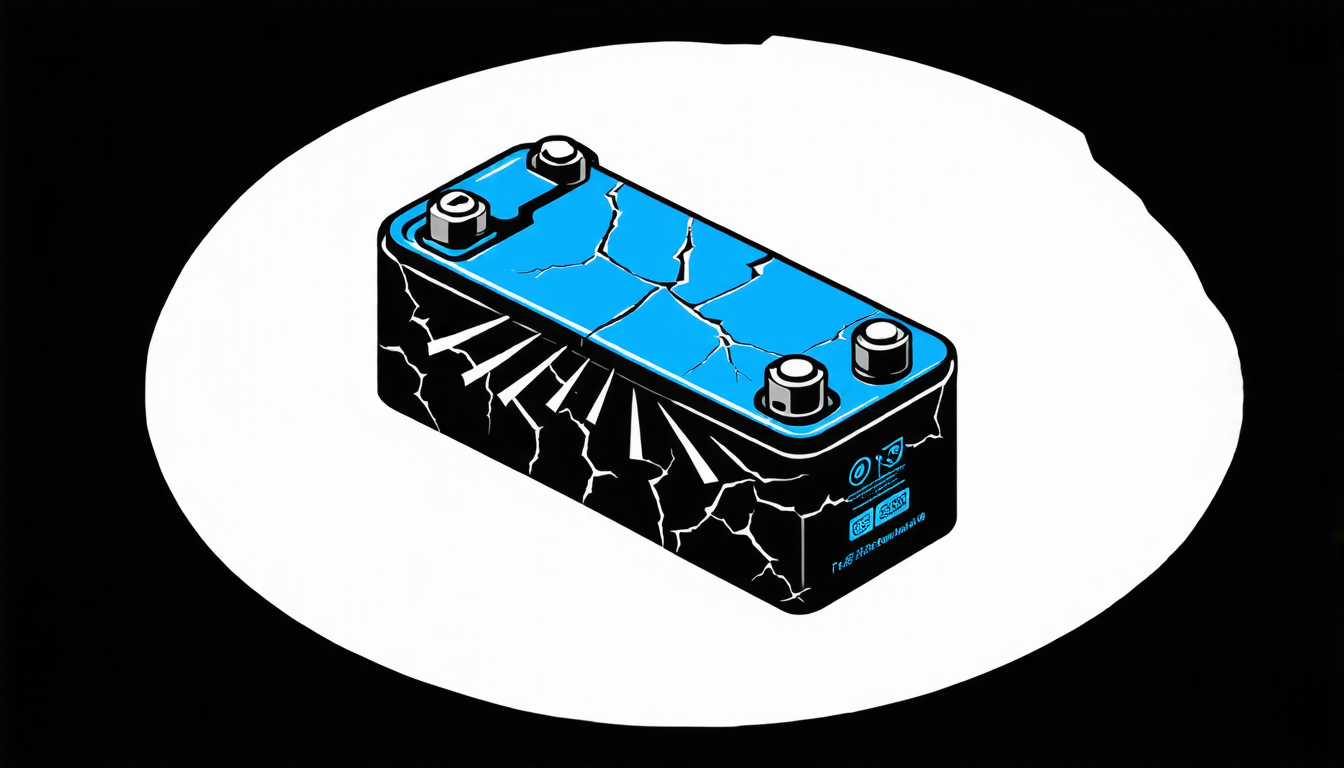
Using advanced X-ray techniques, researchers were able to visualize the internal structure of aged graphite electrodes and found that significant changes had occurred. The once-smooth surface of the electrodes had developed intricate patterns of cracks and crevices, which were not present in fresh electrodes.
These changes weren’t just cosmetic – they also affected the way the electrodes functioned. By analyzing the X-ray data, the researchers discovered that the cracks and crevices created pathways for lithium ions to escape from the electrodes more easily, contributing to their degradation over time.
The study’s findings have significant implications for the development of new battery technologies. For one thing, they suggest that simply improving the efficiency of lithium ion transfer may not be enough to extend a battery’s lifespan – designers will also need to consider the structural integrity of the electrodes themselves.
In another breakthrough, researchers were able to use the same X-ray techniques to create detailed maps of the lithium concentration within the electrodes. This allowed them to pinpoint areas where the ions were accumulating and potentially causing damage.
The study’s authors hope that their work will help pave the way for more durable and efficient batteries in the future. With the increasing demand for renewable energy sources, developing better battery technology is critical to reducing our reliance on fossil fuels and mitigating climate change.
In a major step forward, the researchers were able to use operando X-ray diffraction to monitor the changes in the electrodes in real-time as they cycled through charge and discharge. This allowed them to capture the dynamic process of aging in action, revealing that it’s not just a gradual decline over time – but rather a complex interplay of chemical and physical processes.
The study’s findings have sparked new avenues of research into the mysterious world of battery aging. As scientists continue to unravel the secrets of this process, we can expect major breakthroughs in the development of more sustainable and efficient energy storage solutions.
Cite this article: “Unlocking the Secrets of Lithium-Ion Batteries: A Study of Electrode Heterogeneity Using Operando X-ray Diffraction”, The Science Archive, 2025.
Batteries, Aging, Lithium, Graphite, Electrodes, X-Ray, Degradation, Structure, Efficiency, Renewable Energy





