

Tuesday 08 April 2025
The packing problem has long been a thorn in the side of FPGA designers, who struggle to balance the need for efficient logic utilization with the demands of routability and timing constraints. Now, researchers have developed a new metric that promises to revolutionize the way we approach this challenge.
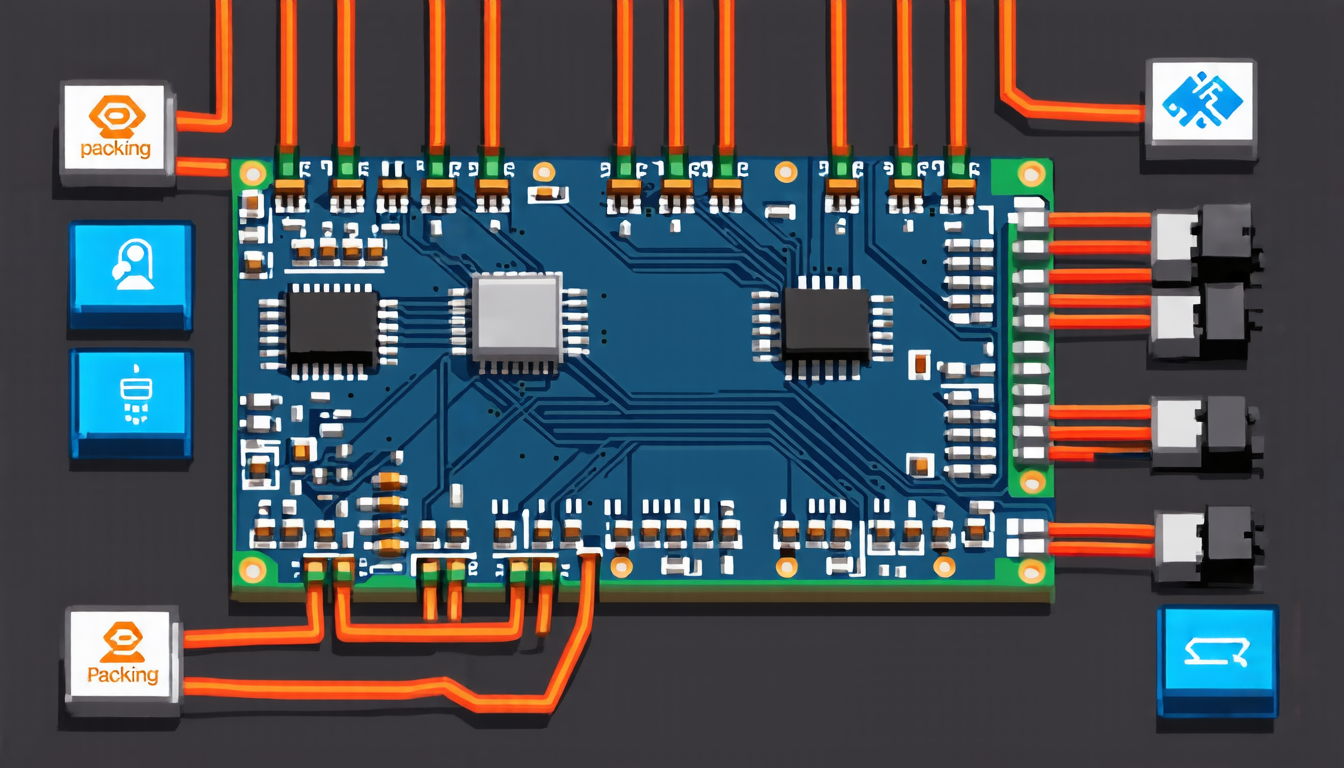
FPGAs, or field-programmable gate arrays, are chips that can be reconfigured to perform specific tasks. They’re incredibly versatile, but their complexity is matched only by the complexity of designing them. One of the biggest hurdles in FPGA design is packing: how do you fit all those logic blocks into a limited amount of space without creating a routing nightmare?
The answer lies in understanding the relationship between the number of terminals and block size within each cluster. This is where Rent’s rule comes in, a fundamental concept in digital circuit design that describes the pin-to-block ratio for partitions of logic graphs.
Traditionally, FPGA designers have used packing algorithms that focus solely on maximizing resource utilization, often at the expense of routability. But what if we could develop an algorithm that takes into account not just the number of blocks used, but also the interconnection complexity between them?
Enter the RDensity metric, a new approach that combines Rent’s rule with post-packing analysis to assess the density of packing algorithms. By evaluating the relationship between terminals and block size within each cluster, researchers can identify areas where the packer is falling short – and adjust accordingly.
The results are impressive: using this new metric, designers can achieve higher utilization rates while maintaining better routability and timing performance. It’s a win-win for FPGA developers, who can now create more efficient and scalable designs without sacrificing performance.
But what does this mean for the future of FPGA design? For one thing, it opens up new possibilities for customized architectures that are tailored to specific applications. With the ability to optimize packing algorithms for specific use cases, designers can create chips that are optimized for everything from machine learning to cryptography.
It also raises questions about the very nature of FPGA design itself. As we move towards more complex and interconnected systems, how will we adapt our design strategies to keep pace? The answer lies in embracing complexity, rather than trying to simplify it – and in developing new tools and metrics that can help us navigate this increasingly complex landscape.
In short, the RDensity metric is a game-changer for FPGA designers.
Cite this article: “Unlocking FPGA Efficiency: A Novel Metric for Assessing Packing Density and Interconnection Complexity”, The Science Archive, 2025.
Fpga, Packing Problem, Rent’S Rule, Rdensity Metric, Packing Algorithms, Routability, Timing Constraints, Logic Blocks, Field-Programmable Gate Arrays, Digital Circuit Design.
Reference: X. Wang, D. Stroobandt, “Dense or Sparse? Post-Packing Interconnection Analysis in FPGAs” (2025).





