

Tuesday 08 April 2025
As technology continues to evolve, we’re seeing a new wave of innovations that are pushing the boundaries of what’s possible. One area where this is particularly evident is in the field of memory storage.
For years, we’ve relied on traditional methods such as RAM and hard drives to store our data. But these solutions have their limitations. They can be slow, power-hungry, and prone to errors. That’s why researchers are turning to a new approach: monolithic 3D integration.
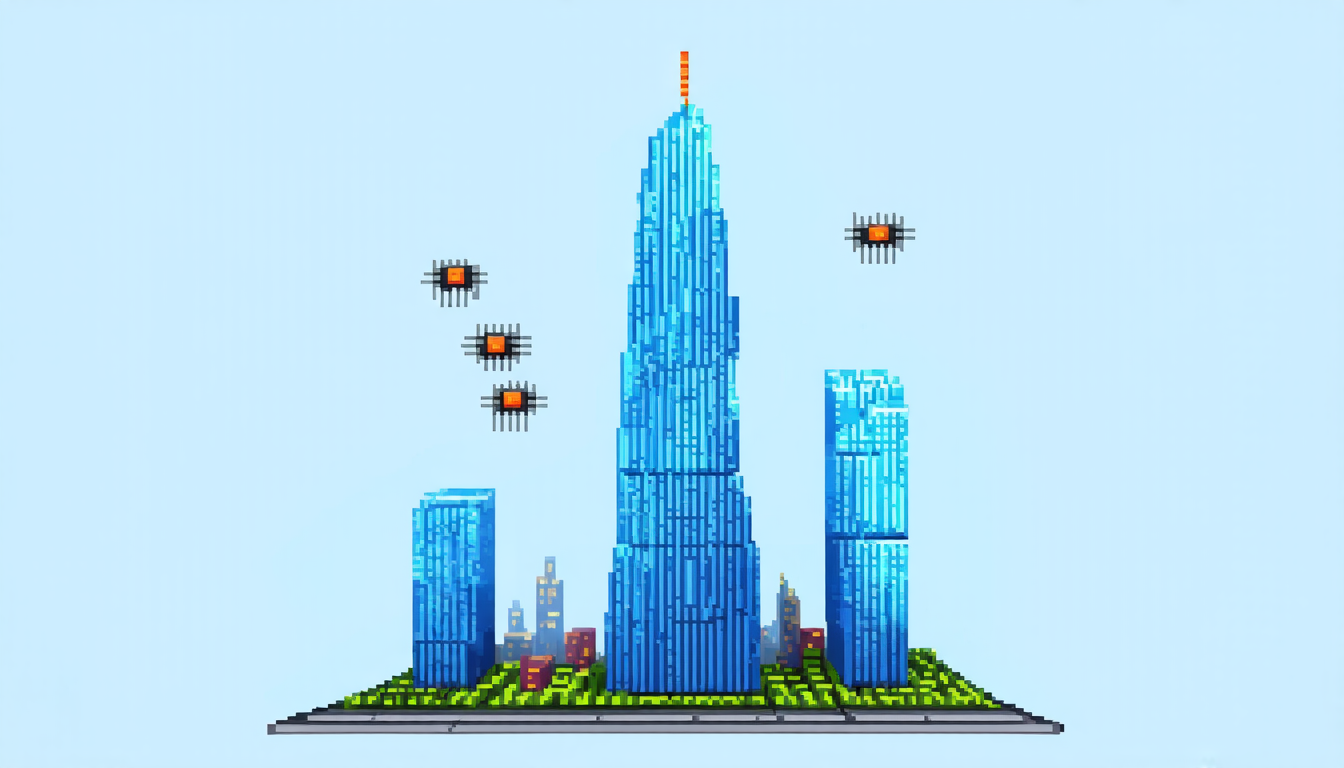
This technique involves stacking transistors on top of each other in a single piece of silicon. This allows for a huge increase in storage capacity, while also reducing the amount of energy required to access that data. It’s like building a skyscraper instead of a row of houses – more efficient and effective.
One of the key benefits of monolithic 3D integration is its ability to reduce latency. Traditional memory solutions often involve moving data across different levels of storage, which can take time. With monolithic 3D integration, all the data is stored in one place, making it much faster to access.
Another advantage is power consumption. As devices become more portable and battery-powered, we need to find ways to reduce their energy requirements. Monolithic 3D integration uses significantly less power than traditional methods, making it a crucial innovation for mobile devices and other low-power applications.
Researchers have been experimenting with different materials and techniques to make monolithic 3D integration a reality. One promising approach is the use of amorphous oxide semiconductors. These materials are highly conductive, yet can be grown in thin layers that don’t waste energy. They’re also compatible with existing manufacturing processes, making them a practical choice for widespread adoption.
To test the viability of monolithic 3D integration, researchers have been building prototype memory devices using these new materials. The results have been impressive – with storage capacities and speeds that far surpass traditional methods.
As we move forward, it’s likely that we’ll see more and more applications of monolithic 3D integration. From smartphones to data centers, this technology has the potential to revolutionize the way we store and access our data. And as the demand for faster, more efficient memory solutions continues to grow, we can expect even more innovations in this area.
The future of memory storage is looking bright – and it’s all thanks to the power of monolithic 3D integration.
Cite this article: “Unlocking the Power of Amorphous Oxide Semiconductors: A Breakthrough in Monolithic 3D Cache Design”, The Science Archive, 2025.
Memory Storage, Monolithic 3D Integration, Ram, Hard Drives, Data Centers, Smartphones, Power Consumption, Latency, Amorphous Oxide Semiconductors, Storage Capacity





