

Tuesday 08 April 2025
Researchers have made a significant breakthrough in the field of topological materials, creating an elastic metamaterial that exhibits both Euler and Stiefel-Whitney topological phases simultaneously. This achievement has important implications for our understanding of the properties of matter at the atomic scale.
Topological materials are unique because they can exhibit exotic properties, such as conducting electricity on their surfaces even when the bulk is insulating. These properties arise from the arrangement of atoms in the material’s crystal structure and are protected by fundamental laws of physics.
The Euler topological phase is characterized by the presence of edge states, which are bands of energy that appear at the surface of the material. These edge states are responsible for the material’s ability to conduct electricity on its surfaces. The Stiefel-Whitney topological phase, on the other hand, is associated with corner states, which are localized modes of vibration that occur at the corners of the material.
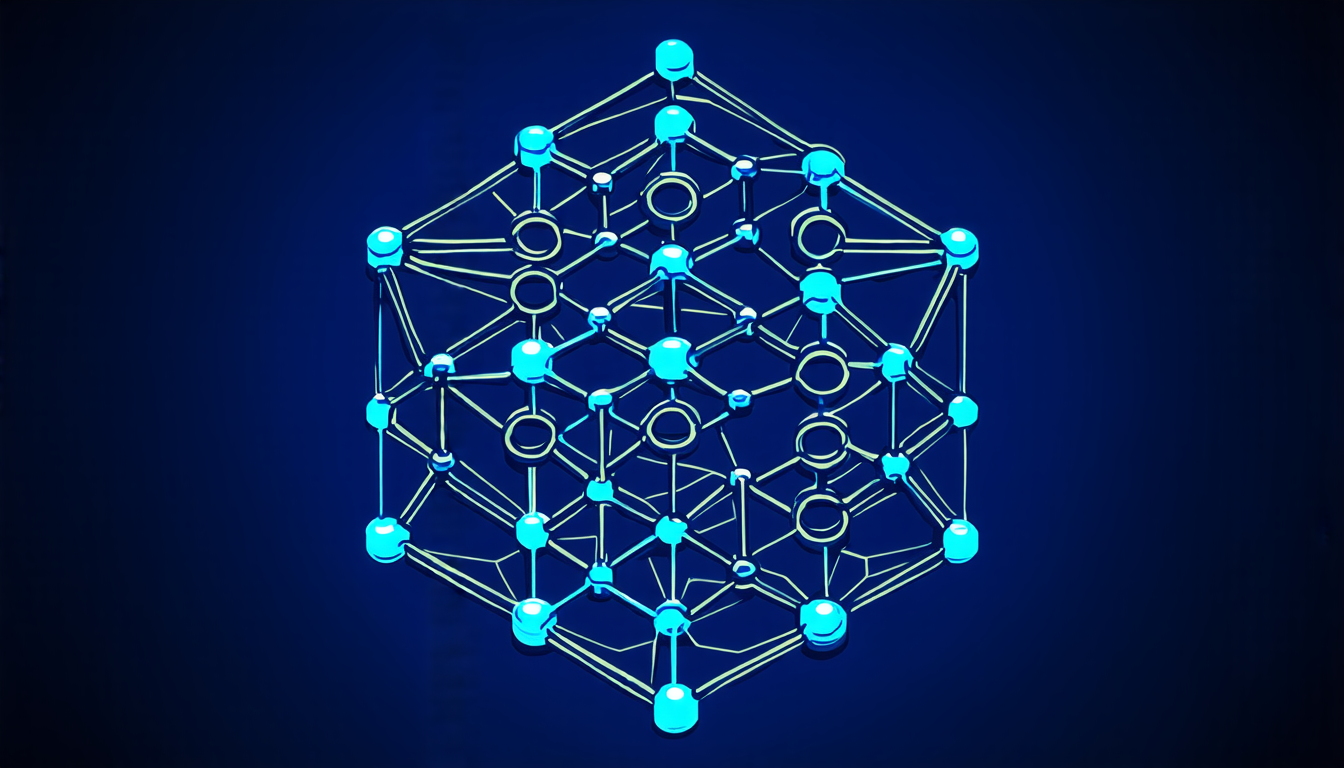
The researchers created their elastic metamaterial by carefully designing a lattice structure made up of tiny cylinders and links. By adjusting the dimensions of the cylinders and links, they were able to tune the material’s properties to exhibit both Euler and Stiefel-Whitney topological phases simultaneously.
The team used computer simulations to model the behavior of the material and experimentally verified their results using a metal-printed sample. They found that the material exhibited the predicted edge states and corner states, demonstrating its ability to conduct electricity on its surfaces and vibrate at specific frequencies.
This achievement is significant because it opens up new possibilities for the design of materials with exotic properties. By combining different topological phases, researchers can create materials with unique properties that could have applications in a wide range of fields, from electronics to medicine.
For example, the ability to control the flow of energy on the surface of a material could be used to develop more efficient solar panels or thermoelectric devices. Similarly, the presence of corner states could be exploited to create new types of sensors or actuators.
The development of this elastic metamaterial is an important step forward in our understanding of topological materials and their potential applications. As researchers continue to explore the properties of these materials, we can expect to see even more innovative applications emerge.
Cite this article: “Unlocking the Secrets of Topological Metamaterials: A Breakthrough in Elastic Wave Manipulation”, The Science Archive, 2025.
Topological Materials, Elastic Metamaterials, Euler Phase, Stiefel-Whitney Phase, Edge States, Corner States, Conductivity, Vibration, Lattice Structure, Computer Simulations.





