

Tuesday 08 April 2025
Computers are getting better at reconstructing three-dimensional images of the human body from limited X-ray data, a breakthrough that could revolutionize medical imaging.
For decades, radiologists have been able to peer inside the human body using computed tomography (CT) scans. These scans use X-rays to take thousands of two-dimensional pictures, which are then combined into a single three-dimensional image. But this process requires patients to be exposed to significant amounts of radiation and can be time-consuming.
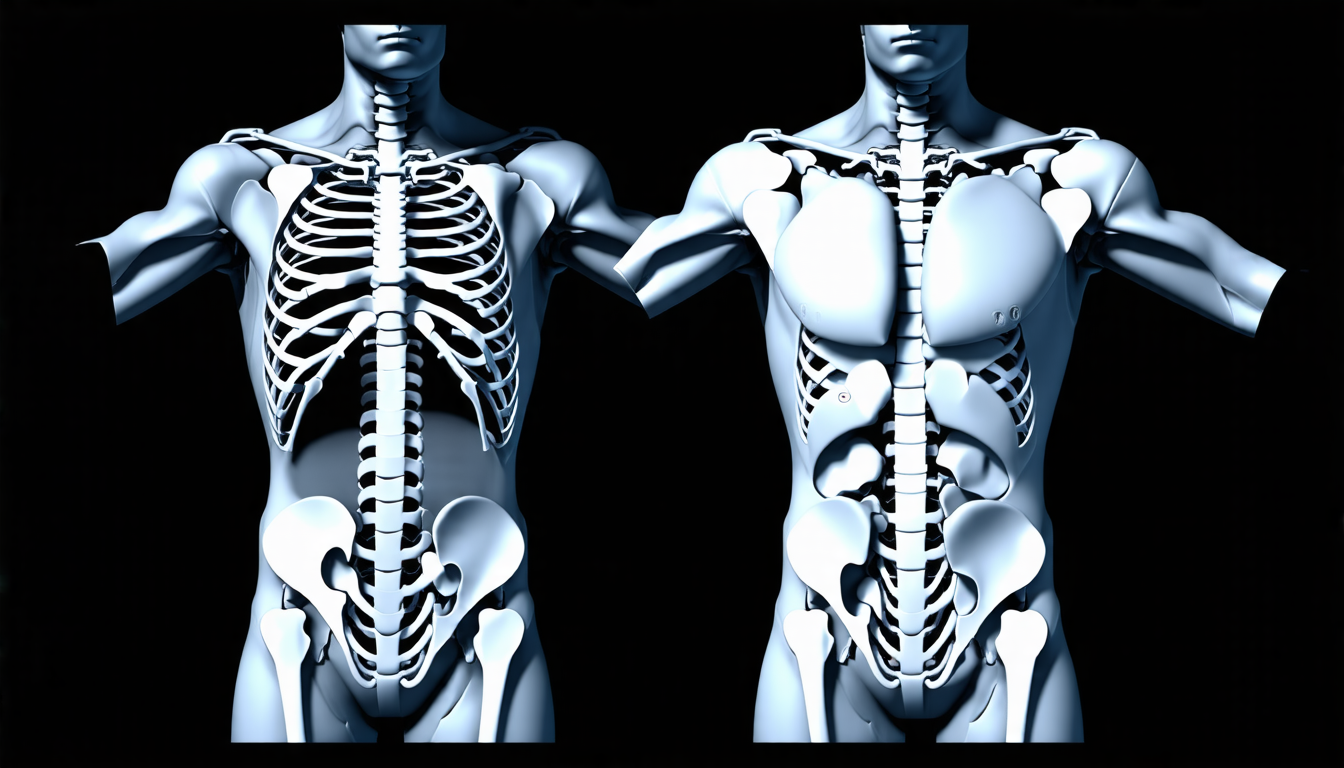
Now, researchers have developed a new technique that uses artificial intelligence to reconstruct 3D images from just a handful of X-ray views. This could enable faster and more accurate diagnoses, as well as reduce the amount of radiation patients are exposed to.
The team used a massive dataset of CT scans to train their algorithm, which they called X- LR M. This neural network is able to learn the patterns and relationships between different parts of the body from the limited X-ray data, allowing it to generate high-quality 3D images.
To test the system, the researchers used a smaller dataset of CT scans with varying levels of noise and artifacts. They found that X-LRM was able to produce accurate reconstructions even in these challenging cases.
One of the most impressive aspects of X-LRM is its ability to handle extremely sparse-view data, where only a few X-ray views are available. This could be particularly useful for patients who are unable to undergo full-body scans due to mobility issues or other health concerns.
The team also developed a new dataset of CT scans, called Torso-16K, which is more than 18 times larger than any existing benchmark. This dataset will enable researchers to train and test their algorithms on a much larger scale, leading to even better results in the future.
While X-LRM is still an early-stage technology, it has the potential to transform the field of medical imaging. By enabling faster and more accurate diagnoses, it could help doctors detect diseases earlier and improve patient outcomes. And by reducing radiation exposure, it could make CT scans safer for patients. As researchers continue to refine this technology, we can expect to see even more impressive advancements in the years to come.
Cite this article: “Revolutionizing Medical Imaging: Transformer-Based Reconstruction Model Surpasses State-of-the-Art Performance in Computed Tomography”, The Science Archive, 2025.
Computers, Artificial Intelligence, X-Ray Data, Medical Imaging, Ct Scans, Radiation Exposure, Neural Network, 3D Images, Sparse-View Data, Torso-16K Dataset





