

Tuesday 08 April 2025
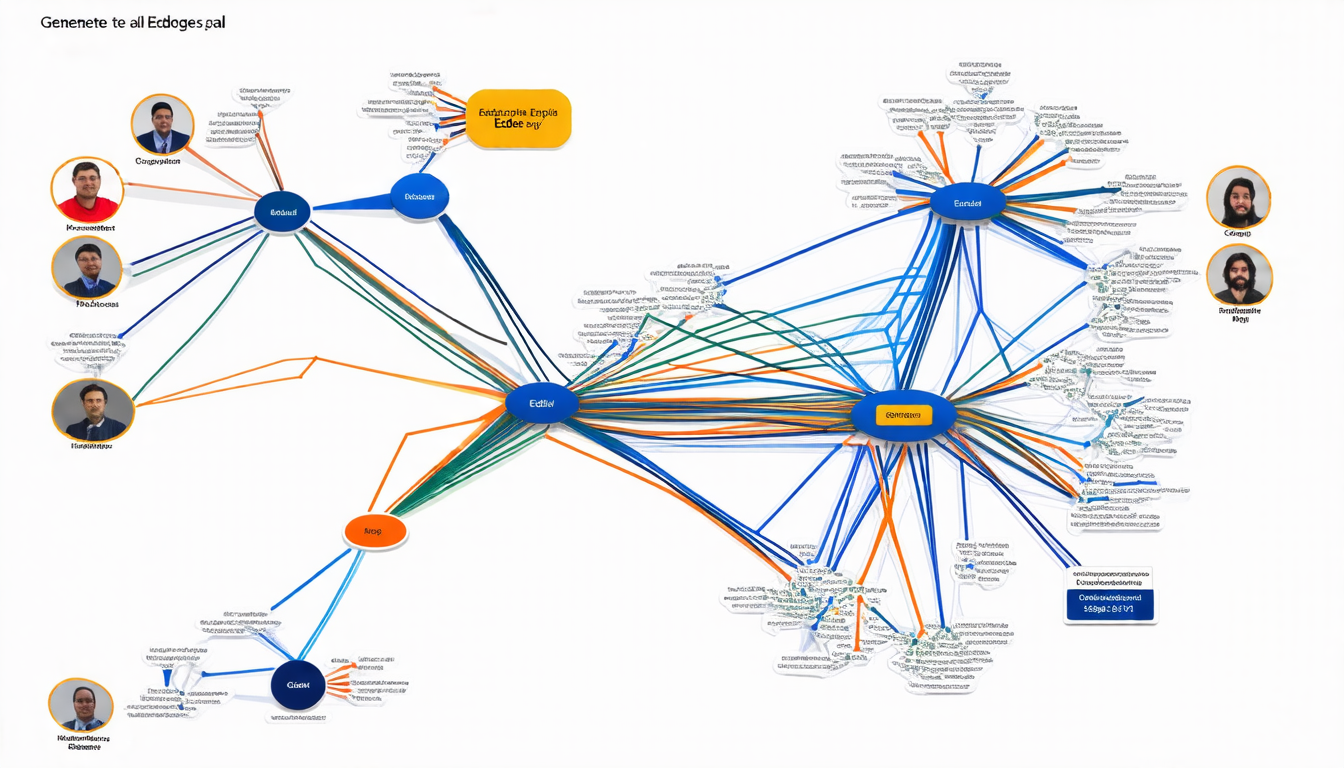
A team of researchers has developed a new method for identifying potential financial risks in companies by analyzing their relationships and connections. The approach, called CF3, uses graph neural networks to learn patterns and behaviors in company knowledge graphs, which are visual representations of a company’s information.
CF3 is an improvement over previous methods because it provides more accurate and reliable explanations for why certain companies are at risk. In the past, financial risk detection models have been limited by their black box nature, making it difficult to understand how they arrive at their predictions.
The researchers created CF3 by combining two key components: a graph generator that identifies important edges in the company knowledge graph, and a feature masker that recognizes crucial node features. The graph generator uses meta-path attribution to select the most relevant meta-paths, or patterns of relationships between nodes, to construct an attribution subgraph.
The feature masker then uses this subgraph to identify which features are most important for predicting financial risk. This information is used to create a loss function that guides the learning process of the graph generator and feature masker.
To evaluate CF3’s performance, the researchers tested it on three real-world datasets and compared its results with those of state-of-the-art approaches in the field. The results showed that CF3 outperformed these other methods in identifying financial risks and providing accurate explanations for its predictions.
The implications of CF3 are significant, as it has the potential to revolutionize the way companies approach risk management. By providing more transparent and explainable results, CF3 can help investors and regulators make more informed decisions about where to invest their money.
In addition to its practical applications, CF3 also has theoretical significance for the field of artificial intelligence. The researchers’ use of graph neural networks and counterfactual reasoning demonstrates a new way of thinking about complex systems and relationships.
The development of CF3 is an important step forward in the field of financial risk detection, and it has the potential to make a real difference in the lives of people and businesses around the world.
Cite this article: “Unlocking Financial Risk Detection: A Graph Neural Network Approach with Explainable Counterfactual Reasoning”, The Science Archive, 2025.
Financial Risk Detection, Cf3, Graph Neural Networks, Company Knowledge Graphs, Meta-Path Attribution, Feature Masker, Loss Function, Artificial Intelligence, Risk Management, Explainability





