

Tuesday 08 April 2025
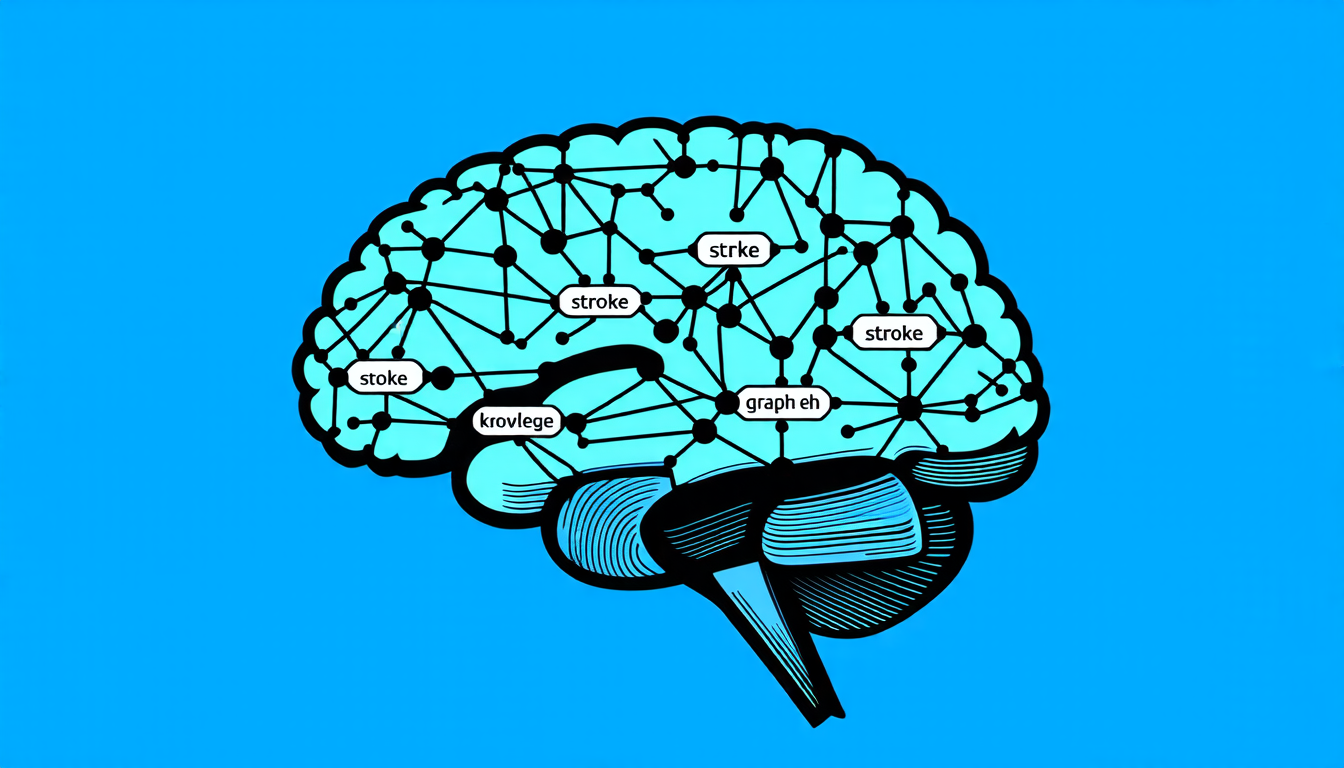
Scientists have made a significant breakthrough in the field of artificial intelligence and language processing, developing a new method for constructing knowledge graphs using large language models. Knowledge graphs are powerful tools that can help us better understand complex relationships between different pieces of information.
The traditional approach to building knowledge graphs involves manually curating vast amounts of data from various sources, which is both time-consuming and prone to errors. The new method uses large language models, such as GPT-4, to automatically extract and organize information from biomedical literature related to stroke.
To create this knowledge graph, the researchers collected articles on stroke-related topics from various sources and applied special processes to convert them into tensors and graphs of communication between them. They then used traditional and three criteria based on GPT-4 to evaluate their model.
The results were impressive: compared to three existing knowledge bases – Wikidata, WN18RR, and SKG-LLM – the proposed approach provided more accurate and meaningful results. In fact, it outperformed all of them in precision and recall tests.
This achievement has significant implications for various healthcare applications, such as predicting patient outcomes, identifying potential new treatments, and improving diagnostic accuracy. By leveraging large language models to construct knowledge graphs, researchers can tap into the vast amounts of information available in biomedical literature and extract valuable insights that would be difficult or impossible to obtain through manual curation.
The authors also explored the potential of integrating deep learning and machine learning approaches with their method to further improve its performance. This could lead to even more accurate predictions and a deeper understanding of complex biological processes.
One limitation of this study is that it focused primarily on stroke-related topics, which may not generalize to other areas of medicine or science. However, the authors suggest that their approach can be easily adapted to construct knowledge graphs for other domains as well.
Overall, this research has significant potential to revolutionize our understanding of biomedical information and improve healthcare outcomes. By harnessing the power of artificial intelligence and large language models, scientists can unlock new insights and make a real difference in people’s lives.
Cite this article: “Unveiling the Power of Large Language Models in Constructing Knowledge Graphs for Biomedical Applications”, The Science Archive, 2025.
Artificial Intelligence, Language Processing, Knowledge Graphs, Biomedical Literature, Stroke, Gpt-4, Machine Learning, Deep Learning, Precision, Recall.





