

Tuesday 08 April 2025
As we navigate through our daily lives, it’s easy to take for granted the ability to recognize familiar places and environments. From walking into a favorite coffee shop to finding your way back home after a long day, visual place recognition is an essential part of our cognitive repertoire. However, have you ever stopped to think about how our brains are able to do this? It turns out that it’s not just our brains doing all the heavy lifting – new research has shown that incorporating text-based information can significantly improve our ability to recognize and distinguish between different locations.
In a recent study published in IEEE Transactions on Robotics, researchers introduced TextInPlace, a novel approach to visual place recognition that leverages scene text spotting to mitigate the challenges posed by repetitive indoor environments. The concept is simple: when we’re trying to find our way around an unfamiliar space, our brains tend to rely heavily on visual cues such as colors, textures, and shapes. But what if these cues are similar across multiple locations? That’s where TextInPlace comes in.
The system uses a dual-branch architecture within a local parameter sharing network to extract global descriptors for coarse-grained retrieval. The first branch focuses on image retrieval using attention-based aggregation, while the second branch utilizes scene text spotting to detect and recognize written words and phrases. By combining these two branches, TextInPlace is able to effectively re-rank the top-K retrieved images based on their similarity to the query image.
To test the efficacy of this approach, the researchers created a custom dataset called Maze-with-Text, which features indoor scenes with repetitive structures and scene text. They also used an existing public dataset, TextLCD, for additional validation. The results were impressive: TextInPlace outperformed state-of-the-art methods in terms of recognition accuracy and efficiency.
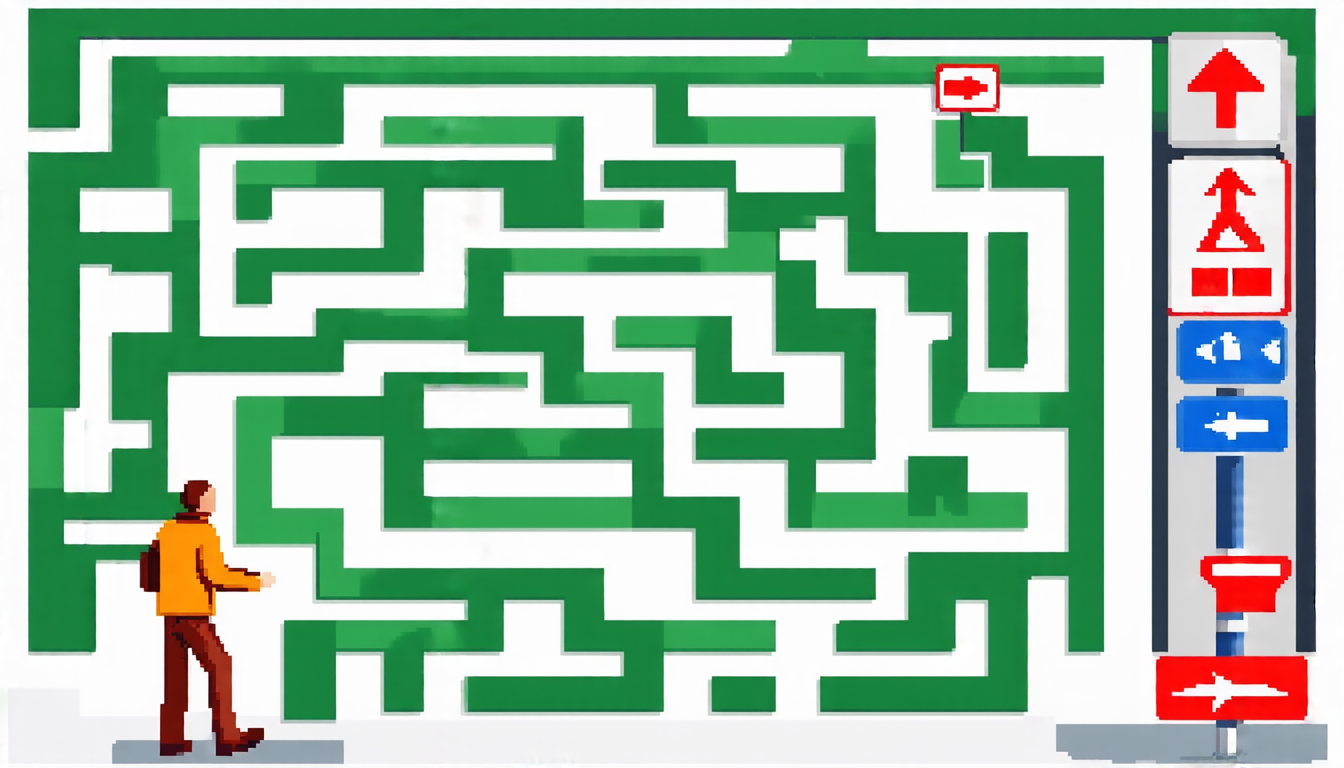
So how does this technology work in practice? Let’s say you’re trying to find your way back to a specific meeting room in a large office building. Your brain might initially focus on visual cues such as the color of the walls or the layout of the furniture, but if these cues are similar across multiple rooms, you’d struggle to distinguish between them. That’s where TextInPlace comes in – by recognizing written words and phrases on signs, labels, and other visual elements, your brain can create a more nuanced understanding of the environment and make more accurate decisions about navigation.
The implications of this technology go beyond just navigation, however.
Cite this article: “Cracking the Code: Uncovering the Secrets of Indoor Visual Place Recognition with Scene Text”, The Science Archive, 2025.
Visual Place Recognition, Text-Based Information, Scene Text Spotting, Indoor Environments, Repetitive Structures, Written Words, Phrases, Navigation, Cognitive Repertoire, Ieee Transactions On Robotics, Local Parameter Sharing Network.





