

Tuesday 08 April 2025
As scientists continue to push the boundaries of computational mathematics, a new method has emerged that promises to revolutionize the way we approach complex problems. The modified dynamic diffusion finite element method, developed by researchers at Chongqing Jiaotong University in China, offers a powerful tool for tackling convection-diffusion-reaction equations.
These types of equations are common in fields such as fluid dynamics and chemical engineering, where they describe the behavior of substances moving through a medium. However, solving them can be challenging due to the complex interactions between convection, diffusion, and reaction processes.
The new method addresses this challenge by introducing a modified dynamic diffusion formulation that allows for more accurate and efficient simulations. The approach is based on a combination of finite element methods and adaptive mesh refinement techniques, which enable the solution to be tailored to the specific characteristics of the problem.
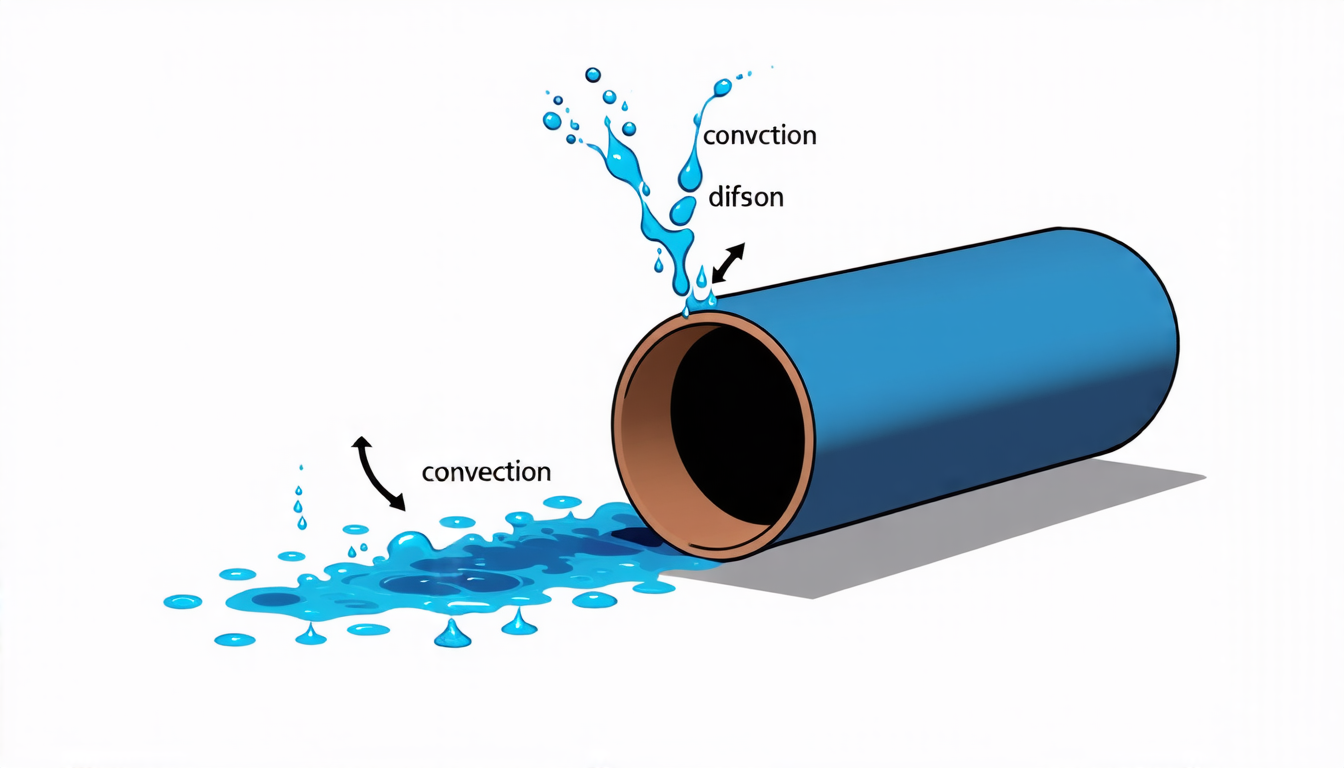
One of the key benefits of this method is its ability to handle complex geometries and boundary conditions with ease. This makes it particularly useful for problems involving real-world objects, such as pipes or vessels, where the geometry can be intricate and the boundary conditions can be non-trivial.
In addition to its accuracy and versatility, the new method also offers significant computational savings compared to traditional approaches. This is due in part to the use of adaptive mesh refinement, which allows for more precise resolution of the solution near critical regions while reducing the overall number of degrees of freedom required.
The modified dynamic diffusion finite element method has been tested on a range of problems, including convection-diffusion-reaction equations and systems with multiple scales. The results show that it is capable of producing highly accurate solutions, even in the presence of strong convection and reaction terms.
The potential applications of this new method are vast and varied. For example, it could be used to model the behavior of chemical reactions in complex systems, such as industrial reactors or biological pathways. It could also be applied to problems involving heat transfer or mass transport, such as the design of more efficient engines or the optimization of chemical processing facilities.
As computational power continues to increase and new methods are developed, it is likely that we will see even more sophisticated simulations in a wide range of fields.
Cite this article: “Efficient Finite Element Methods for Convection-Diffusion Problems: A Review of Recent Advances and Applications”, The Science Archive, 2025.
Finite Element Method, Convection-Diffusion-Reaction Equations, Computational Mathematics, Adaptive Mesh Refinement, Fluid Dynamics, Chemical Engineering, Numerical Simulations, Complex Geometries, Boundary Conditions, Computational Savings





