

Tuesday 08 April 2025
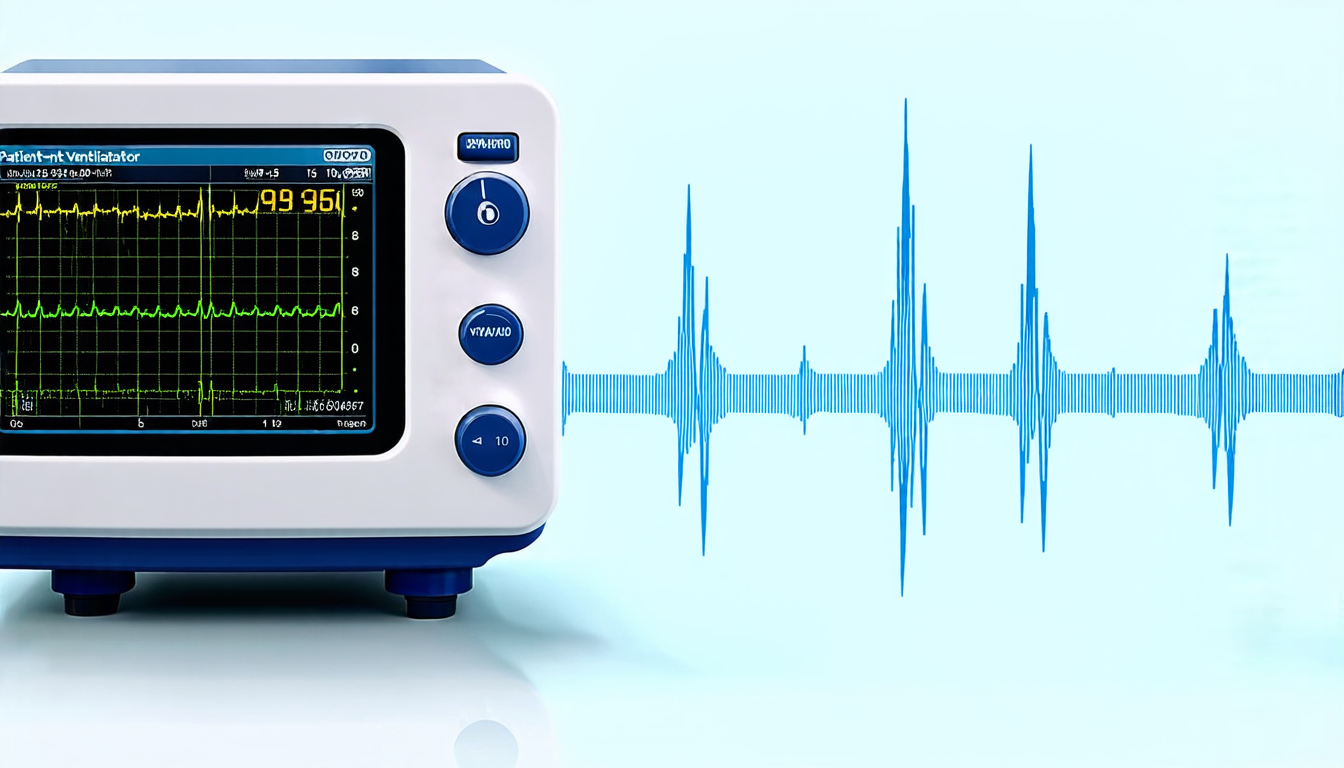
A new approach to detecting patient-ventilator asynchrony, a common and critical issue during mechanical ventilation, has been developed by researchers. This condition can lead to discomfort, sleep disruption, and even more severe complications like ventilator-induced lung injury.
The traditional method of managing patient-ventilator asynchrony relies on manual adjustments by healthcare providers, which can be prone to human error and delays. To address this, a team of scientists has proposed a shapelet-based approach that uses discriminative subsequences in time-series data to enhance detection accuracy and interpretability.
The researchers employed a novel method called SHIP (Shapelet-Interpretable Patient-Ventilator Asynchrony Detection), which utilizes shapelets to identify patterns in patient-ventilator interactions. Shapelets are essentially snippets of data that capture the essential characteristics of a time series, allowing for more effective classification and prediction.
To develop their model, the team used a medical dataset containing recordings from patients undergoing mechanical ventilation. They evaluated the performance of SHIP against several well-established methods, including convolutional neural networks (CNNs) and Gaussian mixture classifiers.
The results showed that SHIP significantly outperformed these baselines in detecting patient-ventilator asynchrony, achieving high accuracy rates for all types of events. Moreover, the model’s interpretability was enhanced by visualizing the shapelets used to classify each event, providing clinicians with a deeper understanding of the reasoning behind the predictions.
One of the key advantages of SHIP is its ability to address data imbalance issues, which are common in machine learning tasks where minority classes are underrepresented. By using shapelet-based augmentation, the model can improve performance for rare events without sacrificing accuracy for more frequent ones.
The researchers also explored the use of different ratios for shapelet-based augmentation, finding that a moderate ratio achieved the best results. This flexibility could be particularly useful in real-world settings where data quality and quantity may vary.
The development of SHIP has significant implications for patient care during mechanical ventilation. By providing clinicians with a more accurate and interpretable method for detecting patient-ventilator asynchrony, this approach could lead to improved treatment outcomes and reduced complications. Future work will focus on integrating SHIP into real-time monitoring systems for dynamic detection and intervention.
In the future, the team plans to explore the potential of SHIP in other medical domains where time-series data analysis is critical, such as cardiac arrhythmia detection or seizure prediction.
Cite this article: “Unlocking the Secrets of Patient-Ventilator Asynchrony Detection: A Novel Shapelet-Based Approach”, The Science Archive, 2025.
Patient-Ventilator Asynchrony, Mechanical Ventilation, Shapelet-Based Approach, Time-Series Data, Discriminative Subsequences, Ship, Machine Learning, Data Imbalance, Augmentation, Medical Domain





