

Tuesday 08 April 2025
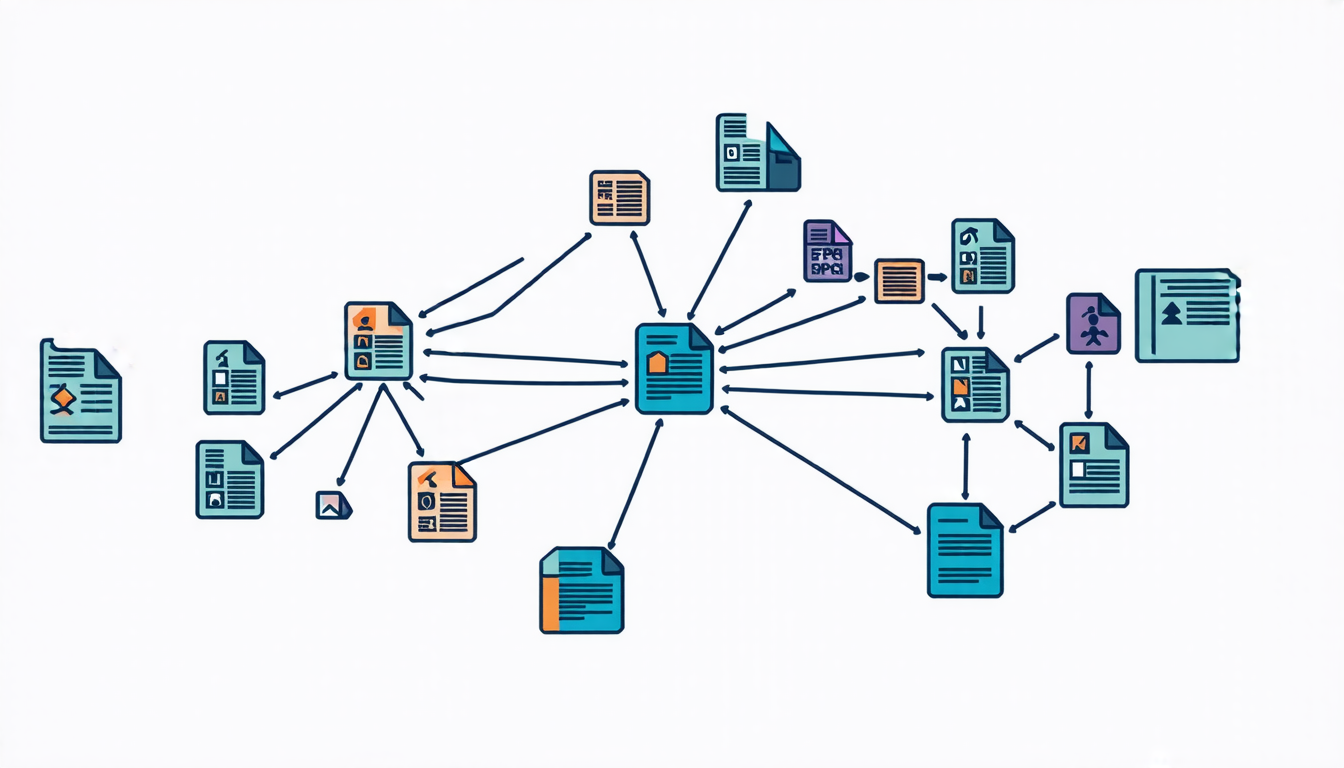
The study of citation behavior has long been a subject of interest in the scientific community, with researchers seeking to understand how and why papers are cited. A new paper delves into this topic, using an agent-based model to simulate the growth of a citation network.
The model is based on the idea that scientists make decisions about which papers to cite based on various factors, such as the relevance of the research, the quality of the paper, and the reputation of the authors. The agents in the model are given weights for these different factors, which influence their decision-making process.
The simulation begins with a small initial network of papers, and then new papers are added over time. Each paper is assigned a unique identifier and a publication year, and it makes citations to other papers based on its weights. The environment also has state variables that affect the growth of the network, such as the number of years since the initial network was created.
One of the key findings of the study is that the model accurately captures many of the patterns observed in real citation networks. For example, it finds that more recent papers are more likely to be cited than older ones, and that papers with higher fitness (or quality) are more likely to attract citations.
The model also shows that preferential attachment, where newer papers tend to cite more established papers, plays a significant role in shaping the network’s structure. This is consistent with previous studies on citation networks, which have found that new research often builds upon existing knowledge rather than starting from scratch.
Another interesting result is that the model can generate a range of different network structures depending on the weights assigned to the agents. For example, if the fitness weight is high, the network will tend to become more centralized around papers with high quality, while if the recency weight is high, the network will be more diffuse and spread out over time.
The study’s findings have implications for our understanding of how scientific knowledge is developed and disseminated. By simulating the growth of a citation network, the model provides insights into the complex processes that shape the scientific literature.
Overall, this paper demonstrates the power of agent-based modeling in understanding complex systems like citation networks. By using a simple yet realistic simulation to capture the key factors influencing citation behavior, researchers can gain new insights into how science is done and how knowledge is shared.
Cite this article: “Unlocking the Secrets of Citation Networks: A Novel Agent-Based Model for Understanding Scientific Collaboration”, The Science Archive, 2025.
Science, Citation Networks, Agent-Based Modeling, Network Growth, Scientific Knowledge, Dissemination, Research Quality, Reputation, Preferential Attachment, Centrality Measures





