

Tuesday 08 April 2025
In a breakthrough that could revolutionize our approach to complex problem-solving, researchers have developed an innovative framework that combines the strengths of artificial intelligence and classical algorithms to tackle challenging tasks.
The new method, dubbed TopIFT (Top-Down Iterated Fine-Tuning), leverages the power of large language models to interpret nuanced, context-dependent constraints, while delegating the enforcement of overall feasibility to traditional algorithms. This hybrid approach has been shown to effectively sample from the intersection of these two constraint spaces, leading to improved performance in a range of domains.
To test the capabilities of TopIFT, researchers applied it to three distinct problems: finding cycles in graphs, scheduling museum visits, and constructing spanning trees. In each case, the framework successfully generated high-quality solutions that met the specified constraints while minimizing costs.
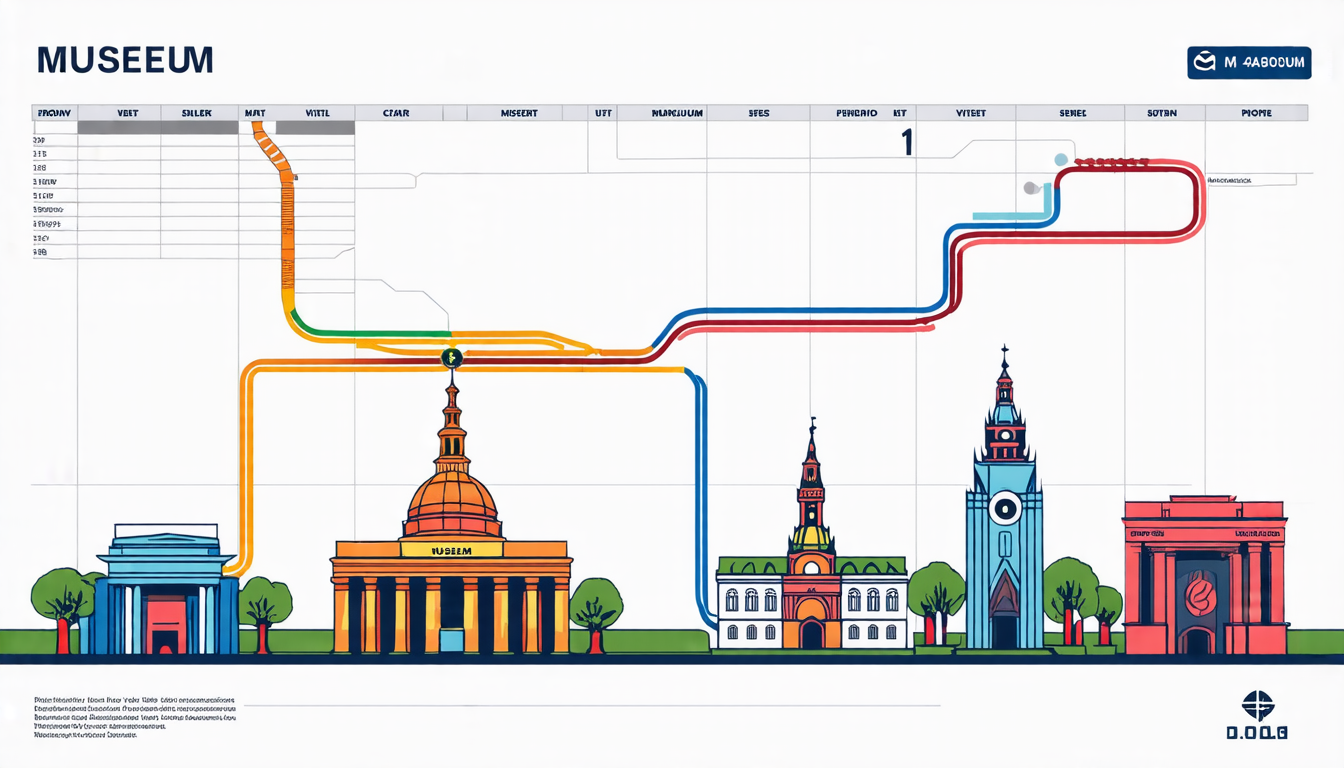
One of the most impressive demonstrations of TopIFT’s potential was its ability to find optimal schedules for visiting a series of museums with opening times and travel times between them. By iteratively refining its solution based on feedback from the large language model, TopIFT was able to produce a schedule that balanced the need to visit each museum with the constraints imposed by their opening hours.
Another notable application of TopIFT was in constructing spanning trees for graphs. This problem requires finding a subset of edges that forms a connected subgraph while minimizing the number of times each vertex is used. By combining the strengths of both AI and classical algorithms, TopIFT was able to generate high-quality spanning trees that met these criteria.
The researchers also demonstrated the potential of TopIFT in clustering data points with specific colors. In this problem, they were able to divide the points into non-empty clusters while minimizing the k-median cost of the clustering.
The success of TopIFT has significant implications for a wide range of applications, from scheduling and resource allocation to planning and optimization. By combining the strengths of AI and classical algorithms, researchers can develop more effective and efficient solutions to complex problems. As the field continues to evolve, it will be exciting to see how this hybrid approach is applied to new challenges and domains.
Cite this article: “Hybrid Framework Bridges Gap Between Human-Specified Constraints and Global Optimization”, The Science Archive, 2025.
Artificial Intelligence, Classical Algorithms, Topift, Language Models, Constraint Spaces, Graph Theory, Scheduling, Resource Allocation, Planning, Optimization.





