

Tuesday 08 April 2025
The quest for realistic digital humans has been a long and arduous one, spanning decades of research and innovation in fields like computer graphics, artificial intelligence, and robotics. But despite significant progress, generating convincing human motion that can be seamlessly integrated into virtual environments or used to control robots remains an elusive goal.
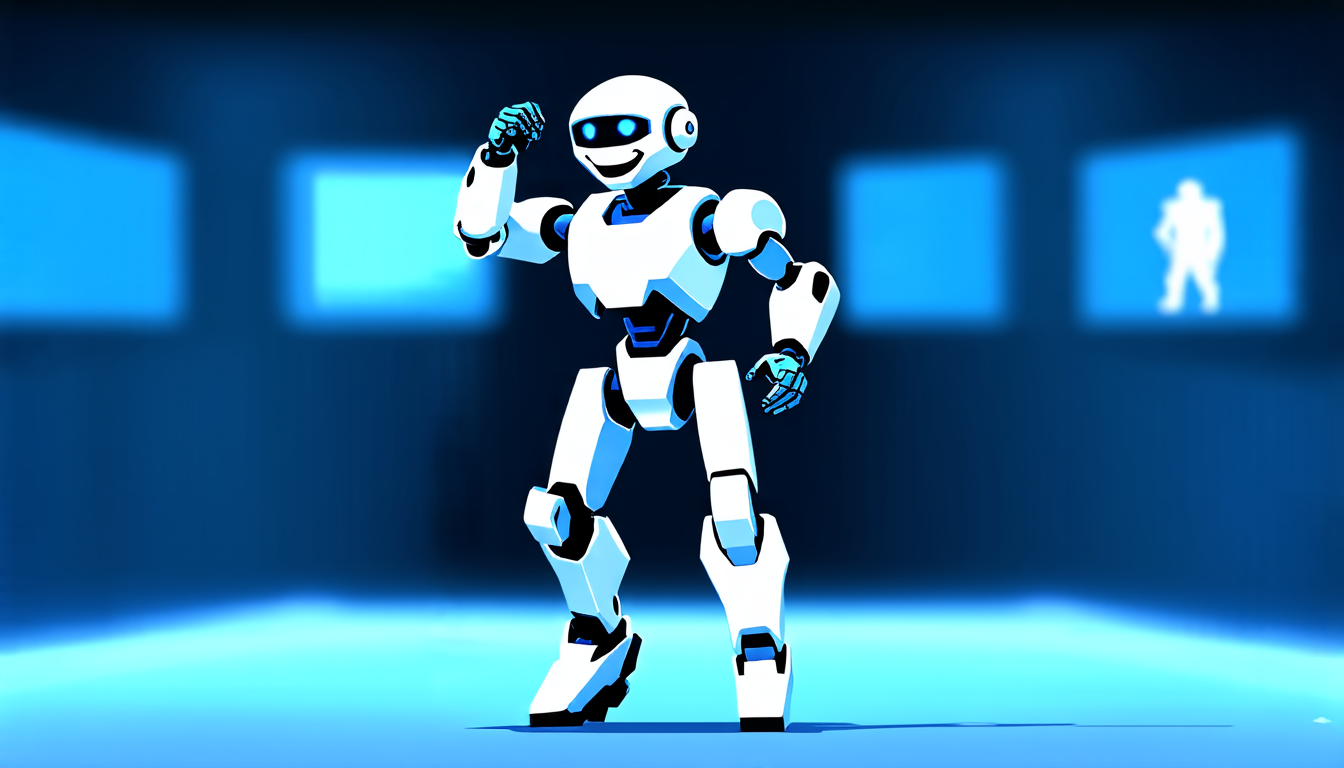
Enter Motion Anything, a new system designed to tackle this challenge head-on by leveraging the power of multimodal conditioning. In essence, Motion Anything is capable of generating high-quality, controllable human motion based on a wide range of inputs – from text descriptions and music to a mix of both.
To achieve this feat, the researchers behind Motion Anything employed an attention-based mask modeling approach, which allows them to fine-tune spatial and temporal control over key frames and actions in the generated motion. This adaptability is crucial, as it enables the system to effectively integrate diverse conditioning modalities and produce more realistic results.
One of the most impressive aspects of Motion Anything is its ability to generate motion sequences that not only match the input conditions but also exhibit a high degree of diversity and creativity. For instance, when tasked with creating dance movements based on a text description and music track, the system produces fluid, coordinated motions that are both aesthetically pleasing and mechanically plausible.
The researchers have also demonstrated Motion Anything’s capabilities in a series of experiments, showcasing its ability to outperform state-of-the-art methods across multiple benchmarks. In one test, they used the system to generate motion sequences for human avatars in virtual environments, producing results that were significantly more realistic and engaging than those produced by competing approaches.
Furthermore, Motion Anything has far-reaching implications for various fields, including film production, video gaming, augmented reality, and robotics. For example, it could be used to create more realistic character animations in movies or games, or to develop advanced robotic systems capable of complex tasks like assembly line work or search and rescue operations.
While there is still much work to be done to refine Motion Anything’s capabilities and expand its range of applications, the system represents a significant step forward in the quest for realistic digital humans. By harnessing the power of multimodal conditioning, it has shown that generating high-quality human motion can be achieved with unprecedented flexibility and realism – a development that could have far-reaching consequences for a wide range of industries and fields.
Cite this article: “Revolutionizing Motion Generation: A Comprehensive Framework for Multimodal Conditioned Avatars”, The Science Archive, 2025.
Computer Graphics, Artificial Intelligence, Robotics, Multimodal Conditioning, Human Motion, Virtual Environments, Augmented Reality, Film Production, Video Gaming, Realistic Digital Humans





