

Tuesday 08 April 2025
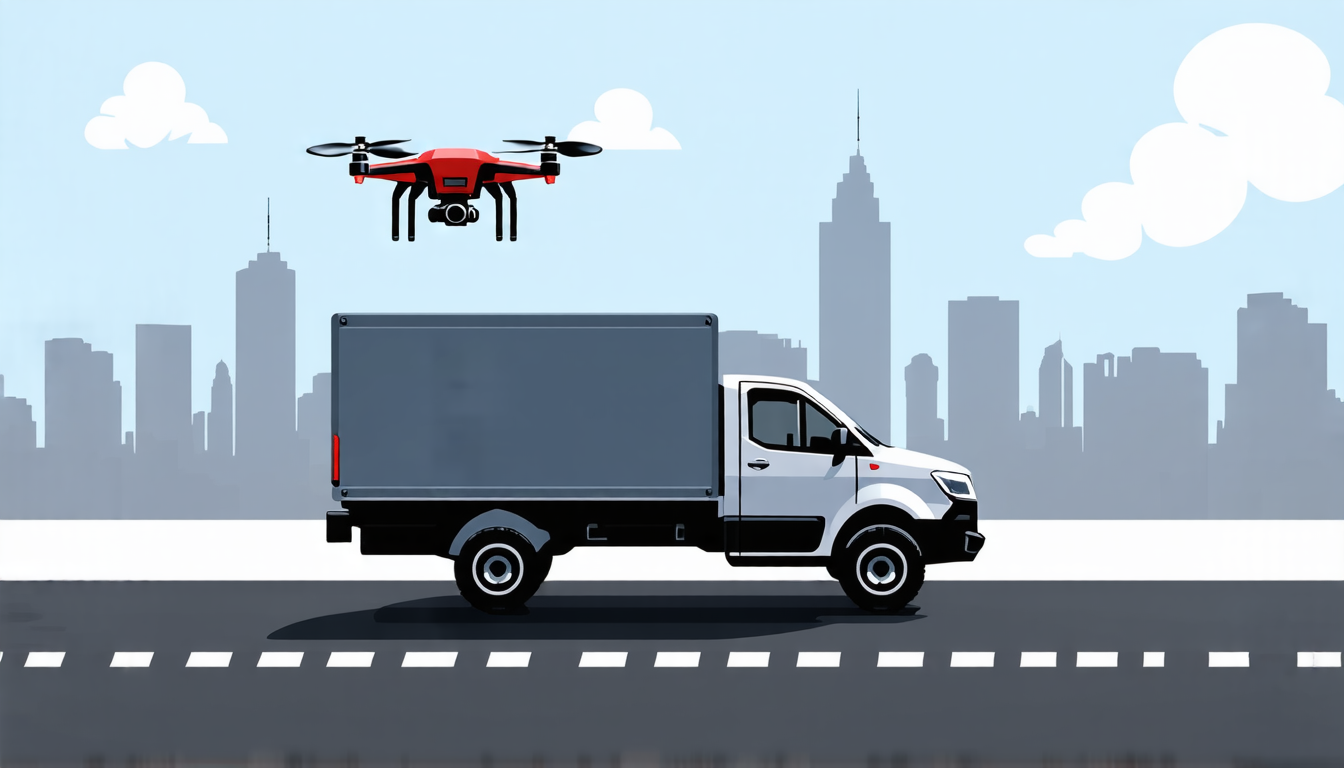
The future of autonomous driving is taking a major leap forward with the development of aerial-vehicle cooperative perception systems. These innovative technologies allow vehicles and drones to work together, sharing information to create a more accurate and comprehensive view of the world around them.
For years, researchers have been working on perfecting the art of autonomous driving, using sensors and cameras to detect and respond to their surroundings. However, these systems often struggle with complex scenarios, such as heavy fog or construction zones, where visibility is limited and objects are difficult to distinguish.
Enter the drone. By integrating drones into the autonomous driving ecosystem, researchers have found that they can provide a fresh perspective on the world. Drones can fly above obstacles, providing a clear view of the road ahead, while vehicles on the ground can focus on navigating through dense environments.
The Griffin dataset is the latest innovation in this field, offering a comprehensive collection of images and data from both aerial and ground perspectives. This dataset has been designed to test the limits of cooperative perception systems, simulating real-world scenarios with varying levels of complexity.
One of the key challenges facing these systems is communication latency. As vehicles and drones exchange information, there can be a delay between sending and receiving data, which can affect performance. To address this issue, researchers have developed specialized algorithms that can adapt to changing conditions, ensuring seamless communication between devices.
Another critical aspect of cooperative perception is feature fusion. By combining the strengths of both aerial and ground perspectives, researchers have created powerful systems capable of detecting objects with unprecedented accuracy. In tests, these systems have shown significant improvements in detection rates, particularly in complex environments.
The implications of this technology are far-reaching. With the ability to share information seamlessly between vehicles and drones, we can expect to see significant advancements in autonomous driving, from improved safety features to enhanced navigation capabilities. Moreover, as this technology continues to evolve, it may also be applied to other areas, such as search and rescue operations or environmental monitoring.
The Griffin dataset is a major milestone in the development of aerial-vehicle cooperative perception systems, offering a new level of realism and complexity for researchers to test their theories. As we continue to push the boundaries of this technology, we can expect to see even more innovative applications in the years to come.
Cite this article: “Cooperative Perception in Autonomous Driving: A Framework for Integrating Aerial and Ground Views”, The Science Archive, 2025.
Autonomous Driving, Aerial Vehicles, Cooperative Perception, Drone Technology, Artificial Intelligence, Machine Learning, Computer Vision, Sensor Fusion, Feature Extraction, Object Detection





