

Tuesday 08 April 2025
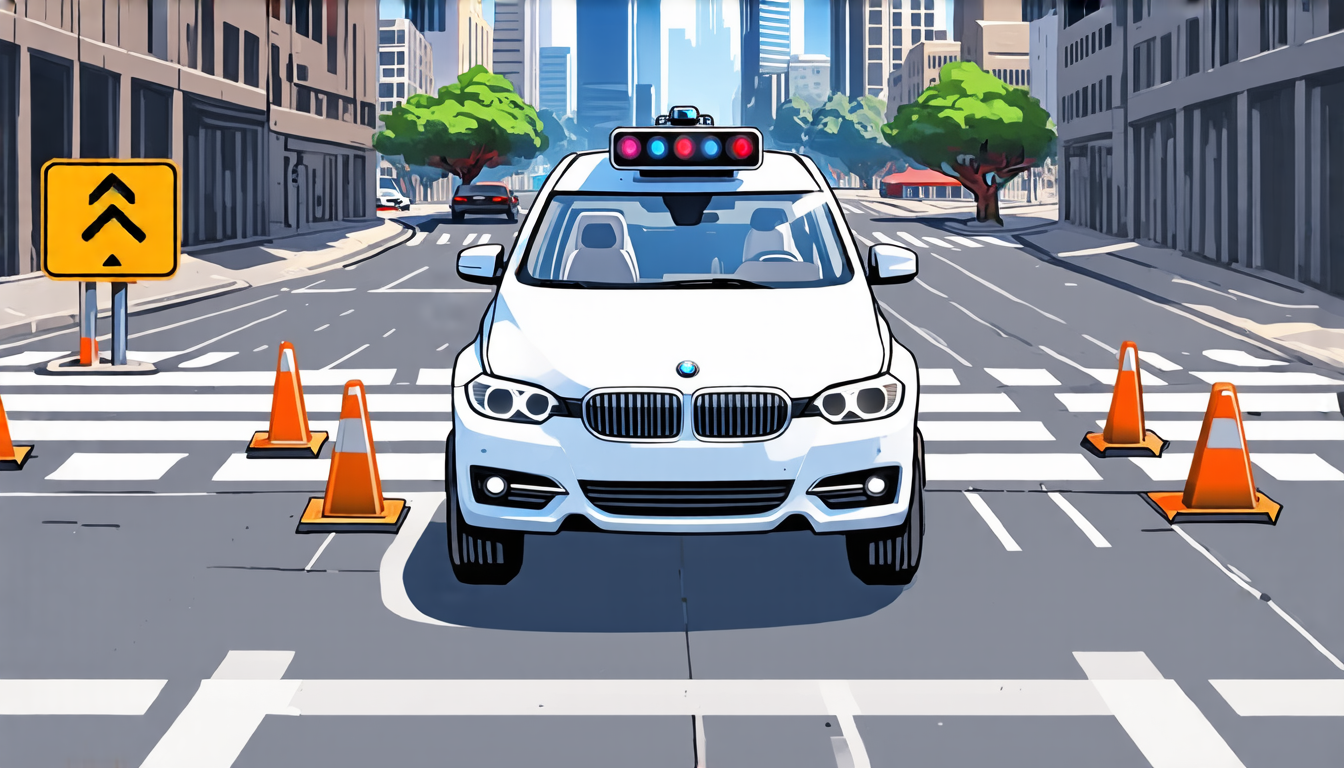
Autonomous vehicles are becoming increasingly common on our roads, but what happens when their sensors fail or they encounter unexpected obstacles? A team of researchers has developed a new system that uses large language models to help autonomous cars navigate difficult situations.
The system, called LLM-RCO, is designed to work in conjunction with the car’s existing sensors and navigation systems. It uses a combination of machine learning algorithms and natural language processing to analyze the situation and make decisions about how to proceed.
One of the key challenges facing autonomous vehicles is the problem of partial perception deficits, where the car’s sensors are unable to detect certain objects or obstacles in its environment. This can be due to a variety of factors, such as weather conditions, road maintenance, or even intentional attacks on the vehicle.
The LLM-RCO system uses large language models to analyze the situation and make predictions about what might happen if the car takes different actions. It then uses this information to generate a plan for how to proceed, taking into account the car’s current speed, direction, and position.
One of the key benefits of the LLM-RCO system is that it can be trained on large amounts of data, including real-world driving scenarios and simulated situations. This allows it to learn from its mistakes and improve over time, making it more effective at navigating difficult situations.
The system has been tested in a variety of scenarios, including urban and rural environments, with mixed results. In some cases, the LLM-RCO system was able to successfully navigate complex situations, while in others it struggled to keep up with the demands of real-world driving.
Despite these challenges, the researchers believe that the LLM-RCO system has the potential to make a significant impact on the development of autonomous vehicles. By providing an additional layer of intelligence and decision-making capabilities, it could help to improve the safety and reliability of self-driving cars.
The future of autonomous vehicles is still uncertain, but one thing is clear: they will need to be able to handle unexpected situations if they are going to become a reality. The LLM-RCO system is just one example of how researchers are working to make this goal a reality, and it’s an exciting development that could have significant implications for the future of transportation.
Cite this article: “Multimodal Large Language Models for Autonomous Driving: Combating Perception Deficits with Commonsense Reasoning”, The Science Archive, 2025.
Autonomous Vehicles, Large Language Models, Navigation Systems, Sensors, Machine Learning Algorithms, Natural Language Processing, Partial Perception Deficits, Weather Conditions, Road Maintenance, Self-Driving Cars





